6 Min Read
Monsoon often causes many health issues or aggravates certain existing health issues, such as joint pain. Individuals with joint pain may notice that their knees, elbows, or fingers aching more than usual when the rains start. There are many factors that contribute to this change, including variations in temperature and atmospheric pressure, which can make the joints stiffer. It’s definitely frustrating, but understanding the joint pain causes during monsoon can help you take steps to ease discomfort. In this blog, leading Orthopaedic experts at Manipal Hospital Yeshwanthpur explain why joints react this way, common triggers, and practical relief tips so you can enjoy the rainy season.
Synopsis
Why Monsoon Affects Your Joints
Some people notice that their elbows, fingers, or knees stiffen and ache when the rains arrive. It is not a coincidence, but weather changes like increased humidity and a drop in barometric pressure have direct effects on joint tissues. When pressure drops, tissues close to the joints may swell a bit. That would irritate nerves and cause that familiar stiffness or pain.
People who already have certain conditions, such as arthritis or previous trauma, tend to feel these changes even more. Joints that were injured or inflamed and had lost pain over months can become sensitive again. Sensitive motion can become annoying due to increased sensitivity.
Common weather-related effects on joints include:
-
Decreased range of motion due to stiffness
-
Visible swelling
-
The previously injured area starts feeling tender or painful
-
Aching or dull pain in the joint on which the weight falls
-
Difficulty performing routine activities because of stiff joints
Common Joint Pain Causes in Monsoon
Monsoon can make joints ache more than usual. Understanding the main joint pain causes helps you manage discomfort before it gets worse.
1. Arthritis Flare-Ups
-
People suffering from osteoarthritis or rheumatoid arthritis experience increased pain in the monsoon
-
Changes in humidity and outside pressure induce stiffness in joints
-
Mild arthritis is also problematic for everyday movements like walking or climbing stairs
2. Old Injuries
-
Past injuries, such as joint damage or healed fractures, can become sensitive again
-
Scar tissue and weakened joints become sensitive due to the damp and cold weather outside
-
Muscles and ligaments around the joint also become stiff, so it’s uncomfortable
3. Generalised Body Pain
-
During monsoons many people often experience increased generalized body pain, which also present as increased joint pain
-
Sedentary habits during rainy days or sudden activity can stress multiple joints
4. Other Contributing Factors
-
Joint lubrication is reduced because of cold
-
Minor infections or viral illnesses increase body pain
-
Poor posture or lack of exercise due to staying indoors
-
Vitamin D and calcium deficiency
Triggers That Can Worsen Joint Pain
Even if you understand the joint pain causes, certain habits and environmental factors during monsoons can make discomfort worse. Recognizing these triggers can help you prevent flare-ups.
1. Sedentary Lifestyle
-
Increased indoor dwelling because of rain leads to less movement.
-
Lack of activity makes muscles and joints stiff, which causes more pain.
2. Prolonged Exposure to Rain and Dampness
-
Getting wet in the rain can make joints feel cold and become stiff.
-
Damp conditions easily aggravate inflammation everywhere, along with injured areas.
3. Sudden Temperature Changes
-
Moving between warm indoor spaces and sudden exposure to cold and rain outdoors induces stress on joints.
-
Quick shifts in temperature can trigger stiffness and aches.
4. Nutritional and Lifestyle Factors
-
Skipping essential nutrients like calcium and vitamin D can weaken bones and joints.
-
Stress and fatigue may make joint pain and weakness more noticeable.
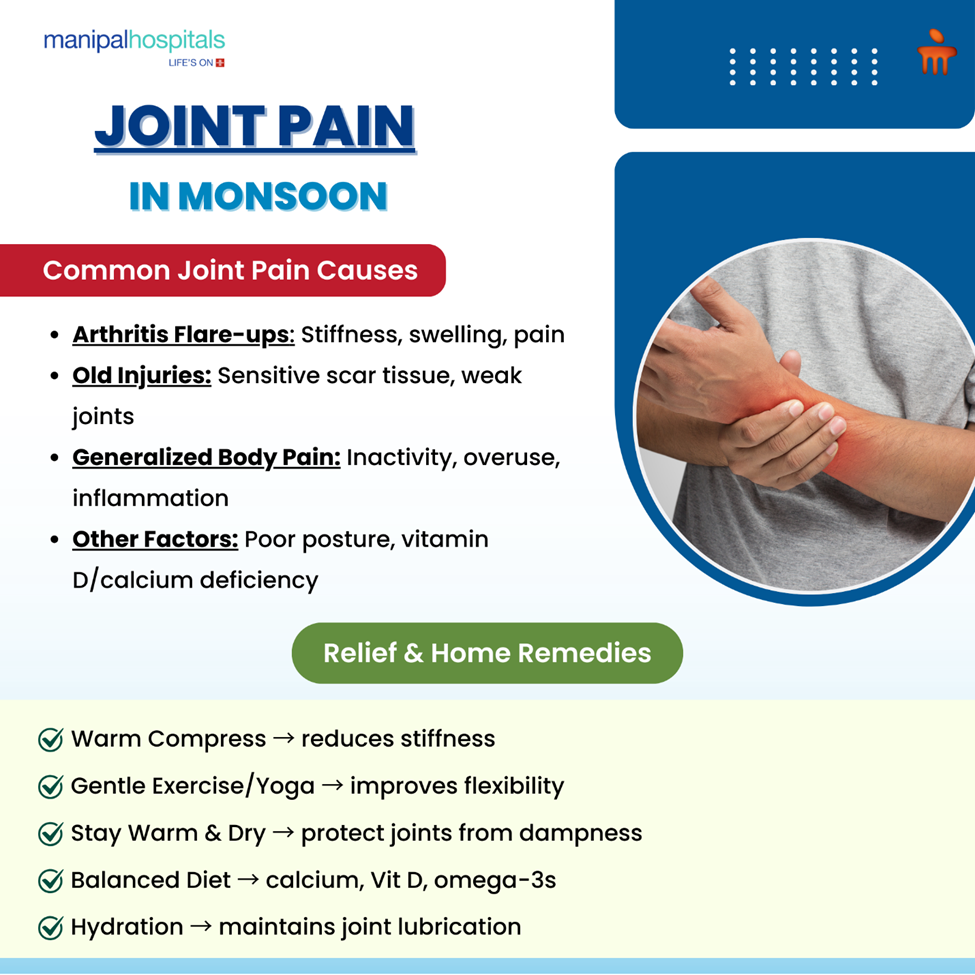
Relief Tips and Home Remedies for Monsoon Joint Pain
Managing joint discomfort during monsoons doesn’t always require medications. Simple home remedies and daily habits can make a big difference. But if pain persists, consult a doctor for joint pain treatment options. Here are basic home remedies that can work:
1. Warm Compresses and Heat Therapy
-
Applying a warm compress or using a heating pad can ease stiffness.
-
Warm baths or showers help relax muscles and improve blood circulation.
2. Gentle Exercise and Stretching
-
Low-impact activities like walking, yoga, or swimming keep joints flexible.
-
Stretching daily reduces stiffness and prevents flare-ups.
-
Avoid sudden or high-impact exercises, which can worsen pain.
3. Protecting Joints from Dampness
-
Wear dry, comfortable clothing and proper footwear to keep joints warm.
-
Avoid prolonged exposure to rain or cold, damp environments.
4. Nutrition and Hydration
-
Include foods rich in calcium, vitamin D, and omega-3 fatty acids to support joint health.
-
Staying hydrated helps maintain joint lubrication and reduces stiffness.
When to See a Doctor
Most joint discomfort during the monsoon can be managed at home, but sometimes professional care is necessary. You should consult a doctor if you notice:
-
Persistent or worsening pain that doesn’t improve with home remedies
-
Swelling, redness, or warmth around the joint
-
Difficulty moving or performing daily activities
-
Sudden joint deformities or intense pain after an injury
-
Joint pain and weakness which stop you from moving
Conclusion
Monsoon should not become the season for pain and worry. By understanding the causes of joint pain, you can follow simple home remedies. It can effectively manage discomfort every day and help you stay relaxed. Remember, persistent pain or swelling should never be ignored. For personalised care and expert joint pain treatment, our orthopaedic experts at Manipal Hospitals Yeshwanthpur are here to help. Book your consultation today.
FAQ's
Changes in humidity and barometric pressure, arthritis flare-ups, old injuries, and reduced joint lubrication are common joint pain causes during rainy weather.
Mild exercises, stretching, soft warm compresses, having a good-fitting shoes, and a balanced diet can reduce joint pain and weakness. Do not expose for long periods to cold, wet conditions.
Seeking medical help will offer you effective measures for pain management. Consult an orthopaedic expert if the pain persists, swelling that stays longer than usual, or it becomes painful while performing normal chores. Recovery at an early stage can prevent complications and provide curative joint pain therapy.
Generalized aches may be caused by inflammation, reduced physical activity, or pre-existing conditions aggravated by humidity. Understanding what causes joint pain all over the body helps in managing it effectively.
Regular stretching, staying warm and dry, maintaining a balanced diet, and avoiding long sedentary periods can prevent stiffness
Share this article on:


.webp "Neurological disorders symptoms and treatment")