9 Min Read
Many people first notice a problem in the shoulder while performing simple daily activities. Reaching for something on a high shelf, fastening a seatbelt, or even putting on a shirt may suddenly feel uncomfortable. The shoulder may begin to feel tight, and movements that once felt natural slowly become difficult. Over time, this discomfort can develop into persistent shoulder pain and stiffness, making even small movements frustrating.
One common reason for these symptoms is frozen shoulder, or adhesive capsulitis, which is a condition that causes shoulder joint stiffness, severe joint pain, and restricted movement in the shoulder joint. Although the condition can take time to recover from, proper treatment and physiotherapy can gradually restore movement and reduce pain.
In this blog, an experienced orthopaedic surgeon and joint replacement specialist in Yeshwanthpur, explains the causes of frozen shoulder, its symptoms and stages, available treatment options, and what to expect during recovery.
Synopsis
- What Is Frozen Shoulder?
- Causes of Frozen Shoulder
- Stages of Frozen Shoulder
- Symptoms of Frozen Shoulder
- How Frozen Shoulder Is Diagnosed
- Physiotherapy for Frozen Shoulder
- Common Physiotherapy Exercises
- Medical Treatment Options
- Recovery Timeline for Frozen Shoulder
- Tips to Support Recovery
- Conclusion
What Is Frozen Shoulder?
Frozen shoulder develops when the connective tissue surrounding the shoulder joint becomes inflamed and thickened. This tissue, known as the shoulder joint capsule, normally allows smooth movement of the shoulder. When inflammation occurs, the capsule tightens and restricts movement, leading to shoulder joint stiffness and persistent discomfort.
The condition typically develops gradually rather than suddenly. Early symptoms often begin with mild pain that slowly progresses into restricted movement. As the condition advances, everyday activities such as reaching overhead, lifting objects, or rotating the arm can become difficult.
Doctors call this condition adhesive capsulitis because the inflamed tissue can develop tight bands of scar-like tissue, known as adhesions, which restrict the joint’s movement. While the problem can affect anyone, it is more commonly seen in people between the ages of 40 and 60, and in individuals with conditions such as diabetes or thyroid disorders.
Causes of Frozen Shoulder
It's not always clear what causes frozen shoulder. But some things can make you more likely to get this disorder. Some common causes include:
-
Prolonged shoulder immobility after injury or surgery
-
Diabetes, which can affect connective tissue health
-
Thyroid disorders that influence metabolic and inflammatory processes
-
Previous shoulder trauma or fractures
-
Stroke or neurological conditions that limit arm movement
When the shoulder remains inactive for a prolonged period, the surrounding tissues can tighten, increasing the chance of developing adhesive capsulitis.
Stages of Frozen Shoulder
Doctors typically describe the progression of frozen shoulder in three stages. Each stage has distinct symptoms and recovery patterns:
|
Stage |
Symptoms |
Duration |
|
Freezing Stage |
- Persistent shoulder pain - Pain is worse at night - Difficulty moving - Gradual loss of motion |
6 weeks – 9 months |
|
Frozen Stage |
- The shoulder becomes very stiff - Pain may slightly improve - Trouble with daily activities |
4 – 12 months |
|
Thawing Stage |
- Mobility slowly returns - Stiffness reduces - Pain gradually subsides |
6 months – 2 years |
Symptoms of Frozen Shoulder
The most noticeable feature of frozen shoulder is a gradual increase in shoulder pain and stiffness. The discomfort may begin mildly but can slowly worsen, especially when trying to move the shoulder. Common symptoms include:
-
Persistent shoulder pain and stiffness that worsens with movement
-
Difficulty raising the arm above shoulder level
-
Limited ability to rotate the shoulder outward or inward
-
Pain that becomes worse at night
-
Reduced range of motion during daily activities
These symptoms can make it hard to carry out daily activities such as combing hair, dressing, or reaching overhead.
How Frozen Shoulder Is Diagnosed
A doctor can tell if someone has frozen shoulder by looking at their medical history, doing a physical exam, and taking pictures of the shoulder. During the physical examination, a doctor may check the range of shoulder pain and stiffness and the ability to turn the arm. Doctors might compare active movement (the patient moves their arm) to passive movement (the doctor moves the arm).
Imaging tests may also be recommended to rule out other conditions. These may include:
-
X-rays to check for arthritis or bone problems
-
MRI scans to examine soft tissues
-
Ultrasound imaging to evaluate tendons and ligaments
These tests help rule out other shoulder problems that could cause the same symptoms.
Physiotherapy for Frozen Shoulder
Physiotherapy is one of the most important treatments for frozen shoulder. Carefully guided exercises help restore movement and strengthen the muscles that support the shoulder joint. The goal of physiotherapy:
-
Improve shoulder mobility: Gentle exercises restore movement in the joint.
-
Reduce pain: Stretching and controlled activity ease discomfort
-
Strengthen shoulder muscles: Builds support around the joint for better function.
-
Restore normal function: Helps patients return to daily activities with less restriction.
The intensity of the frozen shoulder exercises should depend upon the stage of the disease, such as:
-
For the freezing stage, gentle shoulder stretching reduces pain and maintains mobility.
-
For the frozen stage, gradual mobility exercises slowly improve joint movement.
-
For the thawing stage, strength exercises rebuild muscle power and restore full shoulder function.
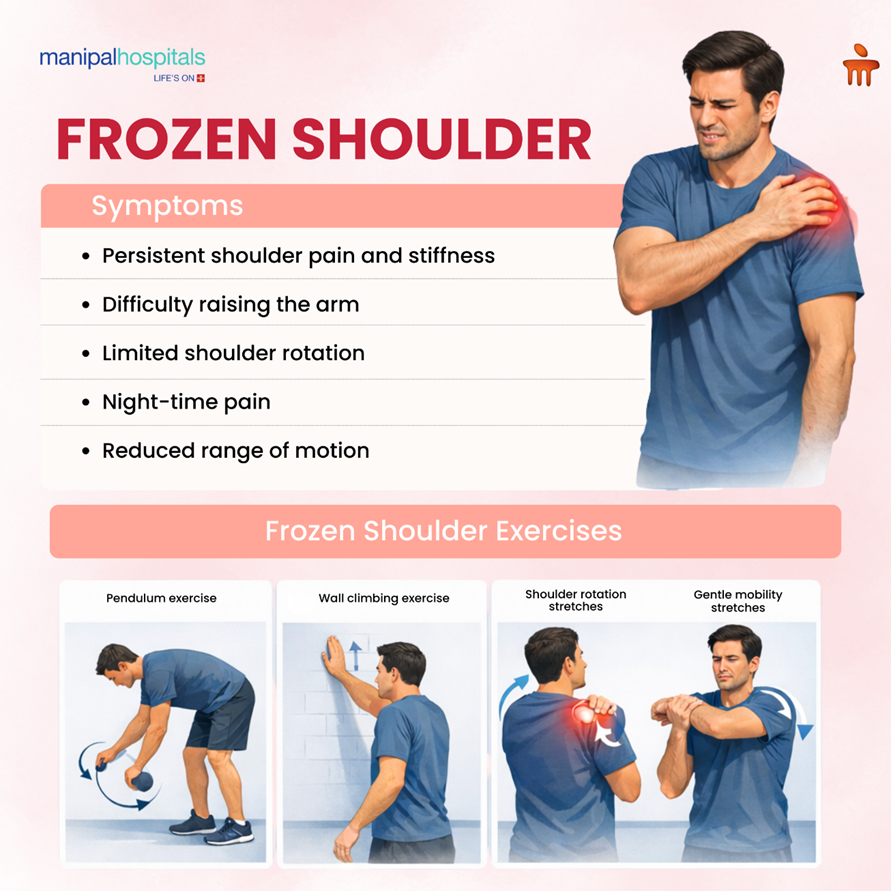
Common Physiotherapy Exercises
-
Pendulum exercise: Gentle swinging of the arm to improve shoulder joint mobility.
-
Wall climbing exercise: Walking fingers up a wall to increase the shoulder range of motion.
-
Shoulder rotation: Rotating the arm inward/outward to enhance flexibility.
-
Stretching exercises: Gentle stretches to reduce stiffness and improve movement.
To prevent further injury, these exercises should be performed under the guidance of a physiotherapist.
Medical Treatment Options
Doctors may suggest other treatments in addition to physiotherapy, depending on how bad the symptoms are.
-
Pain Relief Medicines: Prescribed medicines like nonsteroidal anti-inflammatory drugs (NSAIDs) and pain relievers help reduce inflammation and pain.
-
Corticosteroid Injections: Steroid injections reduce shoulder pain and stiffness and improve mobility.
-
Hydrodilatation: Involves injecting sterile fluid into the shoulder joint capsule to expand it and facilitate improved movement.
-
Surgery: In some cases, surgery may be suggested when other treatments don't help with the symptoms. It includes:
-
Manipulation under anaesthesia: Loosens the stiff joint in the shoulder
-
Arthroscopic surgery: Removes scar tissue and adhesions
-
Most individuals recover without surgery through physiotherapy and other non-invasive treatments.
Recovery Timeline for Frozen Shoulder
Recovery time varies according to the severity of the condition and the effectiveness of treatment; however, most patients can anticipate a gradual progression toward improvement. In the initial stages, symptoms may persist for several weeks to months before subsiding.
During the stiffness phase, recovery frequently extends over multiple months and necessitates ongoing patience and consistent care. The subsequent gradual recovery phase may last up to two years, during which strength and flexibility are progressively restored.
Although this process is often prolonged, many patients ultimately achieve substantial improvement over time, provided that persistence and adherence to the treatment plan are maintained.
Tips to Support Recovery
Some changes to your lifestyle can help you get better faster. Let’s look at some helpful advice:
-
Regular physiotherapy exercises
-
Avoid sudden shoulder movements
-
Apply warm compresses to relieve stiffness
-
Maintain good, straight posture
-
Follow your doctor’s treatment plan
-
Stay physically active within recommended limits
Consistent repetition of physiotherapy exercises is essential for restoring normal shoulder function.
Conclusion
Frozen shoulder is a common condition that leads to shoulder pain and stiffness, often making daily tasks difficult. With proper care and physiotherapy, most people recover, although it may take some time. Learning about the stages of frozen shoulder and following a structured physiotherapy plan can help reduce pain and improve movement.
The orthopaedic specialists at Manipal Hospitals Yeshwanthpur, provide thorough diagnosis, personalised physiotherapy, and the latest treatments to help patients move better and return to their usual routines.
FAQ's
Shoulder injuries, surgery, long periods of inactivity, diabetes, or thyroid problems can all cause frozen shoulder. In some instances, the precise cause may remain undetermined.
Depending on the stage of the condition and how well physiotherapy and treatment work, recovery could take anywhere from a few months to two years.
Yes. Physiotherapy is very important for making the shoulder more flexible, less stiff, and getting it back to normal movement.
In a lot of cases, frozen shoulder gets better over time. But treatment and physiotherapy can help you heal faster and feel less pain.
Most of the time, surgery is only an option if symptoms don't go away after months of physiotherapy and other treatments. Most patients get better without needing surgery.
Share this article on:


.webp "Neurological disorders symptoms and treatment")