7 Min Read
Your brain and nerves quietly coordinate almost everything you do. From remembering a phone number to maintaining balance while walking, the human nervous system works continuously in the background to keep the body functioning smoothly. When something interferes with this system, even simple daily activities can start to feel different or difficult. Many neurological disorders begin subtly. A person might notice occasional numbness, unexplained headaches, or small changes in memory or coordination. These early signals are often overlooked or attributed to stress or fatigue. However, recognising the warning signs of brain disorders early can make a significant difference in treatment and recovery.
In this blog, a top neurologist in Yeshwanthpur discusses in detail about common neurological disorders, their early symptoms, and when to see a doctor.
Synopsis
- What are neurological disorders?
- Causes of Neurological Disorders
- Common Neurological Disorders
- Understanding Specific Neurological Disorders and Their Early Signs
- How Neurological Disorders Are Diagnosed
- Treatment Options for Neurological Disorders
- Lifestyle Habits That Support Brain Health
- When Should You See a Neurologist?
- Conclusion
What are neurological disorders?
Neurological disorders are conditions that affect the brain, spinal cord, or nerves. The brain is the body's control centre, the spinal cord is the main pathway for messages between the brain and the body, and nerves are fibres that send signals throughout the body. These disorders can disrupt communication between the brain and the rest of the body, resulting in difficulties with movement, sensation, cognition (which means thinking and understanding), or coordination.
Some conditions appear suddenly, such as stroke, while others develop gradually over time. Understanding how the human nervous system works can help explain why symptoms may appear in different ways.
Causes of Neurological Disorders
Several factors can contribute to the development of neurological disorders. In some cases, a single cause is identified, while in others, multiple factors may be involved.
Common contributing factors include:
-
Genetic conditions affecting nerve function
-
Traumatic injuries to the brain or spinal cord
-
Infections that affect the nervous system
-
Reduced blood flow to the brain tissue
-
Autoimmune conditions attacking nerve cells
-
Degenerative changes associated with ageing
-
Exposure to toxins or harmful substances
-
Metabolic disorders affecting brain function
-
Vitamin deficiencies, such as vitamin B12 deficiency
-
Chronic conditions such as hypertension or diabetes
In some individuals, the exact cause remains unclear despite thorough evaluation.
Common Neurological Disorders
Neurological disorders affect millions worldwide. Some are temporary or manageable, while others require long-term care and monitoring:
|
Neurological Disorder |
How it Affects You |
|
Stroke |
Sudden loss of blood flow to part of the brain |
|
Parkinson’s disease |
Progressive movement disorder from low dopamine |
|
Alzheimer’s disease |
Progressive memory and thinking decline |
|
Epilepsy |
Tendency to have repeated seizures |
|
Multiple sclerosis |
Immune attack on the nerve covering |
|
Migraine |
Neurological headache disorder |
Even though each disorder has its symptoms, many of them start with similar early warning signs.
Understanding Specific Neurological Disorders and Their Early Signs
1. Stroke
A stroke occurs when blood flow to part of the brain is interrupted, either due to a blockage or bleeding. Because brain cells require constant oxygen, even a brief interruption can cause serious damage.
Early neurological symptoms of stroke usually appear suddenly and may include:
-
Weakness or numbness on one side of the body
-
Slurred or difficult speech
-
Sudden vision problems
-
Severe headache without a known cause
-
Difficulty walking or maintaining balance
Stroke is a medical emergency. Immediate treatment can significantly reduce long-term complications.
2. Parkinson’s Disease
Parkinson’s disease is a progressive neurological condition that affects movement. It develops when the brain gradually produces less dopamine, a chemical that helps coordinate movement. Early signs of Parkinson’s disease often develop slowly and may include:
-
Tremors in the hands or fingers
-
Slowness of movement
-
Muscle stiffness
-
Reduced facial expressions
-
Changes in handwriting
Finding Parkinson's disease early can help manage symptoms better.
3. Alzheimer’s Disease
Alzheimer’s disease is a degenerative brain disorder that primarily affects memory and thinking abilities. It usually develops gradually and becomes more noticeable over time. Some early warning signs of brain disorders associated with
Alzheimer’s include:
-
Memory loss: Difficulty remembering recent events
-
Difficulty performing familiar tasks: Trouble completing daily activities
-
Confusion about time or place: Getting lost in familiar surroundings
-
Poor judgment: Difficulty making decisions
These symptoms usually get worse as time goes on.
4. Epilepsy
Epilepsy is a neurological disorder marked by recurrent seizures resulting from atypical electrical activity in the brain. Early signs of epilepsy are:
-
Sudden episodes of confusion
-
Staring spells
-
Uncontrolled jerking movements
-
Temporary loss of awareness
-
Strange sensations before seizures
Seeing a doctor is important to get the right diagnosis and find the best treatment.
5. Multiple Sclerosis (MS)
Multiple sclerosis is an autoimmune disease, meaning the body's immune system attacks itself, which causes the immune system to attack the protective covering (called the myelin sheath) of nerves. Signs of multiple sclerosis in the beginning include:
-
Numbness or weakness in limbs
-
Problems with vision
-
Difficulty with coordination
-
Muscle stiffness
-
Tiredness
Symptoms can come and go and may be very different from person to person.
How Neurological Disorders Are Diagnosed
Diagnosing neurological disorders requires a combination of clinical assessment and specialised tests. Doctors begin with a detailed discussion of symptoms and a neurological examination. During the examination, they evaluate:
-
Muscle strength and reflexes
-
Balance and coordination
-
Sensory responses
-
Cognitive and memory functions
If necessary, imaging tests such as MRI or CT scans may be recommended to view brain structures. Additional tests, such as EEG or blood investigations, can help identify underlying causes. This comprehensive approach helps doctors determine the most accurate diagnosis.
Treatment Options for Neurological Disorders
Treatment plans vary widely depending on the condition involved. Some conditions require medication, while others benefit from therapy or lifestyle adjustments.
Common treatment approaches include:
|
Treatment |
Purpose |
|
Medications |
Control symptoms and slow disease progression |
|
Physiotherapy |
Improve mobility and muscle strength |
|
Occupational therapy |
Help patients maintain independence |
|
Lifestyle changes |
Improve overall brain health |
|
Surgical treatment |
Required in certain neurological conditions |
Early intervention can significantly influence long-term outcomes.
Lifestyle Habits That Support Brain Health
Certain lifestyle habits can support the human nervous system's health and reduce the risk of developing neurological disorders. Good habits for your brain:
-
Maintain a nutrient-rich, balanced diet
-
Engage in regular physical activity
-
Get adequate sleep
-
Manage stress effectively
-
Avoid smoking and excessive alcohol consumption
-
Keep the mind active through learning and mental exercises
These practices benefit both neurological and overall health.
When Should You See a Neurologist?
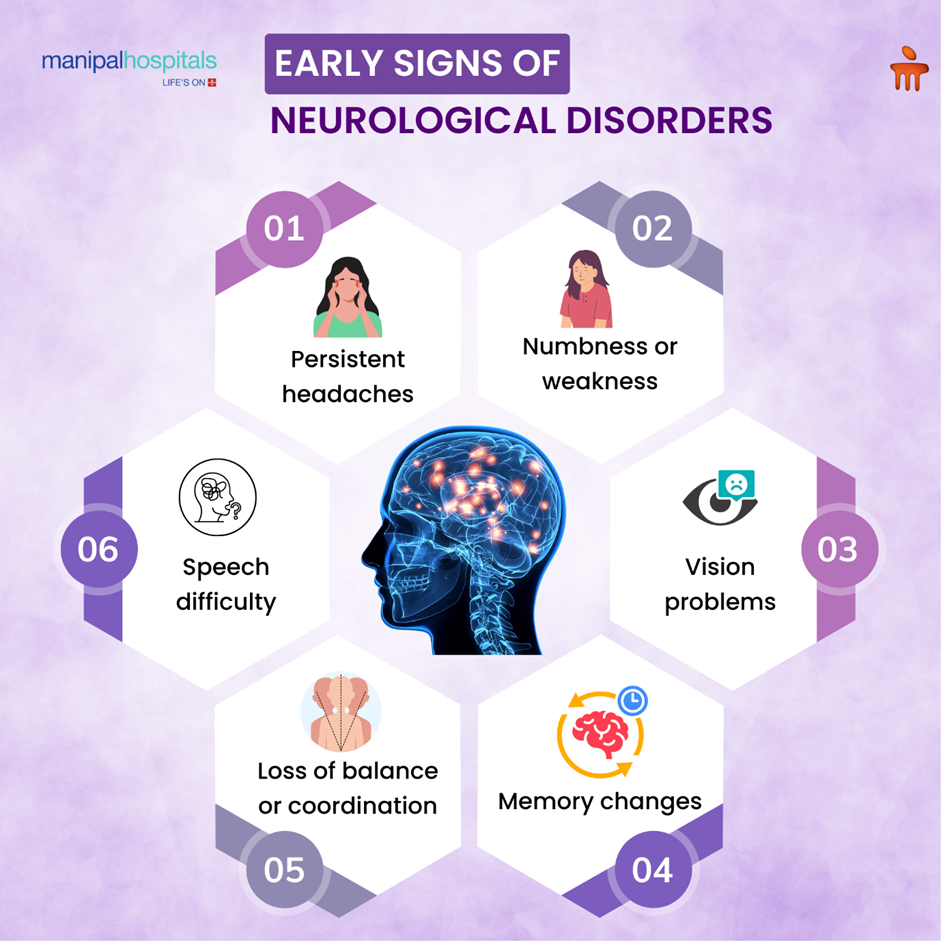
Some symptoms require prompt medical attention. If you have any of the following symptoms, consult a neurologist:
Healthcare professionals can identify neurological disorders and initiate appropriate treatment through early evaluation.
Conclusion
Neurological disorders can affect the brain, spinal cord, and nerves, causing many different symptoms. These conditions might develop slowly, but noticing early warning signs of brain disorders can help doctors diagnose and treat them more effectively.
Many neurological disorders can be effectively managed with early detection, appropriate treatment, and supportive care. The neurology specialists at Manipal Hospitals Yeshwanthpur provide complete neurological care with advanced tests and personalised treatment plans.
FAQ's
Several neurological disorders are commonly seen, including stroke, Parkinson’s disease, Alzheimer’s disease, epilepsy, migraine, and multiple sclerosis. These conditions involve the brain, spinal cord, or nerves and can affect movement, memory, sensation, or coordination.
Early warning signs may include persistent headaches, numbness, weakness, memory problems, vision changes, speech difficulty, or loss of balance. These symptoms should be evaluated if they appear suddenly or worsen over time.
Not all the time. Some neurological conditions are temporary or can be managed with treatment, while others may necessitate long-term medical care.
Yes. Regular exercise, a balanced diet, sufficient sleep, and mental stimulation can help maintain brain health and reduce the risk of neurological disease.
If neurological symptoms come on suddenly, get worse over time, or make it hard to do everyday things, you should see a doctor. Early evaluation can make treatment work better.
Share this article on:


.webp "Neurological disorders symptoms and treatment")