7 Min Read
.webp "Neurological disorders symptoms and treatment")
Your nervous system is a complex network that regulates everything from movement to memory and breathing to emotions. When something disrupts this intricate system, it can lead to neurological disorders that affect daily functioning and quality of life. This is a critical public health reality in India, where over 30 million people live with neurological conditions, and the prevalence rate is nearly 2.4%. Between 1990 and 2019, the burden of non-communicable neurological disorders more than doubled, rising from 4.0% to 8.2% of India's total disease load.
The key to managing these conditions effectively is recognising neurological disorders' symptoms early, as prompt diagnosis often leads to better outcomes and more effective treatment options. Seeking timely evaluation from experienced specialists at a top neurology hospital in Yeshwanthpur, Bangalore, can help ensure accurate diagnosis and comprehensive care.
This blog explores the most common neurological disorders and the neurological disorder symptoms that should prompt a medical visit.
Synopsis
What Are Neurological Disorders?
Neurological disorders are medical conditions that affect the brain, spinal cord, nerves, and muscles. These disorders can result from structural damage, genetic factors, infections, inflammation, or functional problems where the nervous system doesn't work properly without visible damage. There are over 600 recognised neurological conditions, ranging from mild to life-threatening.
The nervous system controls vital functions, including movement, sensation, cognition, consciousness, and automatic processes like breathing and heart rate. When disrupted, even small problems can cause significant symptoms throughout the body.
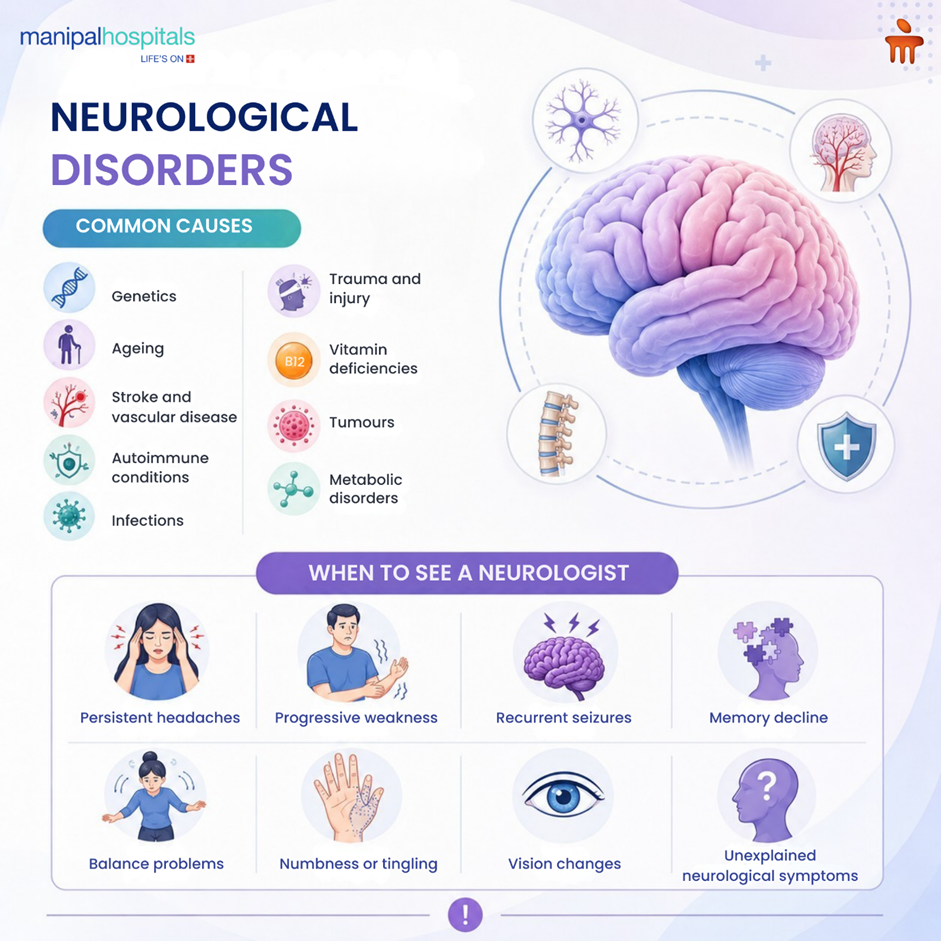
Common Neurological Disorders and Their Early Warning Symptoms
Many neurological conditions share overlapping symptoms in their early stages, making them easy to overlook or attribute to less serious causes. However, each disorder tends to have a distinct pattern of warning signs that can provide important clues to an underlying neurological problem. Understanding these early symptoms can help individuals seek timely medical evaluation and appropriate treatment.
Stroke
A stroke occurs when the blood supply to part of the brain is suddenly cut off, either by a clot blocking an artery (ischemic stroke) or by a burst blood vessel (hemorrhagic stroke). Brain cells begin to die within minutes due to oxygen deprivation. The most common causes include high blood pressure, diabetes, smoking, and an irregular heart rhythm called atrial fibrillation, which allows clots to form and travel to the brain.
Early warning symptoms often strike without warning and include:
-
Sudden numbness or weakness on one side of the face, arm, or leg
-
Confusion and difficulty speaking or understanding speech
-
Trouble seeing out of one or both eyes
-
A sudden, severe headache with no known cause
-
Loss of balance or coordination, often with dizziness
-
A transient ischemic attack (TIA) that mimics a stroke but resolves quickly, a critical warning that a full stroke may be imminent
Parkinson’s Disease
Parkinson’s disease is a progressive neurodegenerative disorder that affects a specific area of the brain called the substantia nigra. Here, the cells that produce dopamine, a chemical messenger essential for smooth, controlled movement, gradually die. The exact cause is unknown, but a combination of genetic predisposition and environmental triggers, such as exposure to certain pesticides, is thought to be involved.
The earliest symptoms are typically motor-related and include:
-
A subtle resting tremor in one hand or fingers, often described as a "pill-rolling" motion
-
A feeling of stiffness or rigidity in the limbs, neck, or trunk
-
Slowed movement (bradykinesia) that makes simple tasks like buttoning a shirt take longer
-
Reduced arm swing on one side while walking
-
Handwriting becoming smaller and more cramped (micrographia)
-
A softening or hoarseness of the voice
-
Non-motor symptoms like loss of smell, constipation, and a flat or depressed mood, which can appear years before the physical signs
Multiple Sclerosis
Multiple sclerosis (MS) is an autoimmune condition in which the body’s immune system mistakenly attacks myelin, the protective sheath that insulates nerve fibres in the brain and spinal cord. This damage disrupts the transmission of electrical signals, leading to scarring (sclerosis) and a wide range of neurological deficits. The precise trigger is unclear, but factors like vitamin D deficiency, Epstein-Barr virus infection, and genetic susceptibility all raise the risk.
Early warning signs often involve a single episode that improves partially or completely and include:
-
Blurred or double vision, particularly with pain behind one eye (optic neuritis)
-
Tingling or numbness in the limbs, often on one side of the body
-
Severe fatigue that is out of proportion to activity and not relieved by rest
-
Unsteadiness while walking or a feeling of imbalance
-
Sudden urinary urgency or difficulty controlling the bladder
-
A sensation of an electric shock running down the spine when bending the neck forward (Lhermitte’s sign)
Epilepsy
Epilepsy is a chronic brain disorder characterised by recurrent, unprovoked seizures. A seizure happens when a sudden burst of excessive electrical activity in the brain temporarily disrupts normal function. Causes range from genetic mutations that affect ion channels in neurons to structural brain damage from head injury, stroke, or a tumour. In many cases, no specific cause is found.
Seizure types vary widely, and early symptoms include:
-
Brief staring spells (absence seizures) that look like daydreaming but cannot be interrupted
-
Strange sensations, déjà vu, or a rising feeling in the stomach (focal seizure aura)
-
Lip-smacking, fumbling hand movements, or repetitive swallowing without awareness
-
A peculiar smell, taste, or visual disturbance preceding an episode
-
Tonic-clonic seizures with loss of consciousness, stiffening, and rhythmic jerking
-
Confusion and fatigue after the event, with no memory of what happened
Alzheimer’s Disease
Alzheimer’s disease is the most common cause of dementia, a progressive loss of memory and cognitive function severe enough to interfere with daily life. Its hallmark is the abnormal build-up of two proteins in the brain: beta-amyloid plaques outside neurons and tau tangles inside them, which together disrupt communication and eventually kill brain cells. Age, family history, and certain genes like APOE4 are the strongest known risk factors, though cardiovascular health also plays a role.
The early warning symptoms centre on memory and thinking and include:
-
Repeatedly asking the same questions
-
Misplacing objects in illogical places (like keys in the fridge)
-
Struggling to find the right word or follow a conversation
-
Difficulty managing finances, following a recipe, or planning tasks
-
Getting lost in familiar places
-
Mood changes such as apathy, irritability, or withdrawal from social activities
-
A decline in personal hygiene or decision-making
Migraine
Migraine is a complex neurological condition, not just a bad headache. It involves abnormal brain activity that affects nerve pathways, chemical messengers, and blood vessels, though the exact chain of events is still being unravelled. Genetic factors make some individuals more susceptible, and attacks can be triggered by hormonal fluctuations, certain foods, stress, sleep changes, or sensory stimuli.
Symptoms typically progress through phases and include:
-
A prodrome phase a day before, with yawning, mood changes, or neck stiffness
-
An aura in about one-third of people: flashing lights, zigzag lines, blind spots, or tingling
-
A throbbing or pulsating headache, usually on one side of the head
-
Nausea and vomiting during the headache phase
-
Extreme sensitivity to light, sound, and smells
-
The attack lasting from a few hours to up to three days
-
A postdrome phase with exhaustion and difficulty concentrating
Peripheral Neuropathy
Peripheral neuropathy refers to damage to the peripheral nerves, the vast communication network that carries information from the brain and spinal cord to the rest of the body. The most common cause worldwide is diabetes mellitus, as chronically high blood sugar injures nerve fibres. Other causes include vitamin B12 deficiency, alcohol misuse, certain chemotherapy drugs, and autoimmune diseases.
Early symptoms usually begin in the feet and hands and include:
-
Numbness, tingling, or a "pins and needles" sensation in a glove-and-stocking distribution
-
A burning or freezing sensation, often worse at night
-
Sharp, stabbing or electric-shock-like pains
-
Extreme sensitivity to touch, even from bedsheets
-
Muscle weakness in the feet or hands, leading to difficulty walking or gripping
-
Unnoticed injuries or infections due to loss of protective sensation
Functional Neurological Disorder
Functional neurological disorder (FND) is a condition where the nervous system fails to send and receive signals correctly, but without a structural disease process visible on conventional scans. It sits at the interface between neurology and psychiatry; triggers can include physical injury, prolonged stress, or psychological trauma, though many patients have no identifiable psychological cause. The brain’s attention and movement networks become dysfunctional, producing real physical symptoms that are not under voluntary control.
The hallmark of FND is variability, and early symptoms include:
-
Tremor or jerking movements that may disappear when distracted and worsen with attention
-
Weakness or paralysis of a limb that does not follow a typical neurological pattern
-
Abnormal walking patterns (gait disturbance) that improve when walking backwards or to music
-
Non-epileptic seizures that resemble epilepsy but lack the typical electrical changes on EEG
-
Speech difficulties, such as slurring or stuttering that fluctuates
-
Sensory disturbances like numbness that follows the body’s idea of a limb rather than an anatomical nerve pattern
-
Dissociative symptoms, such as feeling detached from one’s body or surroundings
Conclusion
Neurological disorders can feel frightening because they involve the core of who we are, our thoughts, movements, and memories. Yet early recognition of neurological disorder symptoms allows for timely treatment that can change the course of many conditions. Whether it’s the tremor of Parkinson’s, the sudden weakness of a stroke, or the unexplained limb symptoms of a functional neurological disorder, a proper diagnosis is the first step toward regaining control.
Our experienced team of neurologists provides expert evaluation and personalized care for a wide range of neurological conditions, helping patients access the right treatment from trusted specialists
If you or a loved one has noticed persistent or troubling neurological symptoms, seek specialist neurological disorder treatment at Manipal Hospital Yeshwanthpur, ranked among the top neurology hospitals in Yeshwanthpur, Bangalore, for a highly specialized comprehensive assessment and treatment plan.
FAQ's
Yes. Stress can trigger or worsen many neurological conditions, from migraines to functional neurological disorder. Chronic stress also affects memory and concentration, symptoms that can mimic early cognitive decline.
A neurologist diagnoses and medically manages nervous system disorders using medications and therapies. A neurosurgeon performs operations on the brain, spine, and nerves. Both work together to manage many conditions.
No. Many, such as migraine, epilepsy, and functional neurological disorder, are not progressive. Others like Parkinson’s and multiple sclerosis may progress, but treatments can significantly slow the rate of decline and manage symptoms.
Share this article on: