7 Min Read
Have you ever felt an unexpected ache, tightness, or pressure in your chest and wondered whether it was something serious or simply a passing discomfort? It is a question that crosses many minds, often in the middle of an ordinary day, during a brisk walk, after a stressful conversation, or while resting at home. It is a thought that can be difficult to ignore. Even a brief episode of chest pain has a way of capturing our attention, often triggering concern long before we know what is actually causing it.
The challenge is that chest pain is not always straightforward. A symptom commonly associated with heart disease can also arise from conditions affecting the lungs, digestive system, muscles, or nerves. In some cases, stress, anxiety, and panic attacks can produce physical sensations that closely resemble those of a cardiac event. This overlap often makes it difficult to distinguish between a medical emergency and a less serious underlying issue.
This blog discusses the common causes of chest pain, explains the anatomical structures that may be involved, and highlights how experts at the best cardiology hospital in Yeshwanthpur, Bangalore, use advanced diagnostic approaches to determine the root cause and guide effective treatment
Synopsis
Anatomy of the Thoracic Region: How Pain Occurs
The human chest cavity houses several vital organ systems protected by a framework of ribs, intercostal muscles, and cartilage. The heart, lungs, oesophagus, and large blood vessels are all heavily wired with sensory nerve fibres.
When tissue irritation, inflammation, or an oxygen deficit occurs, these local nerves transmit distress signals to the brain. Because multiple organs share overlapping nerve pathways in the spinal cord, the brain often struggles to isolate the exact source. This biological overlap is why a non-cardiac issue like acid reflux or a severe panic attack can easily mimic the physical sensations of a coronary artery blockage.
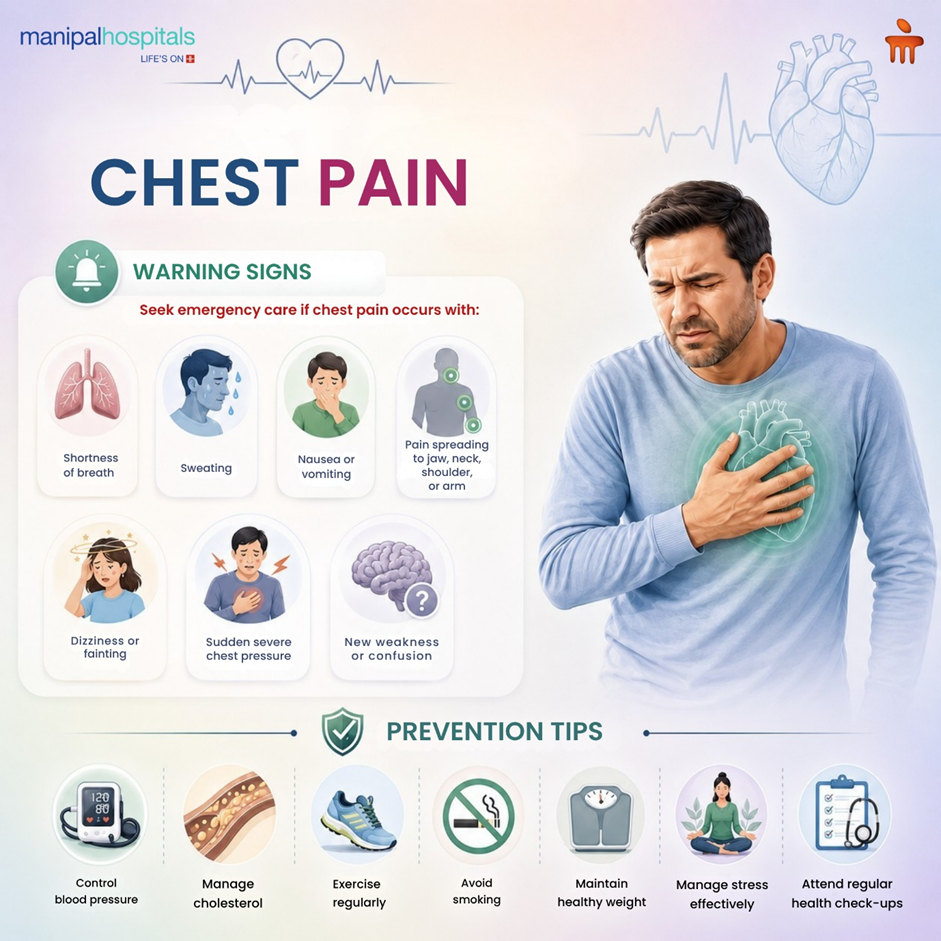
Understanding Left‑Side Chest Pain Reasons
When discomfort presents on the left side of the upper torso, a systematic evaluation is necessary to separate standard muscular strain from a vascular breakdown. Specialists analyse several common left-side chest pain reasons to trace the origin of the symptom:
-
Coronary Artery Deficits: A gradual build-up of cholesterol plaque can narrow the arteries supplying the heart muscle. During exertion, this restriction limits oxygen delivery, causing a crushing or squeezing pressure known as angina.
-
Acute Myocardial Infarction: This happens when a blood clot completely blocks a coronary artery, cutting off blood supply and causing rapid localised muscle tissue damage.
-
Pericarditis: An inflammation of the thin sac surrounding the heart (pericardium). This typically causes a sharp, piercing discomfort on the left side that often eases slightly when you lean forward.
-
Gastroesophageal Reflux (GERD): High stomach acid can back up into the oesophagus, causing a burning sensation directly behind the breastbone that easily spreads across the left side of the chest.
Respiratory and Psychological Triggers
The physical characteristics of the discomfort, especially how it changes when you move or take a breath, offer immediate diagnostic clues to your care team.
Pulmonary Mechanical Causes
If you notice distinct chest pain while breathing, coughing, or turning your torso, the source is frequently linked to the respiratory framework or the surrounding chest wall. Conditions like pleurisy, where the protective membranes lining your lungs become inflamed, cause these membranes to rub together, triggering a sharp, stabbing sensation during deep inhalations. Similarly, a lung infection like pneumonia, a blood clot in the lung (pulmonary embolism), or a simple strain of the intercostal muscles between your ribs can cause localised discomfort that peaks with respiratory movement.
The Neurobiological Link to Anxiety
Psychological distress produces tangible, systemic physical changes in the human body. There is a well-documented connection between chest pain and anxiety, particularly during a severe panic attack.
When hyperventilation or acute stress triggers your fight-or-flight response, the body experiences a sudden surge of adrenaline. This chemical rush causes rapid heart palpitations, sharp spasms in the chest wall muscles, and temporary narrowing of local blood vessels. The resulting tightness can feel remarkably like a physical cardiac event, even though the structural lines of the heart are perfectly healthy.
Strategic Diagnostic Framework
Isolating the precise trigger behind your symptoms requires a rapid, methodical clinical approach to clear up any uncertainty:
-
Frontline Electrocardiogram (ECG): This essential test tracks the electrical activity of your heart within minutes of arrival, letting clinicians check for rhythm irregularities or signs of active heart muscle strain.
-
Advanced Lab Markers: Blood draws measure specific cardiac enzymes, such as troponin. When heart muscle tissue experiences even minor stress or oxygen deprivation, it leaks these proteins into the bloodstream, providing a clear chemical flag.
-
Thoracic Imaging: Standard chest X-rays or high-resolution CT angiograms allow specialists to inspect the structural alignment of your lungs, look for signs of pneumonia, or check the integrity of the aorta.
Chest Pain Treatment Options
Resolving thoracic discomfort depends entirely on the specific organ system or pathway identified during your initial emergency workup. Medical teams do not use a single blanket treatment; they deploy targeted therapies to correct the exact root cause.
Vascular and Interventional Care
If a cardiac deficit or arterial blockage is confirmed, specialists step in with immediate vascular support:
-
Antiplatelet medications like aspirin to thin the blood and improve arterial flow.
-
Intravenous nitroglycerin to quickly dilate blood vessels and restore oxygen delivery to the heart muscle.
-
Emergency angioplasty and stenting to physically open a blocked artery and keep blood moving smoothly.
Managing Respiratory, Gastrointestinal, and Psychological Triggers
For non-cardiac issues, care focuses on calming the specific area of localised inflammation:
-
Respiratory Plans: If pleurisy or muscular strain is causing pain during breathing, targeted anti-inflammatory medications and warm compresses ease the local tissue tension.
-
Digestive Management: High-dose proton pump inhibitors (PPIs) are used to lower stomach acid, quickly cooling oesophageal burning.
-
Anxiety Interventions: When evaluation confirms a panic-related trigger, management shifts toward breathing techniques to correct hyperventilation, paired with targeted anxiolytic support.
Conclusion
Thoracic discomfort requires a careful, evidence-based approach to ensure optimal health outcomes. While global data highlights the critical importance of checking for vascular conditions early, understanding that the majority of symptoms stem from manageable respiratory, muscular, or psychological pathways helps prevent unnecessary panic. Paying attention to your body's specific indicators is the most reliable way to know when to seek expert evaluation.
For individuals seeking comprehensive diagnostic and therapeutic facilities, accessing advanced chest pain treatment in Yeshwanthpur, Manipal Hospital Yeshwanthpur, the best cardiology hospital in Yeshwanthpur, Bangalore, provides access to modern cardiac cath labs, round-the-clock emergency medicine teams, and dedicated physical rehabilitation departments that are essential for a secure recovery.
FAQ's
This occurs due to a biological phenomenon known as referred pain. Because the sensory nerves supplying the heart muscle share a common spinal pathway with the nerves tracking up your neck, jaw, and left shoulder, your brain can occasionally misinterpret a cardiac oxygen deficit as pain originating from those adjacent limbs.
Yes, if the root cause of your discomfort is severe gastroesophageal reflux or an oesophageal spasm, a liquid antacid or acid-reducing medication can calm the burning lining within minutes. However, because acid reduction will not fix a vascular issue, getting professional confirmation remains a smart safeguard.
While both can cause a rapid heart rate and tight breathing, a specialist separates them using objective clinical testing. An ECG will display specific wave changes during a heart issue, and troponin blood tests will flag actual muscle strain, both of which remain completely normal during a standard panic attack.
No. Discomfort that consistently appears during physical exertion and fades shortly after you stop moving is a classic warning sign of stable angina, indicating your heart isn't getting enough oxygen under strain. You should have a specialist evaluate your vascular health before resuming any fitness routine.
Frontline tests are completed rapidly. An initial ECG is typically recorded and read within 10 minutes of arrival, while the initial results from critical cardiac enzyme blood panels are processed by modern hospital laboratories within an hour to ensure swift decision-making.
Share this article on:


.webp "Neurological disorders symptoms and treatment")