8 Min Read
Most people know what a fracture caused by falling, accidents, or other forms of injury is. But you may also have heard doctors talk about a ‘stress fracture’ that runners, athletes, or people in certain occupations can experience. Although the name sounds similar, a stress fracture develops differently from a typical fracture. Stress fractures develop over time from repeated strain on the bone rather than one sudden impact.
Not every stress fracture needs surgery. Some heal with rest and temporary activity changes, while others need closer medical attention because the bone may not heal properly on its own.
In this article, a top orthopaedic and joint replacement specialist in Yeshwanthpur, Bengaluru, discusses what a stress fracture is, the symptoms, how they are diagnosed, and when surgery becomes part of the treatment.
Synopsis
Understanding Bone Stress Injuries
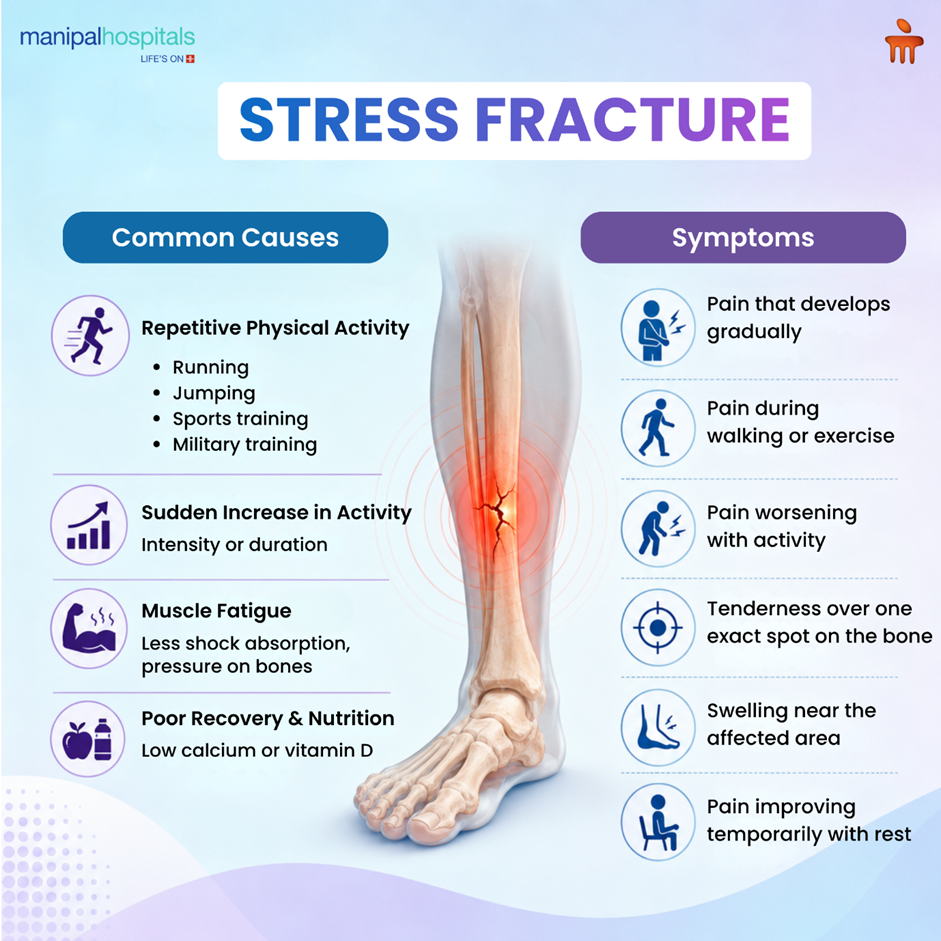
To understand what a stress fracture is, it helps to know what repeated impact can do to bone over time. Bones are constantly handling force when you walk, run, jump, or train. On a daily basis, the body repairs small amounts of stress-induced damage, but the process is quite slow. If repeated pressure continues and the body does not get enough recovery time, tiny cracks can begin to develop in the bone. Tiny cracks can begin developing inside the bone and gradually worsen.
Muscles normally help reduce the force created during running, jumping, and other physical activity. But when they become fatigued, the bones begin taking more of that repeated impact. Over time, that repeated loading starts causing damage in weight-bearing areas such as the shinbone, foot bones, heel, and sometimes even the hip.
Stress fractures are commonly seen in runners, athletes, military training recruits, and people who suddenly increase physical activity intensity or duration.
Common Signs That Should Not Be Ignored
Some stress fracture symptoms can look quite mild in the beginning. Here are the main symptoms to watch for:
-
Pain often starts slowly instead of suddenly. First, many people notice it only during running, exercise, long walks, or climbing stairs.
-
In the early stage, the pain may settle with rest. But as the stress on the bone continues, the discomfort starts returning faster and lasts longer.
-
Over time, the pain can become persistent enough to affect routine walking and standing. Some people even notice discomfort during daily movement inside the house.
-
The pain can become constant over time, making it difficult to walk or stand even during normal daily tasks at home.
-
Early stress fractures can sometimes feel similar to tendon strain or muscle injury. This phenomenon is one reason why the condition may get missed in the beginning.
Areas Where Stress Fractures Commonly Occur
A stress fracture can happen in different bones across the body, but some areas are affected far more often.
-
Shin bone: The tibia is one of the most commonly affected bones. People who run regularly or train intensely tend to develop pain here quite often.
-
Foot bones: The metatarsals in the foot also take a lot of repeated pressure. Long runs, jumping activity, and sudden increases in training can slowly strain these bones over time.
-
Heel and midfoot area: Some fractures develop in the heel bone or navicular bone. Sports with repeated landing and fast movement changes can place extra stress on this region.
-
Hip and upper leg region: Stress-related injuries can also affect the femur and pelvis. This type of injury is more likely in people involved in heavy training schedules or repetitive impact activity.
Diagnosis
Finding a stress fracture early is not always easy because the pain can feel very similar to muscle strain or tendon pain in the beginning. Doctors usually diagnose stress fractures using the following methods:
-
Physical examination: Doctors usually begin by checking the painful area for swelling and tenderness. If pressing on one small area causes noticeable pain, it may suggest a stress fracture. They may also see whether walking or standing makes the pain worse.
-
Activity history: You will be asked about recent changes in exercise, running distance, sports training, or physical work. A sudden increase in daily walking can sometimes trigger symptoms, so it’s considered.
-
X-rays: X-rays are used to look for signs of tiny fractures in suspected areas. However, X-rays sometimes can’t pick up these changes in the early stages.
-
MRI scan: An MRI can pick up early bone changes much sooner. It helps doctors see small injuries before the crack becomes larger.
-
Bone scan and CT scan: In some situations, additional scans are used when symptoms continue, but the diagnosis is still unclear.
Stress Fracture Treatment
Stress fracture treatment depends on the activity that caused it and your personal constraints:
-
Rest and activity changes: Recovery starts by stopping the activity that keeps stressing the bone. Running, jumping, intense workouts, or impact sports have to stop for a period of weeks.
-
Reducing pressure on the bone: Some people will need supportive shoes, a walking boot, braces, or crutches. Walking may need to be limited if it continues putting pressure on the injured area.
-
Managing pain and swelling: Ice helps reduce swelling and discomfort, especially after standing or moving around for long periods.
-
Healing time: Most stress fractures take around 6 to 8 weeks to heal. Certain bones take longer because they continue to handle body weight during daily movement.
-
Returning to activity: Starting training too early will slow healing and can turn a small crack into a more serious fracture. Physical activity has to return gradually.
-
Nutrition and bone support: Doctors also look at calcium and vitamin D levels because bone healing depends on proper nutritional support.
When Is Surgery Needed?
Most people with a stress fracture recover without surgery, but certain fractures do not settle even after weeks of rest and reduced activity. Surgery helps keep the bone stable while healing takes place. Surgeons use screws, pins, or other supports depending on where the fracture is located. Here are instances where surgery is needed:
-
High-risk areas: Fractures in the hip and navicular bone are more likely to need surgical treatment because these bones handle body weight throughout the day. The healing process is also slower in these areas.
-
Pain that keeps returning: Some people notice the pain improves for a short time with rest, but comes back again when activity increases.
-
Fracture becoming larger: Continuing to run, train, or push through pain can turn a very small crack into a more serious fracture.
-
Sports and heavy activity: Athletes and people involved in intense physical training sometimes need surgery to stabilise the bone before returning to high-impact activity again.
Treatment overview
While some fractures improve with rest and activity modification, others may require immobilisation, close monitoring, or surgery. The table below provides a summary of common treatment approaches for different stress fracture situations and what recovery may involve:
|
Fracture Situation |
Initial Management |
Immobilisation |
Surgery |
Recovery |
|
Mild low-risk fracture |
Rest and reduced activity |
Sometimes needed |
Rare |
Activity returns slowly after the pain settles |
|
Painful weight-bearing fracture |
Walking boot or crutches |
Often needed |
Sometimes required |
Healing takes longer because pressure continues during walking |
|
High-risk fracture |
Close monitoring and restricted activity |
Often needed |
Higher chance |
Delayed healing is more common in these areas |
|
Non-healing fracture |
Specialist evaluation and repeat scans |
Depends on severity |
Common |
Ongoing pain needs closer assessment and follow-up |
Conclusion
Not every stress fracture ends in surgery. Many people recover well once the bone gets enough rest and the repeated strain is reduced early. But persistent pain should never be ignored, especially when walking, training, or even routine movement continues causing discomfort weeks later. Delayed diagnosis can allow a small crack to become a more serious injury.
Getting the right evaluation early makes a big difference because treatment depends on the location of the fracture and how well the bone is healing. If you are looking for stress fracture treatment in Yeshwanthpur, Bangalore, our orthopaedic specialists at Manipal Hospital Yeshwanthpur can help. They can guide you completely from the assessment stage to imaging, treatment planning, and recovery guidance based on your condition. Talk to our specialist today.
FAQ's
Yes. Most stress fractures heal with rest, reduced activity, and proper support for the affected bone. Surgery is only needed when the fracture is not healing properly or the crack becomes more serious.
Many stress fractures take around 6 to 8 weeks to heal. Some bones take longer because they continue handling body weight during walking and daily movement.
Not always. Early stress fractures often do not appear on X-rays. This is why doctors sometimes advise an MRI when pain continues despite a normal X-ray.
The pain often starts gradually and becomes worse with walking, running, or exercise. Unlike muscle soreness, the pain is usually felt at one exact spot on the bone.
Some people can still walk in the early stage, but continuing to put pressure on the bone can worsen the crack and delay healing.
Share this article on:


.webp "Neurological disorders symptoms and treatment")