7 Min Read
Pain around the hip and upper thigh can feel like it is coming from one single spot. Many people describe this as thigh joint pain, even when the source is the hip joint or nearby tissues. The discomfort may be felt in the groin in some people. Others notice it on the outer side of the hip or along the upper thigh. At times, it can even extend toward the lower back. The exact location and how the pain behaves during movement give important clinical clues.
The hip lies very close to the upper thigh, so pain at the hip and thigh joint often overlaps and feels difficult to separate. In most cases, the cause may involve the joint itself, surrounding muscles or tendons, or sometimes irritation of nearby nerves.
In this we bring expert clinical insights from a top orthopaedic hospital in Yelahanka, Bangalore, to help you understand the causes for your upper thigh pain and discomfort.
Synopsis
Why Pain Is Felt in the Hip and Thigh Together
The location of pain provides one of the most useful clinical clues. Pain felt on the outer side of the hip or upper thigh often comes from muscles, tendons, or ligaments. It may increase with movement, pressure, or certain positions. Discomfort that feels deeper, especially inside the joint or near the groin, may point toward structures like bone or cartilage within the hip joint.
The hip joint sits close to several important structures in the middle of the body; the pain does not always stay in one place. It can spread to the groin, move along the upper thigh, or even extend toward the lower back. Because of this overlap, many people feel the pain across both regions and describe it as coming from the thigh, even when the source lies in or around the hip.
What Your Pain Pattern May Indicate
Pain around the hip and upper thigh rarely appears at random. It often follows a pattern, and those patterns can offer valuable clinical clues. By paying attention to where the discomfort starts, what triggers it, and how it feels, it becomes easier to narrow down the likely cause. The table below breaks down common pain patterns and what they may suggest:
|
Pain pattern or trigger |
What it may suggest |
Associated signs |
|
Pain felt deep in the groin area |
Problem within the hip joint, such as labral involvement or joint wear |
Stiffness, reduced range of motion |
|
Pain along the outer hip or extending into the upper thigh |
Inflammation of bursae or irritation of tendons |
Pain while lying on one side, tenderness to touch |
|
Pain when pressing or activating the hip flexor or groin muscles |
Core muscle injury or strain |
Pain during lifting the leg or sudden movements |
|
Sensation of clicking, locking, or catching inside the hip |
Structural issues, such as a labral tear |
A feeling of the joint getting stuck during movement |
|
Burning, tingling, or numbness along the outer thigh |
Nerve-related irritation |
Altered sensation rather than deep joint pain |
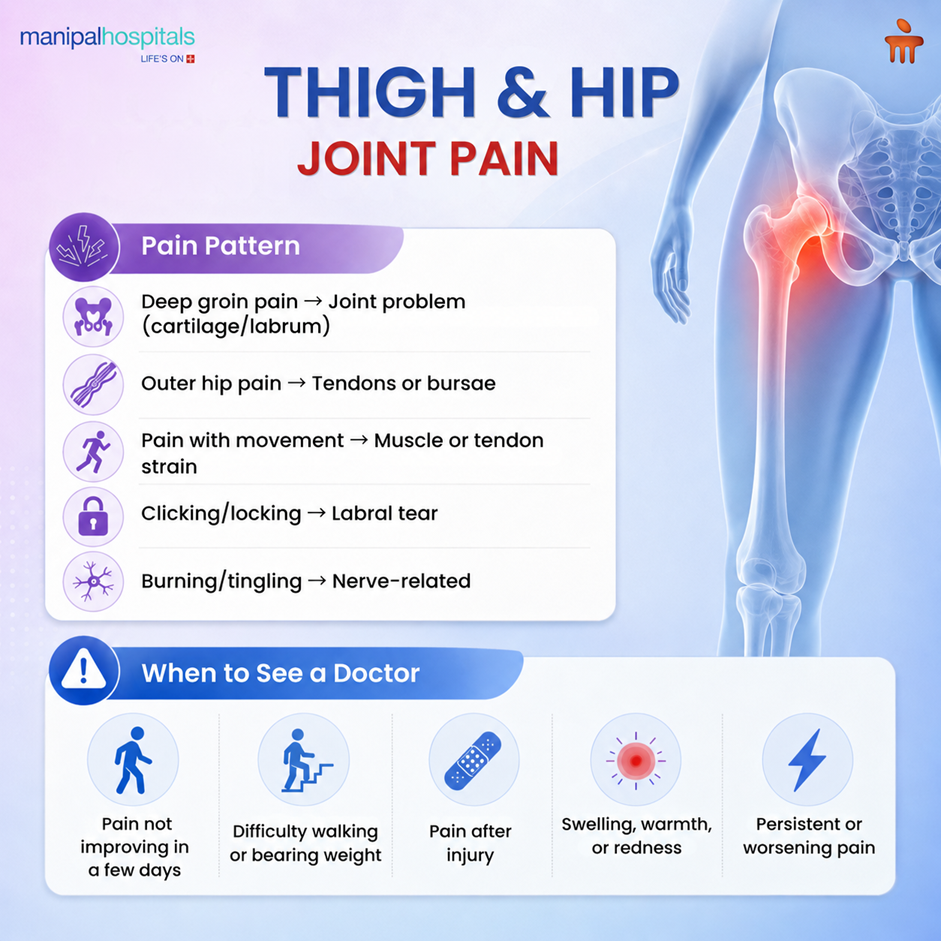
Common Causes of Thigh and Hip Joint Pain
Different structures around the hip can give pain. The pattern changes based on what is involved.
-
Core Muscle Injury: This involves a strain in the lower abdomen or groin muscles, usually after a sudden movement or twist. The pain will start off at the groin and then progress to the upper part of the thigh. The pain subsides when resting but recurs with activities.
-
Bursitis: The term "bursitis" refers to the inflammation of the bursae found in the hip region. Bursitis is characterised by pain in the outside region of the hip joint. This pain can radiate to the thighs and becomes more pronounced when lying on the affected side.
-
Tendonitis: Tendonitis happens when the tendons around the hip are overused. The pain comes on slowly, feels worse with movement like climbing stairs, eases with rest, and then returns again.
-
Labral Tear: A labral tear is damage to the cartilage inside the hip joint. It typically causes deep pain in the hip or groin. Some people may notice a clicking or catching feeling during movement, along with stiffness after sitting for long periods.
-
Hip Impingement: Hip impingement is a condition that occurs when there is poor articulation of movement between the bones of the hip joint. Such a problem is painful when one bends or twists the hip joints.
-
Osteoarthritis: This condition is a disease that comes about from the gradual erosion of the cartilage in the hip joint. The disease brings with it aching pain, particularly in the groin or thigh region. There is always stiffness in movement when suffering from this type of arthritis.
Nerve-Related Causes of Upper Thigh Pain
Not all upper thigh pain comes from muscles or joints. In some cases, the cause is related to nerves.
-
Peripheral Neuropathy: This condition affects the nerves that carry signals between the brain and body. It may feel like burning, tingling, or numbness, sometimes with sharp pain along the thigh, and the area can feel sensitive when touched.
-
Meralgia Paresthetica: This occurs when a nerve along the outer thigh is compressed. The pain is usually felt closer to the skin rather than deep inside. It may cause burning, numbness, or sensitivity on the outer thigh. Symptoms often worsen with standing, walking, or wearing tight clothing around the waist.
-
Referred Pain from the Lower Back: Sometimes, pain felt in the upper thigh actually starts in the lower back. It may feel sharp, shooting, or electric and can travel down the thigh. Certain movements, like bending or sitting, may trigger it, and the thigh itself may not feel tender when pressed.
Treatment For Thigh Joint Pain
Treatment depends on the underlying cause of the pain. Once identified, the approach can be adjusted accordingly.
-
Rest and reduce activity for a few days in cases of strain or overuse
-
Apply ice packs to reduce local irritation, especially in conditions like bursitis
-
Use pain relief medication if discomfort affects walking, sitting, or sleep
-
Start physiotherapy to improve movement, reduce stiffness, and strengthen muscles
-
Introduce exercises gradually to avoid further strain
-
Avoid certain movements temporarily, especially in conditions like hip impingement
-
Consider targeted injections if pain persists or keeps returning
-
Surgery may be discussed in cases like a labral tear if symptoms do not improve
When to See a Doctor
Some pain settles on its own, but if it doesn’t improve or affects your movement, it’s best to get it checked.
You should consider seeing a doctor if:
-
Pain lasts for several days or keeps getting worse
-
You start changing how you walk, sit, or move because of the discomfort
-
The pain began after a fall, twist, or injury
-
You find it difficult to move your leg or put weight on it
-
The pain in the upper thigh remains strong even with rest
-
There is swelling along with warmth or redness over the area
-
The area feels unusually tender compared to the other side
-
Pain while walking feels sharp or different from usual
Conclusion
Pain around the hip and upper thigh can feel confusing because it does not stay in one place. In some people, it starts deep in the joint. In others, it comes from muscles, tendons, or even a nerve. The way the pain behaves often gives more useful clues than the exact spot. If the pain is not settling, keeps coming back, or starts affecting how you move, it is better to get it checked. For proper evaluation and care, you can consult the best ortho doctors in Yelahanka, Bangalore, at Manipal Hospital Yelahanka.
FAQ's
It often means the problem is somewhere around the hip. If you feel it more in the groin, the joint itself may be involved. When the pain is on the outer side, it is more likely to come from the tissues around it.
A simple strain, irritation in the tissues, early joint wear, or a small tear inside the joint can all cause it. The way the pain comes and goes, or what worsens it, helps narrow it down.
Yes, it can. The pain is usually felt deep inside the hip or near the groin. At times, it spreads into the upper thigh. Some people also notice a small click or a catching feeling when they move.
If it feels like burning, tingling, or numbness, it is less likely to be the joint. Nerve pain can also travel down from the lower back into the thigh.
If it doesn't improve after a few days or you change how you walk, it's worth getting checked. Better to look at it early than wait for it to get worse.
Share this article on: