8 Min Read
Sleep does not always come when you want it to. You might lie in bed with a mind that will not quieten, or you drift off only to wake at three in the morning and stare at the ceiling. When restful nights feel out of reach, it is natural to look for solutions that do not involve heavy medication. Magnesium is one of those remedies that keeps coming up in conversation, and you may be wondering, does magnesium help you sleep, or is it just another health trend?
Magnesium does not function like a prescription sleeping pill; it does not force your brain to shut down or artificially cause drowsiness. Instead, it interacts with several chemical pathways in your body to help your nervous system transition into a calm state, making it easier for natural sleep to occur. Understanding the actual science behind this mineral helps you make practical choices for your evening routine.
In this blog, we present clinical insights from experts at the best neurology hospital in Yelahanka, Bangalore, exploring the connection between magnesium and sleep, the science behind its effects on the body, its potential benefits, and how to use it safely as part of a healthy sleep routine.
Synopsis
How Magnesium Interacts with Your Nervous System
To determine if magnesium is good for sleep, we need to look at how it influences the brain's biochemistry. Falling asleep requires a coordinated chemical shift where your brain decreases alert-inducing signals and increases calming signals.
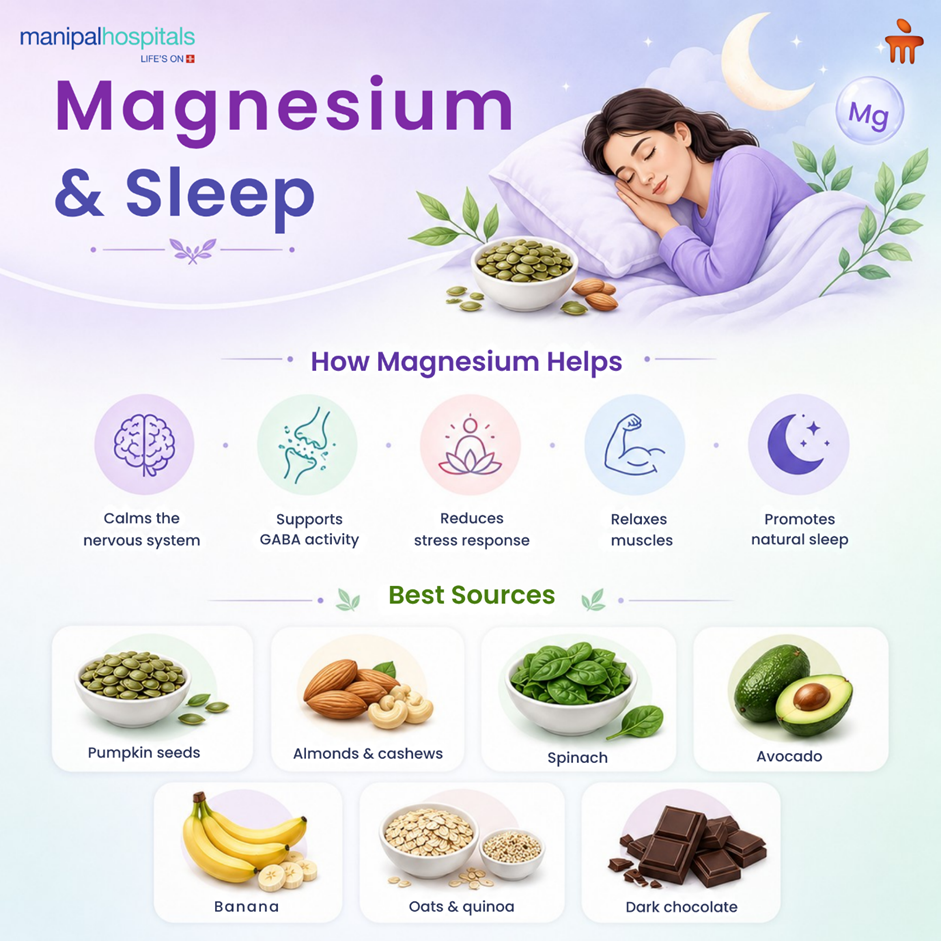
Magnesium plays a direct role in managing this chemical balance:
-
Supporting Calming Signals: Magnesium binds to and activates gamma-aminobutyric acid (GABA) receptors in the brain. GABA is a calming chemical that slows down nerve activity. By supporting GABA, magnesium helps quiet a busy, racing mind.
-
Blocking Alert Signals: The mineral acts as a natural block at the NMDA receptor, a site where an alert-inducing brain chemical called glutamate binds. When magnesium occupies this site, it prevents nerve cells from over-firing, reducing mental overstimulation.
-
Regulating Stress Hormones: Cortisol is your body's primary stress hormone. It naturally peaks in the morning to help you wake up and drops at night to let you sleep. When you are under chronic stress, evening cortisol stays high. Research indicates that maintaining healthy magnesium levels stabilises your stress response system, allowing evening cortisol to decline naturally.
-
Easing Muscle Tension: At a cellular level, calcium causes muscle fibres to contract, while magnesium causes them to release. If your body lacks sufficient magnesium, your muscles cannot fully relax, which can cause physical restlessness, jaw clenching, or leg cramps at night.
Comparing Forms of Magnesium for Sleep Support
Not all magnesium supplements are processed by the body in the same way. The specific compound that the magnesium is bound to changes how well it is absorbed by your digestive tract and how it affects your system.
|
Magnesium Type |
Chemical Pairing |
Bioavailability (Absorption) |
Primary Use Case and Effects |
|
Magnesium Glycinate |
Bound to glycine, a calming amino acid. |
High absorption; very gentle on the stomach and intestinal tract. |
Highly recommended for relaxation and sleep quality; glycine also assists in lowering core body temperature. |
|
Magnesium Citrate |
Bound to citric acid. |
High absorption; easily processed by the digestive system. |
Helpful for correcting a general deficiency, but can cause a laxative effect if taken in larger doses. |
|
Magnesium L-Threonate |
Bound to threonine acid. |
High; specifically, it passes through the blood-brain barrier. |
Used primarily to support brain tissue levels, manage mental stress, and reduce nighttime anxiety. |
|
Magnesium Oxide |
Bound to oxygen. |
Low; poorly absorbed by human tissue. |
Less expensive, but mostly stays in the digestive tract; less effective for systemic sleep or muscle relaxation. |
Maximising Nutrient Intake: Magnesium-Rich Foods for Sleep
While supplements are a common option, clinical guidelines suggest focusing on your diet first. Relying on magnesium-rich foods for sleep ensures your body receives the mineral alongside other essential nutrients that aid absorption, such as dietary fibre and healthy fats.
To meet the recommended daily intake of 310 to 420 milligrams, you can incorporate these nutrient-dense options into your daily meals:
-
Seeds and Nuts: Pumpkin seeds are exceptionally high in magnesium, providing roughly 150 milligrams per ounce. Almonds, cashews, and chia seeds are also excellent sources.
-
Leafy Greens: Cooked spinach and Swiss chard provide approximately 75 to 80 milligrams per half-cup, making them highly effective dietary choices.
-
Whole Grains: Incorporating quinoa, oats, and whole wheat into your diet supports baseline mineral levels throughout the day.
-
Avocados and Bananas: One medium avocado provides about 58 milligrams of magnesium, while a banana offers a steady dose alongside potassium to prevent muscle twitches.
-
Dark Chocolate: An ounce of high-quality dark chocolate (70% or higher) contains around 64 milligrams of magnesium, making it a practical evening option.
How to Introduce Magnesium into Your Routine
If you decide to try using magnesium for better sleep, how you introduce it matters. Following a systematic approach ensures you avoid digestive discomfort and get the best results.
-
Verify Your Kidney Health and Current Medications: Consult your doctor first.
-
Before starting any daily mineral supplement, verify that your kidneys are functioning normally, as your kidneys are responsible for filtering out excess magnesium. You should also check for interactions with any medications you take, such as antibiotics or blood pressure pills.People with chronic kidney disease should seek medical advice before using magnesium supplements due to altered magnesium clearance.
-
-
Select an Absorbable Form and Determine Your Dosage: Start with a low dose.
-
Choose an easily absorbed form like magnesium glycinate. Start with a modest dose of 100 to 150 milligrams to see how your stomach responds before gradually increasing it toward the standard recommended night dose of 200 to 350 milligrams if needed.
-
-
Time Your Consumption with Your Evening Routine: 30 minutes to 2 hours before bed.
-
Take your supplement or eat your magnesium-rich snack in the evening. Because magnesium works by preparing your physiology for rest rather than forcing you to sleep, giving it an hour or two to absorb allows the calming pathways to initialise before your head hits the pillow.
-
Understanding the Limits of Mineral Support
It is important to remember that magnesium is not a universal cure for every type of chronic sleep disruption. If your insomnia is caused by environmental factors like a loud room, excessive late-night screen use, drinking alcohol before bed, or irregular shift work, a mineral supplement cannot override those disruptions.
Furthermore, if you are living with a clinical sleep disorder, such as obstructive sleep apnea (where breathing repeatedly stops and starts) or chronic restless legs syndrome, lifestyle adjustments alone are rarely enough. If your sleep remains fragmented despite maintaining healthy mineral levels and good evening habits, it is practical to look into specialised sleep disorder treatment.
When Magnesium Alone Is Not Enough
If you have been increasing magnesium through diet and supplements, have solid sleep hygiene, and still cannot get restorative rest, there may be an underlying sleep disorder. Conditions like chronic insomnia, obstructive sleep apnoea, or periodic limb movement disorder need proper diagnosis and treatment.
Signs that it is time to see a specialist include:
-
Loud snoring, gasping, or choking during sleep
-
Leg movements that keep you or your partner awake
-
Persistent difficulty falling or staying asleep despite good habits
-
Daytime sleepiness so severe it affects work or driving
Ignoring these signs can lead to long-term health problems that go far beyond feeling exhausted. This situation is where professional help makes all the difference.
Conclusion
Magnesium is not magic, but it is a mineral with real, measurable effects on the nervous system. The answer to "Does magnesium help you sleep?" is a careful yes, particularly when your body is low on it or when stress and muscle tension are stealing your rest. Eating magnesium-rich foods for sleep and considering a supplement under guidance are sensible, low-risk steps.
If the problem runs deeper, knowing that professional sleep disorder treatment in Yelahanka, Bangalore, is available means you do not have to face another exhausted day without answers. Consult the sleep specialists at Manipal Hospital Yelahanka for expert evaluation and personalised treatment to help you achieve better sleep.
FAQ's
For most people, taking magnesium nightly is safe when you stay within recommended doses. The body excretes excess magnesium through the kidneys. However, anyone with kidney disease should not take magnesium supplements without a doctor’s supervision. Long-term use at high doses can cause diarrhoea or stomach irritation.
Some people feel calmer the very first night they take it, especially if they have been deficient. For others, it may take a week or two of consistent use before sleep quality improves noticeably. Giving it at least two weeks while also practising good sleep hygiene gives you a fair assessment.
Yes. Magnesium glycinate is generally preferred for sleep because it is well absorbed and the glycine component adds a calming effect. Magnesium citrate is also absorbable but can loosen stools. Magnesium oxide is poorly absorbed and not ideal. Choose a form that your body tolerates and that research supports.
Magnesium can be helpful for children with sleep difficulties, but dosage must be carefully adjusted based on age and weight. It is essential to consult a pediatrician before starting any supplement. Often, increasing magnesium-rich foods is the safer first step for younger age groups.
If you have been consistent with magnesium and a regular sleep schedule, but still wake up exhausted or cannot fall asleep, it is time to see a sleep specialist. An underlying sleep disorder like sleep apnoea, restless legs syndrome, or chronic insomnia may be present. A proper assessment can identify the issue and open up treatment options that actually work.
Share this article on: