6 Min Read
Anaemia in chronic kidney disease is a common yet often under-recognised complication that can significantly affect overall health and quality of life. Kidney disease and anaemia are often seen together. As kidney damage increases, the risk of anaemia also rises. Many people with later stages of kidney disease experience this problem. Understanding anaemia in chronic kidney disease at an early stage can help in getting the right care and managing the condition better. In this blog, an experienced nephrologist in Yelahanka, Bangalore helps you understand why anaemia is so common in chronic kidney disease, what symptoms to watch for, and how timely care can make a meaningful difference.
Synopsis
Why Anaemia Follows Chronic Kidney Disease
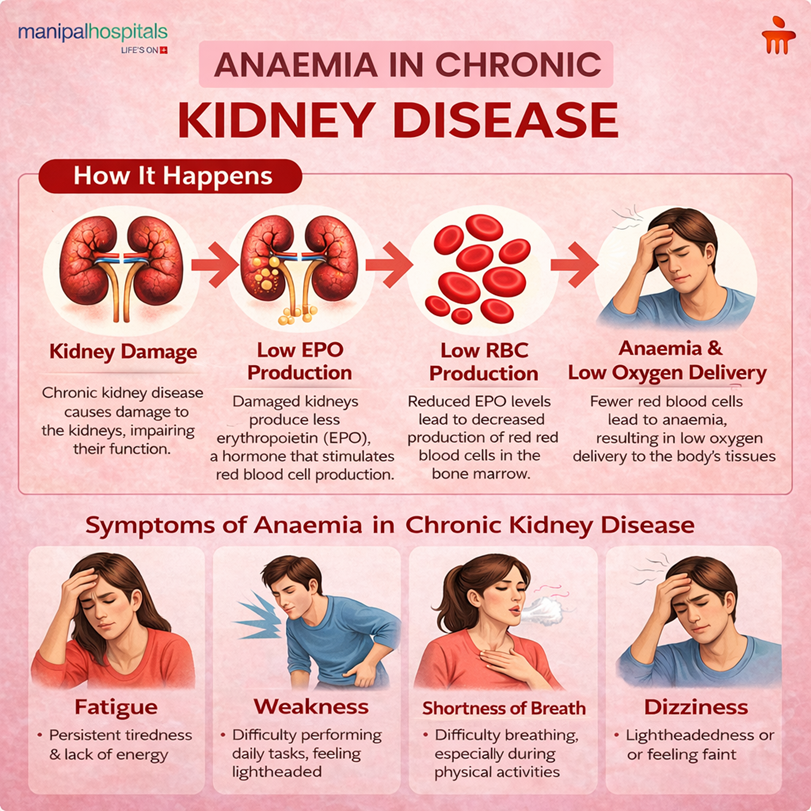
Kidneys are vital organs that do more than filtering wastes. They produce a hormone called erythropoietin, which signals the bone marrow to produce red blood cells (RBCs). In chronic kidney disease condition, the functional capacity of kidney declines notably. Understandably, the production of erythropoietin decreases too. This ultimately results in decreased production of RBCs. Since RBCs are the primary carriers of oxygen, a reduced number of red blood cells leads to lower oxygen delivery to tissues, resulting in anaemia.
Iron also plays a role. It is needed to make haemoglobin, which carries oxygen. In people with kidney disease and anaemia, iron levels are often low, which further affects red blood cell production. Other factors include blood loss during dialysis and ongoing infection or inflammation. Often, more than one cause is involved, so proper evaluation is important before treatment.
Types of Anaemia in Chronic Kidney Disease
In anaemia in chronic kidney disease, more than one problem can affect how red blood cells are made. Common types seen in kidney disease and anaemia include:
-
Iron-deficiency anaemia: it happens when the body does not have enough iron to make haemoglobin. This can be linked to blood loss or the body not absorbing iron properly.
-
Vitamin deficiency anaemia: this is caused by low levels of vitamin B12 or folic acid. Poor diet or problems with absorption in the digestive system can lead to this.
-
EPO deficiency anaemia: this condition is where the kidneys do not produce enough erythropoietin (EPO). This hormone signals the bone marrow to make red blood cells, and low levels directly reduce their production.
How Common Is Anaemia in CKD?
Anaemia in chronic kidney disease (CKD) becomes more common as the condition progresses. In the early stages, there may not be any clear symptoms. As kidney function gets worse, it becomes harder for the body to keep red blood cell levels normal.
Over time, kidney disease and anaemia are often seen together. Studies suggest that anaemia affects a significant number of people with CKD, and the risk increases in later stages. In advanced kidney disease or kidney failure, anaemia is very common.
Certain groups have a higher risk, including people undergoing dialysis and those with diabetes. These conditions can further affect how red blood cells are produced and maintained. Because the risk develops gradually, regular testing is important. Early detection helps manage anaemia in chronic kidney disease before it starts affecting daily energy and overall health.
Symptoms of Anaemia in Kidney Disease
Anaemia and kidney disease symptoms may take time to become noticeable. Many people feel more tired than usual and may not understand why. This happens because there are fewer red blood cells to carry oxygen. As a result, the body feels low on energy.
Common symptoms include:
-
Feeling tired most of the time, even after rest
-
Weakness or difficulty doing regular activities
-
Shortness of breath during simple tasks like walking or climbing stairs
As anaemia in chronic kidney disease progresses, these symptoms become more noticeable. Tasks that once felt easy may start to feel tiring, and even small efforts can leave a person feeling drained. These signs can be similar to symptoms of kidney disease itself, so they are often missed in the early stages.
How Anaemia in CKD Is Diagnosed
Diagnosing anaemia in chronic kidney disease involves looking at a few key factors together:
-
Blood tests are the first step. They are needed to check the exact haemoglobin levels and confirm if red blood cell counts are low. Bloodwork can also give many other clues that indicate anaemia caused by CKD.
-
Medical history is then reviewed to check for the stage of kidney disease, ongoing treatments, and any past issues related to anaemia.
-
Symptoms like tiredness, weakness, or shortness of breath are considered to support the diagnosis.
Early detection allows timely kidney disease anaemia treatment, which can help manage symptoms and prevent further complications.
Kidney Disease Anaemia Treatment Options
Treatment for kidney disease anaemia depends on the cause of low red blood cell levels. The aim is to improve oxygen supply in the body and reduce symptoms.
-
Iron supplementation: Iron is needed to make haemoglobin. If levels are low, iron supplements may be given along with advice on iron-rich foods. Tablets are commonly used, but in some cases, iron may be given through an IV.
-
Medicines to increase red blood cell production: If the kidneys are not making enough erythropoietin, medicines may be used to help the body produce more red blood cells. These are given based on individual needs and monitored regularly.
-
Managing the underlying kidney condition: Treatment also focuses on managing kidney disease. Better control of kidney health can support blood production. Regular follow-up and addressing factors like inflammation are also important.
When to Seek Medical Help
It is important to pay attention to symptoms and seek medical advice at the right time.
-
Ongoing tiredness that does not improve with rest
-
Shortness of breath during normal daily activities
-
Feeling dizzy or light-headed
-
Pale skin or a general feeling of weakness
-
Symptoms are getting worse over time
-
Living with kidney disease and not having regular check-ups
-
Any sudden change in symptoms or new symptoms appearing
Conclusion
Anaemia is a common complication in chronic kidney disease, but it can be managed with the right approach and timely care. Early identification plays an important role in preventing the condition from worsening and affecting daily life.
Recognising symptoms early on is necessary to reduce complications. Then, regular monitoring and following the prescribed treatment plan also support improved energy levels and overall health.
For timely diagnosis and expert care, consult our expert nephrologists at Manipal Hospital Yelahanka for proper evaluation and structured management of anaemia related to kidney disease, including anaemia in kidney disease treatment in Yelahanka.
FAQ's
In chronic kidney disease, the kidneys do not produce enough erythropoietin. This hormone is needed to make red blood cells. Along with that, low iron levels, vitamin deficiencies, or ongoing inflammation collectively affect the body’s ability to produce healthy red blood cells and carry oxygen efficiently, leading to anaemia in chronic kidney disease.
Yes, it can be managed with the right approach. Treatment depends on the cause and may include iron supplements or medicines that help the body produce more red blood cells. Early diagnosis makes treatment more effective.
Common anaemia kidney disease symptoms include feeling tired more often, low energy, weakness, and sometimes shortness of breath. These signs can be mild in the beginning, so they are easy to ignore.
Kidneys help control red blood cell production through a hormone. When kidney function drops, the body does not get enough of this signal, which slows down the production process.
If tiredness, weakness, or breathlessness continue for a while or start affecting daily life, it is better to get checked. Early evaluation helps in starting the right kidney disease anaemia treatment and avoiding further complications.
Share this article on: