9 Min Read
Have you ever looked at your blood test results and wondered if your creatinine levels are normal? A creatinine test is often part of a routine health checkup because it gives you important information about how well your kidneys are working. Creatinine is a byproduct of normal muscle metabolism. Healthy kidneys take creatinine out of the blood and get rid of it through urine. Creatinine levels may increase when the kidneys do not filter waste effectively. However, normal creatinine levels can vary with factors such as age, sex, muscle mass, and overall health.
In this blog, we discuss insights from the best nephrology experts in Yelahanka, Bangalore; normal creatinine levels by age; when to worry about creatinine levels; and what your test results could mean.
Synopsis
- What is Creatinine?
- What Are Creatinine Levels and Why Are They Important?
- Normal Creatinine Levels in the Body
- Factors That Affect Creatinine Levels
- Signs of Abnormal Creatinine Levels and When to Worry About Creatinine Levels
- Risk Factors for Kidney Problems
- How to Do Creatinine Tests
- How to Keep Your Creatinine Levels Healthy
- In conclusion
What is Creatinine?
When you use your muscles, they use a chemical called creatine phosphate for energy, and produce creatinine as a waste product. Creatinine is produced at a relatively steady rate from muscle metabolism, and the kidneys filter it from the blood. Because of this steady production and reliable filtration, doctors use creatinine as a marker to estimate how well the kidneys are filtering waste. As a rule of thumb, a normal creatinine level in your blood or urine indicates your kidneys are working well.
What Are Creatinine Levels and Why Are They Important?
Measuring creatinine levels in blood or urine is one of the simplest ways to check kidney health. Through this, healthcare providers can get an idea of how efficiently the kidneys are working. A creatinine test may be suggested to:
-
Check how well the kidneys are working.
-
Diagnose or monitor kidney dysfunction.
-
Screen for any factors that may affect kidney function.
-
Understand the factors affecting creatinine levels, such as sugar and blood pressure.
-
Monitor kidney function post-kidney transplant.
For a more accurate assessment, creatinine testing is often done along with other tests, like the estimated glomerular filtration rate (eGFR).
Normal Creatinine Levels in the Body
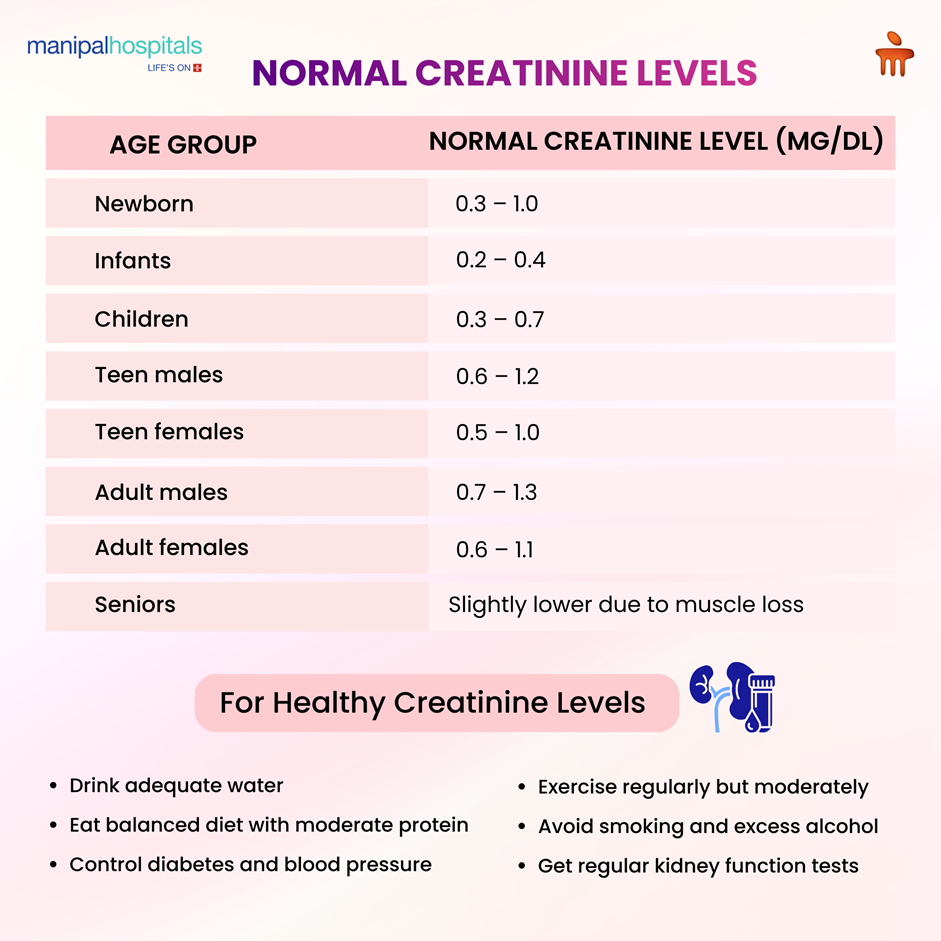
The normal range for creatinine levels is usually between these values, but it can vary a little depending on the laboratory. The following is an easy guide for understanding normal creatinine levels (mg/dL) as per age groups:
|
Age Group |
Normal Level (mg/dL) |
Notes |
|
Newborn to 1 month |
0.3-1.0 |
Higher levels immediately after birth due to maternal creatinine |
|
Infant (1-12 months) |
0.2-0.4 |
Lowest levels due to low muscle mass |
|
Children (1-12 years) |
0.3-0.7 |
Stable range and gradually increases with age and muscle development |
|
Teen (13-17 years) |
Male: 0.6-1.2 Female: 0.5-1.0 |
Persistent higher levels should be noted |
|
Adult (18-59 years) |
Male: 0.7-1.3 Female: 0.6-1.1 |
Range may fluctuate due to diet or hydration |
|
Seniors (60+ years) |
Male: 0.7-1.2 Female: 0.6-1.0 |
Regular monitoring of the levels is important |
The main reason for these differences is that men usually have more muscle mass than women. Age also affects what is considered normal for a person. As people age, their muscle mass slowly decreases, which can slightly lower the amount of creatinine they make.
Factors That Affect Creatinine Levels
Kidney function is not the only factor that affects creatinine levels. Factors, such as diet, hydration, exercise, and muscle mass, can also influence the range seen in a blood test. Understanding these influences can help explain why creatinine levels sometimes fluctuate.
-
Muscle Mass: People with more muscle mass tend to have higher creatinine levels.
-
Age: Older people tend to make less creatinine because they have less muscle mass.
-
Food: Eating a lot of cooked meat or a high-protein diet can temporarily raise creatinine levels.
-
Dehydration: Insufficient fluid intake can cause creatinine to build up in your blood.
-
Medications: Some drugs can change how the kidneys work and raise the levels of creatinine.
-
Intense Workouts: Exercise increases muscle breakdown and creatine metabolism, which may temporarily elevate creatinine. In such cases, the fluctuations in creatinine levels do not particularly indicate kidney health.
-
Pregnancy: Increased blood volume during pregnancy lowers creatinine levels in the body.
Signs of Abnormal Creatinine Levels and When to Worry About Creatinine Levels
While fluctuations in creatinine levels do not show any signs in particular, your body will give some signals to indicate declining function. In such cases, the doctor may suggest a test to check creatinine levels to further diagnose the issue.
|
Creatinine Level |
Males (mg/dL) |
Females (mg/dL) |
|
Low |
below 0.7 |
below 0.6 |
|
Normal |
0.7-1.3 |
0.6-1.1 |
|
High |
above 1.3 |
above 1.1 |
Note: Exact ranges may vary depending on laboratory standards.
Creatinine levels may be high or low depending on various factors. Usually, a low level is caused by reduced muscle mass or liver malfunction. Some symptoms that occur alongside low creatinine levels include:
-
Muscle weakness or atrophy
-
Unexplained weight loss
-
Malnutrition
-
Feeling tired and weak
Similarly, some symptoms that can show up alongside high creatinine levels include:
-
Fluid retention and swelling
-
Less urine output
-
Confusion or difficulty focusing
-
Reduced appetite or hunger
-
Disturbed sleep patterns
In the case of such symptoms, doctors may suggest tests, such as:
-
eGFR test
-
Test for albumin in the urine
-
Imaging of the kidneys
-
Test for blood urea nitrogen (BUN)
Doctors rarely interpret creatinine alone. Instead, they calculate the estimated glomerular filtration rate (eGFR) using creatinine, age, sex, and sometimes race. eGFR gives a clearer estimate of how efficiently the kidneys are filtering blood. Accordingly, early detection of kidney problems makes it easier to take care of them.
Risk Factors for Kidney Problems
Some people have a higher risk of developing kidney problems due to underlying health conditions or lifestyle habits. Knowing these risk factors can help individuals monitor their kidney health more closely. The following factors increase the risk of getting kidney problems:
-
Diabetes
-
High Blood Pressure
-
Cardiovascular Disease
-
Obesity or Being Overweight
-
Smoking or Overuse of Alcohol
-
Age Over 60 Years
How to Do Creatinine Tests
Doctors usually check creatinine levels with simple lab tests. For a blood creatinine test, a blood sample is taken to measure the amount of creatinine in your blood. This gives a clear picture of your kidney function. Creatinine clearance tests are done in three formats, testing different elements in the body:
-
Creatinine in the Blood: Checks the level of creatinine in the blood
-
Creatinine in urine: Measures how much creatinine is in your urine
-
Clearance of Creatinine: Checks how well the kidneys filter blood
How to Keep Your Creatinine Levels Healthy
Keeping your kidneys healthy plays an important role in maintaining normal creatinine levels. Simple lifestyle habits, including proper hydration, balanced nutrition, and managing chronic conditions, can help support kidney function.
-
Eat a Balanced Diet: Drink sufficient water and include fruits, vegetables, whole grains, and moderate protein in your meals.
-
Take Care of Long-Term Health Issues: Managing diabetes and high blood pressure properly helps keep your kidneys healthy.
-
Maintain Moderate Physical Activity: Regular exercise is good for health, but avoid intense workouts right before a blood test.
-
Avoid excessive alcohol and quit smoking: Over time, both habits can hurt your kidneys; thus, it is ideal to entirely stop engaging in such activities.
In conclusion
Understanding your creatinine levels is important for kidney health. The normal range depends on your age, sex, muscle mass, and overall health. While normal levels can vary, consistently high results may point to kidney problems. Adults and seniors can keep their creatinine levels in a safe range by getting regular health checkups, living a healthy lifestyle, and getting medical attention early. If you're not sure what your results mean or when you should start to worry about your creatinine levels, talking to a doctor can help you understand.
Book an appointment with top nephrology specialists at Manipal Hospital Yelahanka for prompt evaluation and specialist care.
FAQ's
The normal range for creatinine levels in adults is usually between 0.6 and 1.3 mg/dL, but this can vary based on sex and muscle mass.
Yes, depending on the cause. Temporary factors, such as dehydration, intense exercise, or certain medications, may cause a short-term rise in creatinine. Once the underlying issue is addressed, levels may return to normal.
Not necessarily. Creatinine levels can increase due to dehydration, high protein intake, muscle injury, or certain medications. Doctors usually interpret creatinine together with eGFR and other tests before diagnosing kidney disease.
Yes. When you are dehydrated, your blood has less fluid to dilute waste products, which can temporarily raise creatinine levels.
Taking care of underlying health problems, drinking enough water, eating a balanced diet, and following your doctor's advice can all help keep your creatinine levels in check.
Share this article on: