8 Min Read
Can everyday habits play a role in protecting heart health beyond medications?
Rising cholesterol is a common risk factor for heart disease that often goes unnoticed. Nearly 4 out of 10 adults have borderline or high cholesterol, usually without realising it. Knowing the cholesterol range that’s healthy, choosing cholesterol-reducing foods, and using sensible lifestyle measures are practical steps anyone can take. This blog lays out 10 evidence-based, natural approaches, from diet and exercise to supplements and sleep hygiene.
Synopsis
What is Cholesterol, and Why Do Levels Matter?
Cholesterol is a waxy substance the body needs for hormones, cell membranes, and vitamin D. Problems arise when total cholesterol, low-density lipoprotein (LDL), or triglycerides are high and high-density lipoprotein (HDL) is low.
The balance between these, often noted as HDL and LDL levels, determines cardiovascular risk. Tracking cholesterol levels helps to spot risk early.
What Do Cholesterol Numbers Mean?
|
Test |
Desirable |
Borderline |
High |
|
Total cholesterol |
< 200 mg/dL |
200-239 mg/dL |
≥ 240 mg/dL |
|
LDL (bad) |
< 100 mg/dL |
100 - 159 mg/dL |
≥ 160 mg/dL |
|
HDL (good) |
≥ 60 mg/dL (protective) |
40 - 59 mg/dL |
< 40 mg/dL (low) |
|
Triglycerides |
< 150 mg/dL |
150 - 199 mg/dL |
≥ 200 mg/dL |
Discuss personal targets with a clinician because the cholesterol range considered safe can change if you have diabetes or heart disease.
When Diet Alone May Not Be Enough to Lower LDL?
While lifestyle changes play a key role in managing cholesterol, it is important to understand that elevated LDL cholesterol does not always respond sufficiently to diet alone. In some individuals, genetic conditions such as familial hypercholesterolemia or metabolic factors can cause persistently high LDL levels despite healthy eating and regular exercise. In such situations, dietary changes remain important for overall cardiovascular health, but medications are often required alongside lifestyle measures to effectively reduce LDL and lower the risk of heart disease.
10 Natural Ways to Lower Your Cholesterol Levels
1) Choose Foods That Actively Lower Cholesterol
Diet is central to lowering cholesterol. Emphasise whole, minimally processed foods and specific cholesterol-reducing foods.
-
Oats and barley provide soluble fibre that binds cholesterol.
-
Beans and lentils are filling, low in fat, and lower LDL when eaten regularly.
-
Fatty fish (salmon, mackerel) supply omega-3s that help lower triglycerides.
-
Nuts and seeds (walnuts, almonds, and chia) improve lipid profiles in modest portions.
-
Olive oil and avocados offer heart-healthy monounsaturated fats.
2) Reduce Specific Dietary Culprits
Not all fats are equal. Focus on reducing:
-
Trans fats (found in some baked goods and fried foods) should be avoided completely.
-
Excess saturated fat (fatty cuts of meat, full-fat dairy): limit portions.
-
High-sugar foods elevate triglycerides and deteriorate metabolic health.
-
Replacing dietary cholesterol sources with plant-based options lowers LDL and improves overall heart health.
3) Add Plant Sterols And Soluble Fibre
Plant sterols and stanols, which are substances found in fortified foods, block cholesterol absorption and lower LDL (low-density lipoprotein) cholesterol modestly. Soluble fibre, found in oats, psyllium, apples, and beans, traps cholesterol in the gut so it is excreted. A practical goal is 5–10 grams of added soluble fibre daily alongside a varied diet.
4) Move More, Targeted Aerobic Exercise For Cholesterol
Regular aerobic activity raises HDL and helps lower LDL and triglycerides. Aim for at least 150 minutes of moderate activity per week (brisk walking, cycling, swimming). Resistance training twice weekly also supports metabolic health. Consistency matters more than intensity for lasting changes in cholesterol levels.
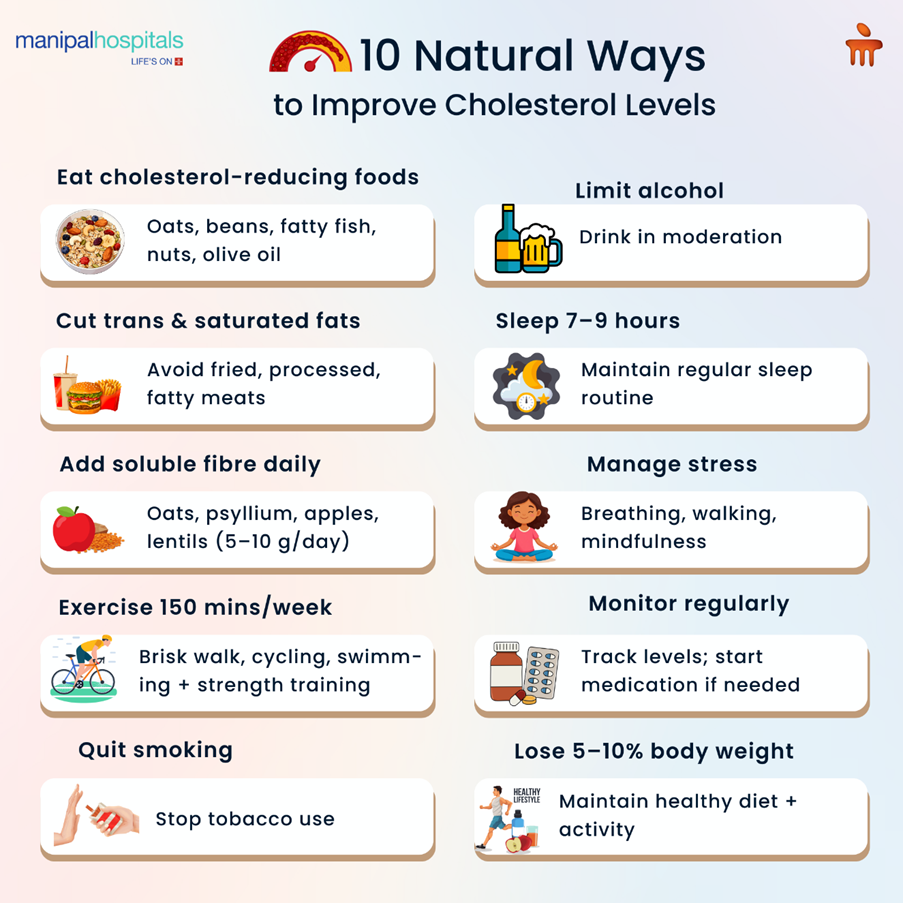
5) Maintain a Healthy Weight and Waistline
Losing 5–10% of body weight when overweight substantially lowers LDL and triglycerides. Central fat (waist circumference) links strongly to poor lipid profiles. Weight loss combines calorie control with the activity measures above and often improves the cholesterol range within months.
6) Limit Alcohol and Stop Smoking
Moderate alcohol may raise HDL slightly, but excess drinking raises triglycerides and calories. Smoking reduces HDL and harms blood vessels. Quitting smoking and moderating alcohol intake are practical steps to improve cholesterol levels and overall cardiovascular risk.
7) Consider Evidence-Based Supplements and Foods
Some supplements can help when diet and activity alone are insufficient:
-
Omega-3 supplements reduce triglycerides (prescription doses for high triglycerides).
-
Psyllium husk adds soluble fibre and lowers LDL.
-
Plant sterol supplements or fortified spreads can reduce LDL modestly.
-
Red yeast rice contains natural statin-like compounds; use only under medical supervision because of variability and potential interactions.
Treat supplements as adjuncts and discuss them with a clinician, especially if medications are in use.
8) Improve Sleep and Manage Stress
Poor sleep and chronic stress worsen metabolic health and can unfavourably shift the HDL/LDL level balance. Aim for regular sleep (7–9 hours for most adults) and use proven stress-reduction techniques, brisk walks, structured breathing, or short mindfulness sessions, to support lipid control.
9) Practical Home Remedies to Control Cholesterol
Certain home measures can complement lifestyle changes:
-
Regular consumption of garlic has a small LDL (low-density lipoprotein) lowering effect when eaten consistently.
-
Green tea provides antioxidants and may modestly reduce LDL.
-
Consistent use of soluble fibre sources (oats, psyllium) as a routine habit.
These home remedies to control cholesterol help only when part of a structured diet and activity plan; they are not replacements for prescribed therapy when levels are high.
10) Monitor and Review Medications, and Know When to Start Drug Therapy
Lifestyle change lowers cholesterol for many, but medications are necessary when risk remains high, especially for elevated LDL or metabolic disorders affecting lipid processing. For these individuals, medications such as statins, ezetimibe, or newer therapies may be required in addition to diet and exercise to achieve adequate cholesterol control.
Regular blood tests track progress and establish whether lifestyle measures are sufficient. Discuss timing and benefits of medication with a clinician if the cholesterol range remains above target or if cardiovascular risk is elevated.
Practical Weekly Plan
|
Goal |
Example actions |
|
3–4 servings of cholesterol-reducing foods |
Oats for breakfast, two fish meals, beans twice, nuts as snacks |
|
Activity target |
30-minute brisk walk 5 days + two short resistance sessions |
|
Fibre target |
Add 1 serving of beans + 1 tablespoon of psyllium or oats daily |
|
Sleep & stress |
7–8 hours sleep, 10 minutes daily relaxation |
When to Seek Clinical Care?
See a doctor if any of the following apply:
-
Family history of premature heart disease.
-
Very high cholesterol on a single test (total ≥ 300 mg/dL or LDL ≥ 190 mg/dL).
-
Diabetes, high blood pressure, or previous heart disease—these change treatment thresholds.
A cardiologist will interpret the cholesterol levels in context, calculate overall cardiovascular risk, and recommend immediate or staged therapy.
Conclusion
Managing cholesterol levels is a long-term task that combines diet, activity, sleep, stress control, and targeted supplements when appropriate. By choosing proven cholesterol-reducing foods, planning regular aerobic activity, and using simple home strategies, many people can shift their cholesterol range toward safer levels. Regular monitoring and discussion with a clinician ensures that natural methods are working and that medication is started promptly if risk remains high.
For personalised evaluation and care to improve cholesterol and heart health, consult with top cardiologists in Manipal Hospitals Whitefield.
FAQ's
A healthy cholesterol range should be below 200 mg/dL, with recommended LDL (low-density lipoprotein) levels being low and higher HDL (high-density lipoprotein) levels being desirable. Regular testing helps track cholesterol and heart risk early.
Regular exercise, a diet high in fibre, stress management, and eating foods that lower cholesterol, like oats, nuts, and fruits, are all important parts of learning how to lower cholesterol naturally.
Whole grains, legumes, fatty fish, nuts, seeds, and fruits high in soluble fibre are all foods that can help lower cholesterol and keep it in a healthy range.
Diet changes and exercise can help lower cholesterol, especially when done regularly and guided by a doctor.
Adults should have their cholesterol levels checked every four to six years, or more often if they have risk factors. Regular monitoring helps make changes to your lifestyle or treatment on time.
Share this article on: