7 Min Read
Feeling unusually tired lately?
Getting breathless while climbing a single flight of stairs?
Many people brush off these changes as stress, ageing, or lack of sleep, which can be true for many. But sometimes, these subtle shifts can also identify a serious problem with the heart, and these can be subtle early signs of heart disease.
Heart problems rarely begin with a dramatic event. Instead, symptoms often appear gradually. Recognising these early red flags can help prevent serious complications like heart attack, heart failure, or stroke.
With this blog, let us discover heart problem symptoms to watch for and explain why those signs should never be ignored.
Synopsis
Why Do We Tend to Miss Early Signs of Heart Disease?
In many adults, early signs of heart disease develop slowly. Plaque can slowly build up inside arteries for years before causing a major blockage. During this time, the body may send subtle warning signals. These early heart problem symptoms are frequently mistaken for:
-
Acidity or indigestion
-
Muscle strain
-
Anxiety
-
Fatigue from work
-
Age-related tiredness
Another reason? People often associate heart disease symptoms only with severe chest pain. While chest pain is important, many cardiovascular disease symptoms don’t involve pain at all.
Recognising these symptoms early improves the chance that lifestyle changes, medicines, or procedures can prevent a heart attack or stroke. This also allows doctors to intervene early with medication, lifestyle changes, or procedures before damage becomes irreversible.
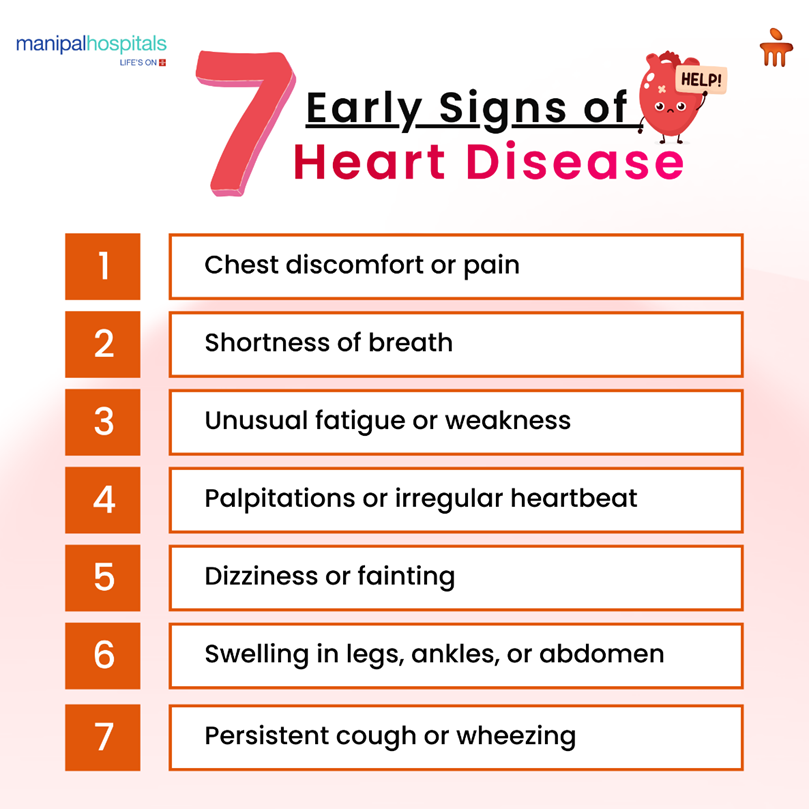
7 Warning Signs You Should Never Ignore
Sign 1: Chest Discomfort or Pain
Chest pain is the symptom most people fear. Not all chest pain means a heart attack, but it must be taken seriously.
-
Typical chest discomfort warning signs include pressure, squeezing, burning, or tightness in the centre of the chest.
-
Pain may spread to the jaw, neck, shoulder, or arm.
-
Some people feel mild discomfort rather than sharp pain.
If chest discomfort lasts more than a few minutes or returns repeatedly, seek urgent assessment. These symptoms can be signs of blocked arteries needing immediate evaluation.
Sign 2: Shortness of Breath or Reduced Exercise Tolerance
Shortness of breath with ordinary activities is a common early indicator.
-
Shortness of breath and heart signs appear when the heart cannot pump effectively or when blood flow to the lungs is impaired.
-
You may notice breathlessness when climbing stairs, carrying groceries, or during mild exertion.
-
Resting breathlessness, waking at night short of breath, or needing extra pillows to sleep are concerning.
Persistent breathlessness alongside other heart problem symptoms requires medical attention.
Sign 3: Unusual Fatigue or Weakness
Long-lasting tiredness can be a subtle but important clue.
-
A constant lack of energy that interferes with daily tasks is a fatigue heart warning.
-
This happens when the heart cannot supply muscles with enough oxygen-rich blood.
-
Fatigue may come with lightheadedness or reduced ability to exercise.
When new and unexplained, this symptom should prompt a check for cardiovascular disease symptoms.
Sign 4: Palpitations or Fast Irregular Heartbeat
Feeling your heart race, skip beats, or flutter is common and often benign. But repeated episodes merit attention.
-
Episodes of pounding or irregular heartbeat can be palpitations and heart risk signals.
-
Some rhythm disturbances are harmless; others increase stroke risk or cause fainting.
-
If palpitations accompany dizziness, chest pain, or breathlessness, seek urgent care.
An ECG and monitoring can identify arrhythmias that need treatment.
Sign 5: Dizziness, Light-headedness, or Fainting
A fainting spell or repeated near-fainting should never be ignored.
-
Dizziness may occur when the brain receives insufficient blood flow due to arrhythmia or low cardiac output.
-
Heart problems symptoms that include syncope could indicate severe electrical or structural heart disease.
-
Document when these episodes occur and any triggers.
Immediate evaluation helps rule out life-threatening causes.
Sign 6: Swelling in Legs, Ankles or Abdomen
Fluid retention is a sign of the heart struggling to move blood effectively.
-
Swelling in the legs, ankles, or abdomen points to poor circulation and possible heart failure. These are poor blood circulation symptoms.
-
Symptoms often worsen after prolonged standing and may improve with elevation.
-
Accompanying shortness of breath or weight gain over days is significant.
A clinical exam and tests assess whether heart function is reduced.
Sign 7: Persistent Cough or Wheeze with Pink Sputum
A cough that does not clear or produces pink, frothy sputum may be more than a respiratory issue.
-
When caused by fluid backing up into the lungs, it becomes an important cardiovascular disease symptom.
-
This may be worse at night or when lying down.
-
Treating the underlying heart issue often resolves the cough.
If a cough appears with other cardiac signs, mention it to your clinician immediately.
How Doctors Evaluate These Symptoms
When you present with heart problems symptoms, the clinical evaluation typically includes:
-
Detailed history: onset, triggers, timing, and family history of heart disease.
-
Physical exam: blood pressure, heart sounds, lung exam, peripheral pulses.
-
ECG (electrocardiogram) to detect arrhythmia or signs of ischemia.
-
Blood tests, including cardiac enzymes, cholesterol, and markers of inflammation.
-
Chest X-ray to assess heart size and lung congestion.
-
Echocardiogram to evaluate heart structure and pumping function.
-
Stress testing or coronary imaging (CT/angiography) is performed when signs of blocked arteries are suspected.
Early testing clarifies risk and guides treatment to prevent progression.
Factors That Increase the Risk of Heart Disease
Understanding risk factors helps you take the early signs of heart disease more seriously. When these conditions are present, even mild heart disease symptoms should not be brushed aside.
-
High Blood Pressure: When blood pressure is consistently high, it puts strain on the arteries and the heart muscle. This can lead to damage to the blood vessel walls, making it easier for plaque to build up and restricting blood flow.
-
Diabetes: High blood sugar can damage blood vessels and nerves that regulate the heart. Diabetics are at a significantly higher risk of developing blocked arteries earlier than usual.
-
High Cholesterol: High levels of LDL (“bad”) cholesterol can accumulate in the walls of the arteries, forming plaques. These plaques can narrow blood vessels and are a leading cause of the symptoms of blocked arteries.
-
Smoking: Smoking can damage the lining of blood vessels, decrease oxygen in the blood, and increase the risk of blood clots. Even occasional smoking can raise the risk of heart disease symptoms.
-
Family History: If your family members have developed heart disease at a younger age, your risk may be higher. Your family history can raise your risk of heart disease, as it can affect your cholesterol levels, blood pressure, and arterial health.
If one or more of these risk factors apply, paying attention to subtle heart problem symptoms becomes even more important.
Lifestyle Steps to Reduce Heart Disease Risk
-
Stop smoking and avoid secondhand smoke.
-
Aim for at least 150 minutes of moderate exercise weekly.
-
Maintain a balanced diet low in saturated fats and high in vegetables, fruits, and whole grains.
-
Control weight, blood pressure, blood sugar, and cholesterol.
-
Limit alcohol and manage stress with practical techniques.
-
Take medications as prescribed and attend routine follow-ups.
These measures reduce plaque progression and improve circulation.
When to See a Cardiologist?
If you have persistent heart problems symptoms, known risk factors, or abnormal test results, seek specialist input. A cardiologist can:
-
Arrange advanced imaging and coronary assessment.
-
Discuss medications or interventional options like stents.
-
Offer targeted programmes for rehabilitation and risk reduction.
-
Provide ongoing follow-up to prevent complications.
Conclusion
The early signs of heart disease are often subtle but meaningful. Chest discomfort, unusual fatigue, breathlessness, swelling, or poor blood circulation symptoms should not be dismissed. If you notice persistent changes, schedule a cardiac evaluation. Recognising heart problem symptoms early gives you control over your health. The right guidance at the right time can prevent serious complications. Don’t ignore warning signs, act early, and protect your heart.
If you need focused cardiac care, consult our best cardiologist in Whitefield for expert options.
FAQ's
Yes. Many cardiovascular disease symptoms begin with fatigue, breathlessness, or indigestion-like discomfort rather than severe chest pain. Subtle early signs of heart disease should not be ignored.
Women may experience jaw pain, back discomfort, nausea, or extreme fatigue instead of classic chest pressure. These atypical heart disease symptoms require equal attention.
Persistent cold extremities, leg pain while walking, or swelling combined with other cardiovascular disease symptoms may suggest underlying arterial issues requiring evaluation.
Adults above 30 with risk factors like diabetes, high blood pressure, or family history should begin routine screening to detect early signs of heart disease.
Seek urgent care for chest pain lasting more than five minutes, severe breathlessness, fainting, or pain spreading to the arm or jaw. Early intervention prevents complications.
Share this article on: