8 Min Read
If we talk about common health complaints, back pain is one of the most common, affecting people across all age groups and lifestyles worldwide. While many episodes of back pain see an improvement within a few days or weeks with rest and basic care, some individuals experience pain that lasts for more than a few days, lingering for months or even years. This persistent discomfort is commonly referred to as chronic back pain. As common as it is, it also comes with the ability to quietly disrupt daily routines, work productivity, sleep quality, and overall emotional well-being.
Understanding why back pain becomes chronic, recognizing the warning signs early, and knowing what the right treatment options are available can make a significant difference in long-term spinal health.
Synopsis
What Is Chronic Back Pain?
If pain lasts longer than 12 weeks even after the original injury or cause has been treated or has healed, it can then be referred to as chronic back pain. The pain may be constantly present, or it can be episodic in nature, often flaring up with certain movements, prolonged sitting, physical activity, or even rest.
Unlike acute back pain, chronic pain is more complex and often involves a combination of physical, mechanical, and psychological factors.
Common Symptoms of Chronic Back Pain
Chronic back pain does not always have set symptoms that can help in its easy identification. However, some of the symptoms may vary depending on the underlying conditions. Some of them are as mentioned below:
-
Persistent muscle ache or stiffness
-
Sharp, shooting, or stabbing pain
-
Pain radiating down one or both legs
-
Reduced flexibility and limited range of motion
-
Difficulty standing, sitting, or walking for long periods
-
Pain that worsens at night or during rest
Why Does Back Pain Become Chronic?
Chronic back pain does not always arise from a single, clearly identifiable issue. For many people, it develops gradually due to a combination of physical strain, structural changes in the spine, and lifestyle or psychological factors. Understanding the causes of chronic back pain is an important step in answering what it is and why it tends to persist beyond the normal healing period.
-
Repeated muscle or ligament strain due to poor posture or improper lifting: Long hours of sitting, poor ergonomic habits, sudden twisting movements, or lifting heavy objects incorrectly place repeated stress on the back muscles and ligaments. These ongoing micro-injuries prevent proper healing and are among the most common chronic back pain causes, leading to persistent stiffness and discomfort.
-
Bulging or herniated discs compressing nearby nerves: Spinal discs act as shock absorbers between vertebrae. When a disc bulges or herniates, it may press on surrounding nerves, causing continuous back pain along with radiating leg pain, numbness, or tingling. Prolonged nerve compression is a key reason chronic back pain can last for months or even years.
-
Arthritis of the spine, especially osteoarthritis: Age-related wear and tear of spinal joints leads to cartilage degeneration and inflammation. This results in stiffness, reduced mobility, and ongoing pain, making arthritis a frequent contributor to chronic back pain causes, particularly in older adults.
-
Spinal stenosis and nerve compression: Spinal stenosis occurs when the spinal canal narrows due to degenerative changes. This narrowing puts pressure on nerves, leading to long-term back pain, leg weakness, or difficulty walking, especially during prolonged activity.
-
Structural issues such as scoliosis: Abnormal curvature of the spine alters posture and weight distribution. Over time, this uneven stress on muscles, joints, and discs can result in muscle fatigue and persistent pain, contributing to chronic back pain.
-
Osteoporosis-related compression fractures: Weakened vertebrae are prone to fractures, even with minimal trauma. These fractures can cause lasting pain, postural changes, and reduced spinal stability, making recovery slow and incomplete without proper care.
-
Psychological factors such as stress, anxiety, or depression: Mental health significantly influences how pain is perceived. Chronic stress and emotional distress can heighten pain sensitivity, increase muscle tension, disturb sleep, and reduce physical activity, all of which can worsen and prolong chronic back pain.
Identifying these underlying factors helps guide effective management and ensures that chronic back pain treatment in Varthur Road, Bangalore, is tailored to address both the physical and emotional contributors, rather than focusing on pain relief alone.
When to Seek Medical Help
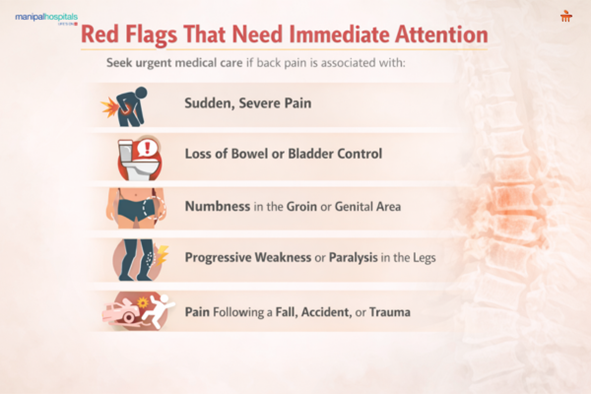
You should consult a spine specialist if your back pain:
-
Persists beyond a few weeks without improvement
-
Is severe, constant, or worse at night
-
Radiates down the legs, especially below the knee
-
Causes numbness, tingling, or weakness
-
Is accompanied by unexplained weight loss or fever
-
Begins after age 50 or in individuals with cancer, osteoporosis, or long-term steroid use
Diagnosis of Chronic Back Pain
Diagnosis usually begins with a detailed clinical evaluation, including posture, movement, reflexes, and nerve function. If required, investigations may include:
-
X-rays
-
MRI or CT scans
-
Bone scans
-
Nerve conduction studies (EMG)
These tests help identify disc problems, nerve compression, arthritis, fractures, or other structural abnormalities.
How to Manage Chronic Back Pain
Treatment focuses on relieving pain, restoring function, and preventing recurrence.
Conservative Treatment Options
-
Over-the-counter pain relievers or anti-inflammatory medications
-
Prescription medications such as muscle relaxants when necessary
-
Physical therapy to improve strength, flexibility, and posture
-
Heat or cold therapy
-
Staying active with low-impact exercises like walking or swimming
Advanced Treatment Options
-
Epidural or facet joint injections for nerve-related pain
-
Structured rehabilitation programs
-
Surgery, reserved for selected cases with significant nerve compression or instability
Alternative Therapies
Some patients benefit from complementary therapies such as chiropractic care, acupuncture, massage, yoga, or guided stretching. These should always be discussed with a spine specialist before starting.
Preventing Chronic Back Pain
You can reduce the risk of long-term back problems by:
|
Preventive Habit |
How It Helps Prevent Chronic Back Pain |
|
Maintaining correct posture |
Helps keep the spine properly aligned, reducing unnecessary strain on muscles and joints, one of the most common chronic back pain causes. |
|
Exercising regularly to strengthen core muscles |
Strong core muscles provide better spinal support, improve flexibility, and lower the risk of developing chronic back pain over time. |
|
Keeping a healthy body weight |
Reduces excess pressure on the spine and discs, helping prevent degeneration that contributes to chronic back pain causes. |
|
Using proper lifting techniques |
Protects the lower back from sudden injury and repetitive strain, lowering the risk of long-term spinal damage and chronic back pain. |
|
Avoiding prolonged sitting without breaks |
Prevents stiffness, muscle tightness, and poor posture, key factors in what is chronic back pain and why it persists. |
|
Managing stress and ensuring adequate sleep |
Reduces muscle tension and pain sensitivity, supporting recovery and improving outcomes of chronic back pain treatment in Varthur Road. |
Final Thought
Chronic back pain is common, but it should never be ignored or accepted as normal. With early diagnosis, the right treatment plan, and lifestyle modifications, most people can achieve significant relief and regain mobility.
If you are experiencing persistent back pain, numbness, or mobility issues, consult the spine specialist at Manipal Hospitals. Early diagnosis and personalized treatment can help relieve pain, restore movement, and prevent long-term complications.
FAQ's
Chronic back pain is pain that persists for more than 12 weeks, even after the original injury or cause has healed. It may be constant or episodic, often triggered by movement, prolonged sitting, physical activity, or sometimes even rest.
Back pain becomes chronic due to repeated strain, disc problems, arthritis, spinal stenosis, structural abnormalities, osteoporosis-related fractures, or psychological factors like stress and anxiety. Often, multiple physical and lifestyle contributors combine, preventing proper healing and prolonging discomfort.
Symptoms include persistent muscle stiffness, sharp or stabbing pain, radiating leg pain, reduced flexibility, difficulty sitting or standing for long periods, and pain worsening at night or during rest. Symptoms vary depending on the underlying spinal condition.
Consult a spine specialist if pain lasts weeks without improvement, becomes severe, radiates down the legs, causes numbness or weakness, worsens at night, or is associated with fever, weight loss, or specific risk factors like osteoporosis.
Management includes medications, physical therapy, posture correction, heat or cold therapy, low-impact exercises, injections for nerve pain, structured rehabilitation, and surgery in select cases. Lifestyle changes like regular exercise, weight control, and stress management are essential.
Manipal Hospital, Varthur Road, offers comprehensive spine care, diagnosing and managing chronic back pain with personalised treatment plans. Their expert team evaluates underlying causes and provides medication, therapy, minimally invasive procedures, and referrals to specialists as needed for effective long-term relief.
Share this article on: