8 Min Read
The heart does much more than simply pump blood; it relies on a carefully coordinated electrical system that controls every heartbeat. When these electrical signals slow down or become delayed, it can affect how efficiently the heart functions. One such condition is **first-degree heart block**, a mild but important heart rhythm abnormality that is commonly detected during routine cardiac evaluations.
For many people, the diagnosis comes as a surprise because the condition often develops silently without obvious symptoms. However, while it is usually not life-threatening, understanding the condition is important because it can sometimes indicate underlying heart problems or increase the risk of future rhythm disturbances.
Knowing the first-degree heart block symptoms, understanding the causes, and learning when medical care is necessary can help patients manage the condition with confidence. In this blog, we’ll explain everything you need to know, from symptoms and diagnosis to treatment and long-term management. If needed, early evaluation by the Department of Cardiology can help ensure accurate diagnosis and proper heart care.
Synopsis
- Understanding First Degree Heart Block
- Why the Heart’s Electrical System Matters
- Is First Degree Heart Block Serious?
- First Degree Heart Block Symptoms: Early Signs to Watch For
- Causes of First Degree Heart Block
- When First Degree Heart Block Becomes Concerning
- How Is First Degree Heart Block Diagnosed?
- First Degree Heart Block Treatment: What Actually Works
- When Should You See a Doctor?
- Conclusion
Understanding First Degree Heart Block
The heart has its own electrical conduction system that ensures every chamber beats in a coordinated rhythm. Normally, electrical signals begin in the sinoatrial (SA) node, often called the heart’s natural pacemaker. These signals travel through the atria and then pass through the atrioventricular (AV) node before reaching the ventricles.
In first-degree heart block, the electrical signal travels more slowly than normal through the AV node. The signal still successfully reaches the ventricles, but the delay becomes visible on an electrocardiogram (ECG).
Unlike more advanced forms of heart block, the heartbeat itself usually remains regular. Because of this, many individuals continue their normal lives without even realising they have the condition.
Why the Heart’s Electrical System Matters
The electrical system of the heart is responsible for maintaining a steady and efficient heartbeat. Even small disruptions in this conduction pathway can affect circulation and heart performance.
When the electrical signals slow down:
-
The coordination between heart chambers may become less efficient
-
Blood circulation may slightly reduce in some individuals
-
Symptoms like dizziness or fatigue may develop
-
The risk of future rhythm abnormalities may increase in certain patients
This is why even mild conduction abnormalities should not be completely ignored.
Is First Degree Heart Block Serious?
One of the most commonly searched questions is, "Is first-degree heart block serious?”
In most cases, first-degree heart block is considered mild and harmless, especially in healthy individuals without underlying heart disease. Many people never develop complications and only require periodic monitoring.
However, the seriousness depends on several factors, including:
-
Age
-
Existing heart disease
-
Medication use
-
Severity of conduction delay
-
Presence of symptoms
-
Overall cardiovascular health
For example, in athletes or physically fit individuals, mild first-degree heart block may occur naturally because of increased vagal tone and may not require treatment at all.
On the other hand, if the condition develops alongside coronary artery disease, previous heart attack, or structural heart abnormalities, doctors may monitor it more closely to ensure it does not progress.
Although the condition is usually manageable, regular cardiac evaluations remain important.
First Degree Heart Block Symptoms: Early Signs to Watch For
One of the reasons this condition often goes unnoticed is that many people experience no symptoms at all. However, some individuals may develop mild or occasional symptoms, especially if the conduction delay becomes more pronounced.
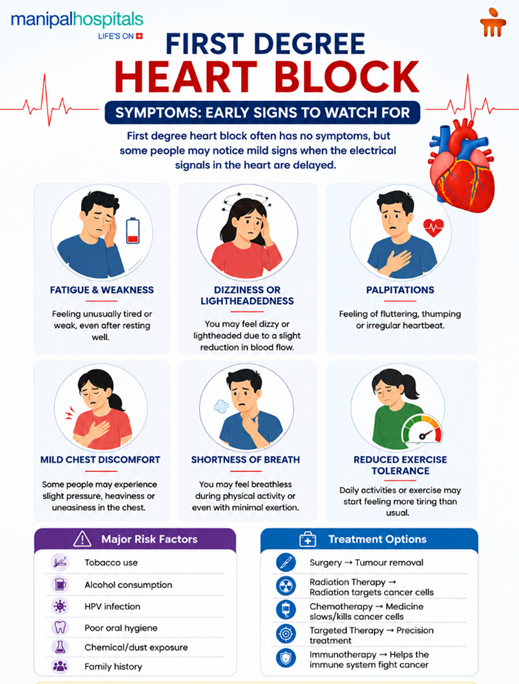
Common first-degree heart block symptoms include:
-
Fatigue and Weakness: You may feel unusually tired even after adequate rest. Reduced efficiency in heart conduction can sometimes affect circulation and energy levels.
-
Dizziness or Lightheadedness: Slower electrical conduction may occasionally reduce blood flow to the brain, causing dizziness.
-
Palpitations: Some individuals become more aware of their heartbeat and may notice fluttering or skipped beats.
-
Mild Chest Discomfort: Although uncommon, certain patients may experience slight chest pressure or discomfort.
-
Shortness of Breath: Some people may notice breathlessness during physical activity or climbing stairs.
-
Reduced Exercise Tolerance: Activities that were once easy may start feeling more exhausting than usual.
These symptoms are also frequently searched online as **1st degree heart block symptoms**, both terms referring to the same condition.
Sometimes these symptoms are mild and mistaken for stress, anxiety, lack of sleep, or general tiredness.
Causes of First Degree Heart Block
Many different factors can affect the heart’s electrical conduction system. The most common causes of first-degree heart block include:
-
Age-Related Changes: As people age, the heart’s electrical pathways may naturally become slower. This is one of the most common causes in older adults.
-
Certain Medications: Some medicines can slow electrical conduction through the AV node, including:
-
Beta blockers
-
Calcium channel blockers
-
Digoxin
-
Anti-arrhythmic medications
-
In some cases, adjusting medications may improve the condition.
-
Coronary Artery Disease: Reduced blood supply to the heart can affect the electrical system and contribute to conduction delays.
-
Previous Heart Attack: Damage to the heart tissue following a heart attack may interfere with normal electrical signalling.
-
Myocarditis: Inflammation of the heart muscle can temporarily or permanently affect heart conduction.
-
High Vagal Tone: Athletes and highly active individuals sometimes naturally develop mild first-degree heart block due to increased vagal activity.
-
Electrolyte Imbalances: Abnormal potassium, calcium, or magnesium levels may disrupt the electrical activity of the heart.
-
Congenital Heart Conditions: Some individuals are born with mild conduction abnormalities that become noticeable later in life.
Understanding the exact cause helps cardiologists decide whether simple monitoring or active treatment is required.
When First Degree Heart Block Becomes Concerning
Although the condition is often mild, there are situations where it may become more serious.
Warning signs that need medical attention include:
-
Fainting episodes
-
Severe dizziness
-
Persistent chest pain
-
Rapid or irregular heartbeat
-
Breathlessness at rest
-
Extreme fatigue
-
Sudden worsening of symptoms
These symptoms may indicate progression to a more advanced conduction disorder or another underlying cardiac issue.
Ignoring persistent symptoms may increase the risk of complications over time.
How Is First Degree Heart Block Diagnosed?
Doctors diagnose the condition using tests that evaluate the heart’s electrical activity and overall function.
-
Electrocardiogram (ECG): This is the primary test used to detect first-degree heart block. It measures electrical activity and identifies delayed conduction between heart chambers.
-
Holter Monitoring: A portable ECG device records heart rhythms continuously over 24–48 hours to detect intermittent abnormalities.
-
Echocardiogram: This imaging test evaluates the heart’s structure, pumping function, and valve health.
-
Blood tests: Doctors may check for electrolyte imbalance, thyroid disorders, medication-related effects, and other medical conditions affecting the heart.
Early diagnosis helps prevent complications and ensures proper monitoring.
First Degree Heart Block Treatment: What Actually Works
The approach to first-degree heart block treatment depends on the underlying cause, severity, symptoms, and overall heart health.
Observation and Regular Monitoring
In many patients, especially those without symptoms, treatment may not be immediately necessary. Doctors often recommend periodic ECGs and follow-up visits.
Medication Review
If certain medications are contributing to slowed heart conduction, doctors may:
-
Adjust dosages
-
Switch medications
-
Monitor ECG changes after modification
Treating Underlying Conditions
Managing associated conditions can help stabilise heart rhythm:
-
High blood pressure
-
Coronary artery disease
-
Electrolyte imbalance
-
Thyroid problems
-
Diabetes
Lifestyle Modifications
Healthy lifestyle choices can improve overall cardiovascular health and reduce future risks. Helpful habits include:
-
Regular exercise
-
Maintaining healthy weight
-
Eating a heart-friendly diet
-
Reducing stress
-
Avoiding smoking
-
Limiting alcohol
-
Controlling cholesterol and blood pressure
Pacemaker (Rare Situations)
A pacemaker is usually not required for isolated first degree heart block. However, in rare cases where symptoms become severe or conduction worsens significantly, advanced treatment may be considered.
When Should You See a Doctor?
Mild cases may not require urgent treatment, but you should consult a cardiologist if you experience:
-
Frequent dizziness
-
Fainting
-
Chest pain
-
Persistent fatigue
-
Breathlessness
-
Palpitations
-
Irregular heartbeat
Timely cardiac evaluation helps determine whether the condition is harmless or linked to a more serious problem.
If you are searching for a cardiologist for heart block in Salem, consulting an experienced heart specialist can help ensure accurate diagnosis, careful monitoring, and appropriate treatment.
Conclusion
At first glance, first-degree heart block may sound alarming, but in many individuals, it is a mild and manageable condition. Since it often develops silently, routine ECG testing and regular cardiac evaluations play an important role in early detection.
Understanding the warning signs, identifying possible causes, and seeking timely medical care when necessary can help prevent complications and support long-term heart health. With proper monitoring, healthy lifestyle choices, and expert cardiac care, most individuals with first-degree heart block continue to lead healthy and active lives. If you are looking for first-degree heart block treatment near Salem, early consultation with a cardiology specialist is recommended. If you have symptoms like dizziness, fatigue, or an irregular heartbeat, visit the Department of Cardiology at Manipal Hospitals Salem for an expert heart check-up and care.
FAQ's
In some cases, especially when caused by medications or temporary conditions, the conduction delay may improve after the underlying issue is corrected.
Most individuals can continue exercising normally unless advised otherwise by their cardiologist. Mild conduction delay is sometimes seen in athletes.
Stress and anxiety may increase palpitations or awareness of heartbeat, although they do not directly cause first-degree heart block.
No. Many people only require regular monitoring and lifestyle management rather than active treatment.
In some individuals, especially those with underlying heart disease, the condition may progress and therefore requires periodic follow-up with a cardiologist.
Share this article on:


__Its_Type_and_Benefits.webp "what-is-ecg-types-benefits")