6 Min Read
Tobacco use remains one of the leading preventable causes of death and disease around the world. A society committed to raising awareness about the profoundly harmful effects of tobacco on health can support individuals on their journey to a healthier, tobacco-free life. This blog emphasises that understanding the comprehensive impact of tobacco remains the first step towards making informed choices and protecting your well-being.
Synopsis
Health risks of tobacco use
The habit of tobacco consumption, whether through smoking, chewing, or other forms, exposes the body to thousands of toxic chemicals, many of which are known carcinogens. The health risks of tobacco use are far-reaching, affecting nearly every organ system and significantly shortening life expectancy. Studies show that smokers are 15 to 30 times more likely to get lung cancer than non-smokers. The adverse effects of tobacco include:
-
Respiratory system damage- Chronic exposure leads to reduced lung function, persistent cough, and shortness of breath.
-
Cardiovascular impact- Tobacco narrows blood vessels, increases heart rate and blood pressure, significantly elevating the risk of heart attacks and strokes. Quitting can reduce heart disease risk by 50% within a year.
-
Increased cancer risk- Beyond lung cancer, tobacco use is a primary cause of cancers of the mouth, throat, esophagus, bladder, kidney, pancreas, and more.
-
Oral health deterioration- Tobacco leads to stained teeth, gum disease, bad breath, and an increased risk of oral cancers.
-
Weakened immune system- Tobacco addiction can make the body more susceptible to infections and diseases.
-
Reproductive health issues- It can lead to infertility in both men and women, and complications during pregnancy.
Diseases caused by tobacco
The link between tobacco and chronic illnesses is undeniable. The spectrum of diseases caused by tobacco is vast, making it a critical public health concern. Globally, tobacco use accounts for over 8 million deaths annually. The various diseases caused by tobacco include:
-
Chronic Obstructive Pulmonary Disease (COPD)- A progressive lung disease including emphysema and chronic bronchitis, making breathing increasingly difficult. Over 85% of COPD cases are linked to smoking.
-
Cardiovascular diseases- This includes coronary artery disease, heart attack, stroke, and peripheral artery disease.
-
Type 2 diabetes- Smokers have a 30-40% higher risk of developing type 2 diabetes compared to non-smokers.
-
Osteoporosis- Leads to weaker bones and increased fracture risk.
-
Peptic ulcers- Tobacco irritates the stomach lining, increasing the likelihood of ulcers.
-
Cancers- Several types of cancers, affecting different organs, are directly linked to tobacco consumption.
Increased risk of Cancer
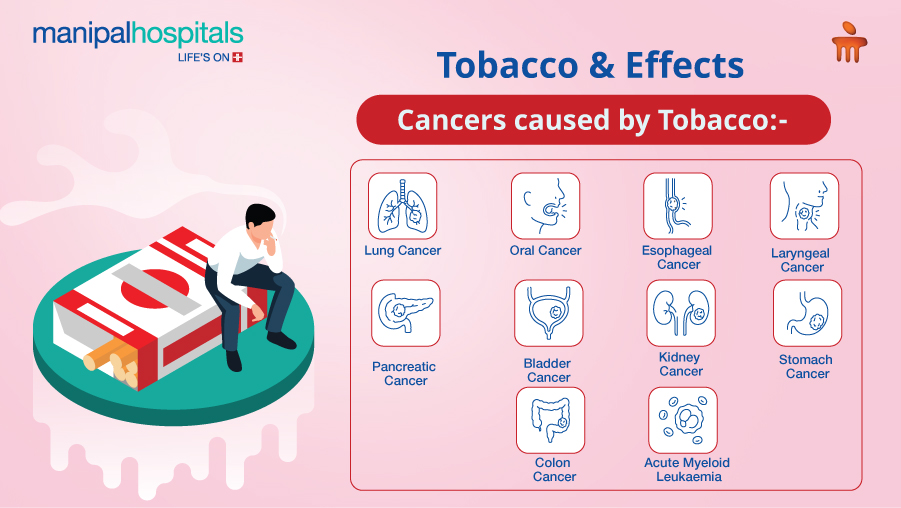
Tobacco use is one of the leading causes of cancer worldwide and significantly increases the risk of developing several life-threatening malignancies. Regular smoking or chewing tobacco exposes the body to harmful carcinogenic chemicals that can damage cells and tissues over time. Cancers commonly associated with tobacco use include lung cancer, oral cancer, esophageal cancer, laryngeal cancer, pancreatic cancer, bladder cancer, kidney cancer, stomach cancer, colon cancer, and acute myeloid leukaemia. The risk rises with the duration and frequency of tobacco use, making early cessation essential for reducing cancer-related health complications.
How to quit tobacco
While the harmful effects of tobacco are severe, it is never too late to quit. Giving up tobacco is one of the best decisions you can make for your health, and the benefits begin almost immediately. Within 20 minutes of quitting, your heart rate and blood pressure drop. After 1-9 months, coughing and shortness of breath decrease. You can:
-
Set a quit date- Choose a specific day to stop and prepare for it beforehand.
-
Seek professional help- Consult doctors, counsellors, or specialised tobacco cessation programs for guidance and support.
-
Nicotine Replacement Therapy (NRT)- Products like patches, gums, or lozenges can help manage withdrawal symptoms.
-
Behavioural therapies- Counselling and support groups can provide strategies to cope with cravings and triggers.
-
Avoid triggers- Identify situations, people, or feelings that make you want to use tobacco and try to avoid or manage them.
-
Stay active- Regular physical activity can help reduce cravings and withdrawal symptoms.
-
Maintain a healthy diet- Eating nutritious foods can improve overall well-being and aid in the quitting process. You can talk to an expert dietitian or nutritionist.
Care essentials
Quitting tobacco may seem challenging, but with the right strategies, support, and determination, it is entirely achievable and highly rewarding for your overall health. Choose to motivate and prep yourself by:
-
Creating a personalised quit plan and sticking to it
-
Informing your family and friends about your decision to quit for their support
-
Practising relaxation techniques to manage stress and cravings
-
Celebrating small milestones in your quitting journey
-
Avoiding the habit of storing tobacco products; get rid of them completely
-
Not giving-up if you slip, but viewing it as a learning experience and restarting your quit plan
-
Never isolating yourself, instead seeking support from others who are also trying to quit
Conclusion
Tobacco use can severely harm the lungs, heart, and overall health, while also increasing the risk of several cancers. However, quitting tobacco at any stage can greatly improve quality of life, lower the risk of chronic illnesses and tobacco-related cancers, and support better long-term health outcomes. Manipal Hospitals Rangapani offers expert guidance, personalised care, and counselling on how to quit tobacco effectively. Our strategies can help you successfully begin and sustain your journey towards a healthier, tobacco-free life.
If you have been consuming tobacco for a considerable time or are experiencing unusual or concerning symptoms, do not wait. Consult our surgical oncologist today at Manipal Hospitals Rangapani for a thorough cancer screening and comprehensive guidance and care.
FAQ's
Within just 20 minutes of quitting tobacco, your heart rate and blood pressure begin to decrease towards healthier levels. In about 12 hours, the harmful carbon monoxide levels in your bloodstream return to normal, allowing your body to carry oxygen more efficiently.
While some damage, especially to the lungs, may be permanent, many risks significantly decrease over time. For example, after 10 years, your risk of lung cancer is about half that of a person who is still smoking.
No, e-cigarettes and vaping products are not considered safe alternatives to tobacco. They still contain harmful chemicals and nicotine, which is highly addictive, and can negatively affect lung health, heart health, and overall well-being with long-term use.
Withdrawal symptoms after quitting tobacco are usually strongest during the first few days to one week. Over time, these symptoms gradually become less intense and may subside within a few weeks or, in some cases, a few months as the body adjusts.
Yes, second-hand smoke can seriously harm non-smokers and is considered a major public health risk. Regular exposure may increase the risk of lung cancer, heart disease, asthma, and other respiratory illnesses, especially in children, older adults, and individuals with existing health conditions.
Share this article on: