4 Min Read
The word ‘cancer’ often evokes fear, but the fact that shows a ray of hope is that a significant number of cancer cases are preventable. Research indicates that up to 40% of cases could be prevented through modifiable lifestyle choices. Understanding these choices and integrating them into daily life is a powerful strategy for long-term well-being and effective cancer prevention. This blog explores the crucial role of lifestyle changes in cancer prevention, offering actionable steps to reduce your personal risk.
Understanding cancer and its risk factors
Cancer is a complex disease involving uncontrolled cell growth. While genetics play a crucial role, many instances are influenced by external factors and daily habits. These contributing factors are known as cancer risk factors. The good news is that many of these factors are within our control, offering us a chance to actively participate in our own health defence.
Lifestyle changes that matter
Taking proactive steps can significantly lower your susceptibility to various cancers. Here is how to prevent cancer through impactful daily choices:
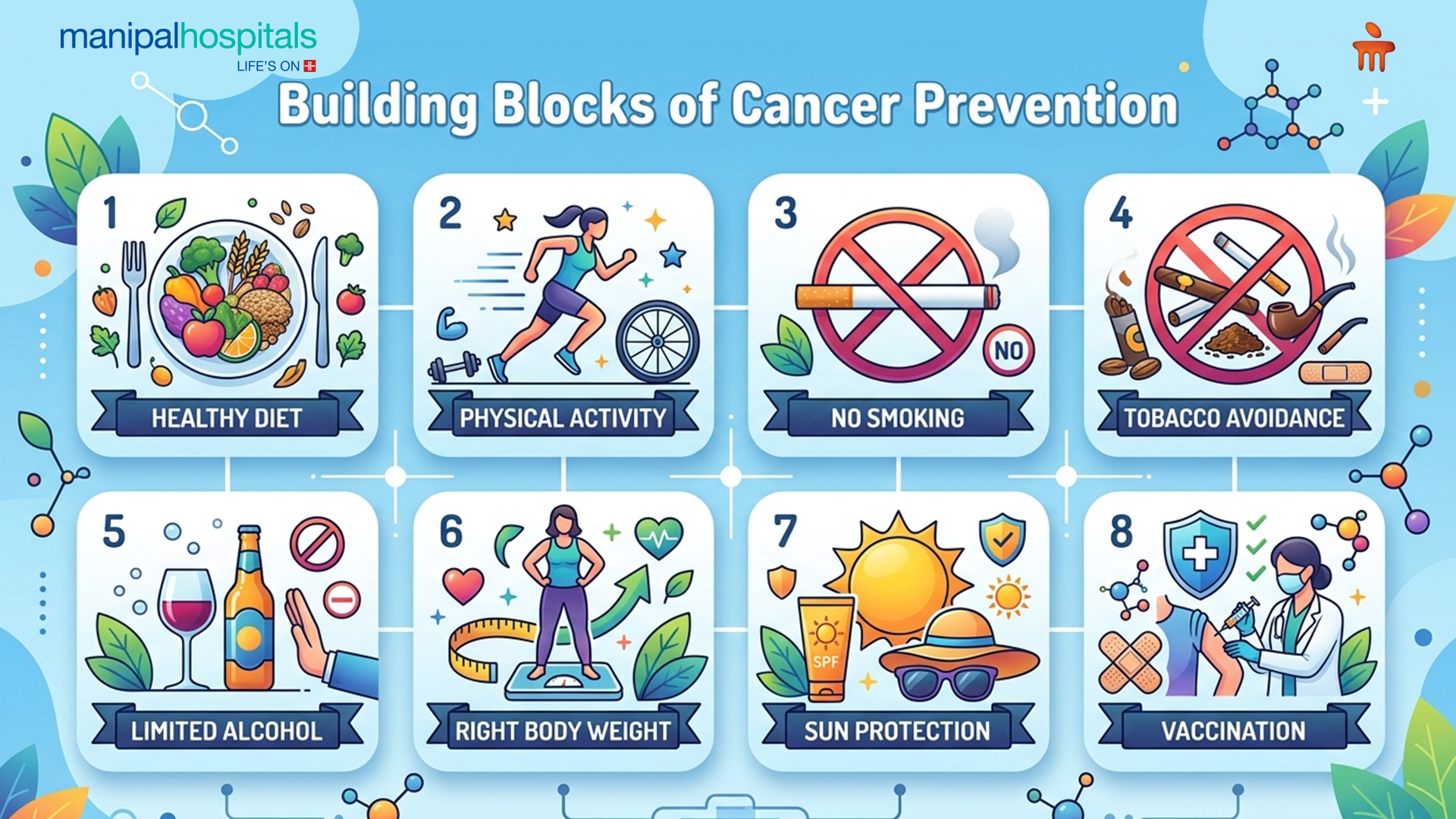
Stick to a healthy diet
-
Focus on fruits, vegetables, and whole grains. They're packed with antioxidants that protect cells.
-
Limit the consumption of processed foods. High consumption of processed foods, sugary drinks, and red/processed meats increases the risk of certain cancers.
Be regular with physical activity
-
Engage in at least 150 minutes of moderate-intensity or 75 minutes of vigorous-intensity physical activity weekly to reduce risk.
-
Exercise helps maintain a healthy weight, improves immune function, and reduces inflammation, all crucial for cancer prevention.
Quit smoking and avoid tobacco
-
Tobacco use is the leading preventable cause of cancer, linked to lung, mouth, throat, bladder, and kidney cancers.
-
The link between smoking and cancer is undeniable. Quitting tobacco is the most effective way to reduce your risk. Even after years of smoking, your body begins to repair itself.
Maintain a healthy weight
-
Obesity is one of the significant cancer risk factors, linked to at least 13 types of cancer.
-
Achieving and maintaining a healthy weight through diet and exercise dramatically lowers your risk.
Practice sun safety
Excessive UV exposure causes skin cancer. Protect your skin by seeking shade, wearing protective clothing, and using broad-spectrum sunscreen (SPF 30+).
Limit alcohol consumption
Alcohol consumption increases the risk of several cancers. If you drink, do so in moderation: up to one drink per day for women and two for men.
Get vaccinated
Vaccines like HPV and Hepatitis B protect against viruses that cause cancer, contributing to comprehensive cancer prevention.
Care essentials
Every small step contributes to a healthier you. The journey to effective cancer prevention is continuous, supported by informed choices and regular medical guidance.
-
Eat a balanced diet
-
Exercise regularly
-
Maintain a healthy weight
-
Protect from the sun
-
Stay hydrated
-
Attend screenings
-
Quit smoke
-
Limit alcohol consumption
-
Avoid over-exposure to UV
-
Do not ignore symptoms
Conclusion
Cancer prevention begins with adopting healthy lifestyle choices, regular screenings, and awareness of potential risk factors. While not all cancers can be prevented, early detection and timely medical care can significantly improve outcomes. The Cancer Care Department at Manipal Hospitals Rangapani offers comprehensive cancer prevention, screening, diagnosis, and treatment services with advanced facilities and expert care. Consult the specialists at Manipal Hospitals today to understand your risks and take proactive steps towards better health.
FAQ's
While not all cancers are entirely preventable, a significant percentage (up to 40%) can be avoided through lifestyle modifications. These changes drastically reduce your risk, though they don't guarantee immunity.
Quitting smoking and avoiding all tobacco products is widely considered the single most impactful step you can take. It significantly reduces the risk of numerous cancers, and the benefits begin almost immediately.
While no single ‘superfood’ can prevent cancer, a diet rich in a variety of fruits, vegetables, whole grains, and legumes provides protective nutrients and antioxidants. Limiting processed foods, red meat, and sugary drinks is also crucial.
The benefits of quitting smoking begin quickly and continue over time. Within 20 minutes, heart rate improves; in weeks, circulation gets better. After 10 years, lung cancer risk is significantly reduced, and after 15 years, heart disease and stroke risk approaches that of a non-smoker.
Yes, regular screenings (like mammograms, colonoscopies, and pap tests) are vital for early detection, which often leads to successful treatment. While not strictly ‘prevention’, they are a key component of a comprehensive cancer control strategy.
Share this article on: