5 Min Read
A breast cancer diagnosis is a significant cause of worry. It is the most common form of cancer among women, seen in both from rural and urban areas. Breast cancer makes up about 14% of all cancers in Indian women, with more than 2,00,000 cases reported annually. Despite its gravity, medical advancements have significantly improved treatment outcomes, and early detection of breast cancer can raise the 5-year survival rate by up to 99%. This blog explains all about treatment modalities for breast cancer in detail.
Synopsis
Understanding Breast Cancer: Stages and Personalised Care
Breast cancer is the most common form of cancer in women. Other than affecting millions of women worldwide, it may also affect men, though rarely.
Effective breast cancer treatment starts with accurate diagnosis and detailed staging to determine size and spread. Early detection is crucial for significant treatment outcomes and increased 5-year survival rate. Proper diagnosis helps guide personalised plans based on disease progression and patient’s overall health.
Stages of Breast Cancer Treatment
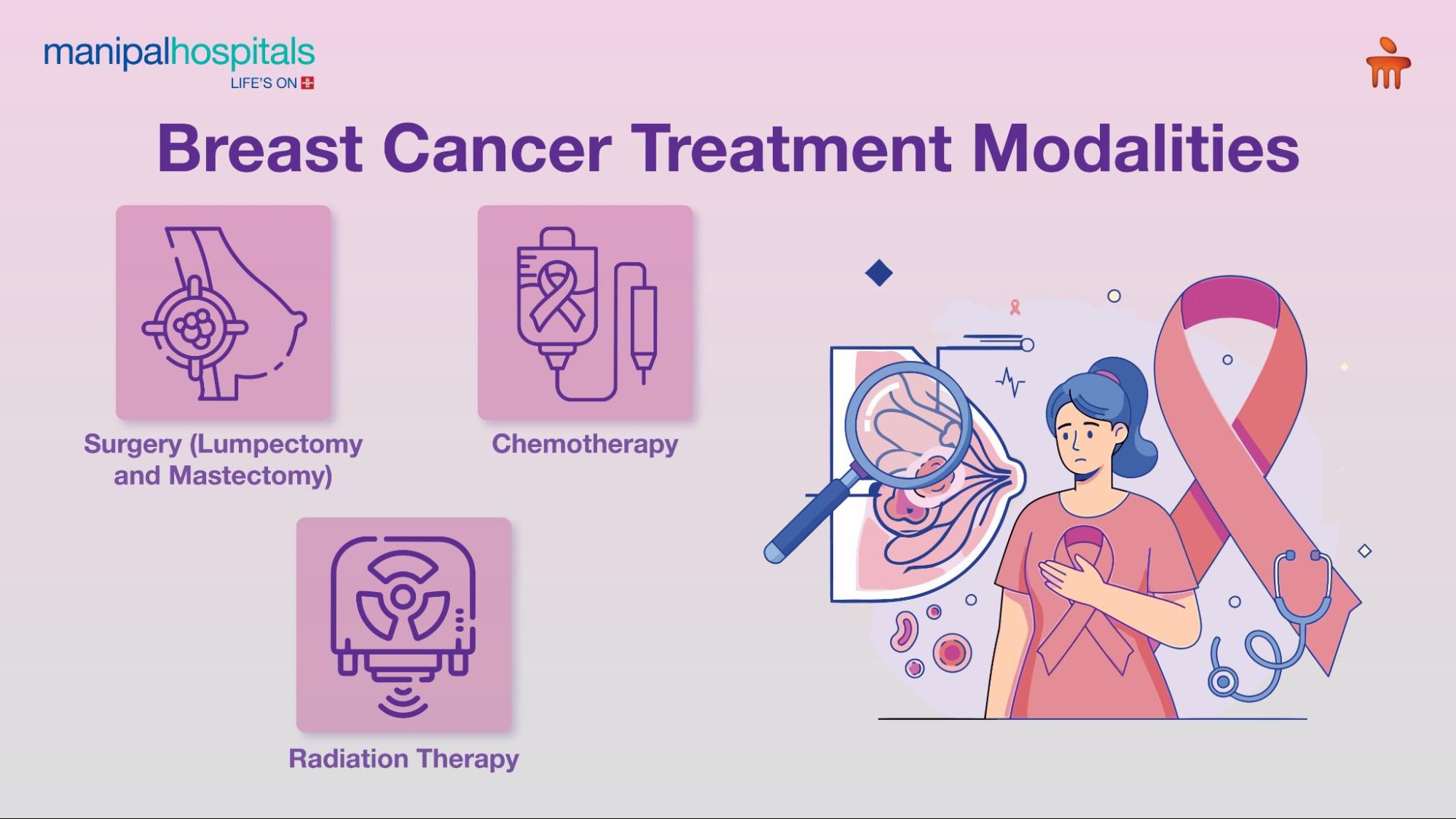
Breast cancer treatment combines therapies like surgery, chemotherapy, and radiation, often with targeted or hormone therapy. An integrated approach is often used to maximize successful outcomes.
Breast Cancer Surgical Options
Surgery is often the principal option of breast cancer treatment. The two main breast cancer surgical options are Lumpectomy (lump removal, often with radiation) and Mastectomy (entire breast removal). Lymph node dissection checks for spread. Early-stage patients achieve over 95% local disease control with surgery and adjuvant therapies.
Chemotherapy for Breast Cancer
Chemotherapy as a form of breast cancer treatment uses drugs to kill cancer cells. Chemotherapy for breast cancer can be used before or after surgery. It is of three main types; Neo-adjuvant (pre-surgery to shrink tumours), Adjuvant (post-surgery to destroy remaining cells), or Palliative (symptom control). Adjuvant chemotherapy reduces recurrence risk by 30-50%, thereby improving survival rate significantly.
Radiation Therapy: Targeting Cancer Cells
Another form of breast cancer treatment is radiation therapy. Radiation therapy for breast cancer uses high-energy rays to destroy cancer cells. This procedure is typically used post-lumpectomy or mastectomy. While mastectomy may not always warrant the need for radiation, it is always applied after lumpectomy. External Beam Radiation Therapy is a common form of radiation therapy for breast cancer. Post-lumpectomy radiation lowers local recurrence by 50-70%, which is essential for long-term remission.
Care Essentials: Do's and Don'ts
It is crucial to maintain some essential do’s and dont’s during treatment to prioritize well-being:
Do’s
-
Stay hydrated,
-
Eat a balanced diet
-
Get adequate rest
-
Communicate regularly with your care team and seek support when necessary
-
Perform mild to moderate activity as advised by the doctor
Don’t’s
-
Avoid self-medicating
-
Do not ignore symptoms
-
Do not overexert yourself,
-
Do not keep yourself isolated, or self-blame.
Conclusion
Manipal Hospitals Rangapani prides itself on a multidisciplinary team approach. Oncologists, surgeons, and support staff collaborate to design personalized breast cancer treatment plans, ensuring comprehensive care with expertise. At Manipal Hospitals Rangapani, we offer advanced, compassionate breast cancer treatment options. Understanding your treatment path empowers you toward recovery and control. Book an appointment with our expert oncologist at Manipal Hospitals today. Your health is our priority.
FAQ's
Some of the most common symptoms of breast cancer include: a noticeable lump in your breast or underarm, clear or bloody nipple discharge, persistent pain in breast or nipple, changes in texture of breast skin, inverted or sore nipples.
No, breast cancer treatment is highly individualized, and it is based on stage, type, genetics, health, and preferences of the patient.
Some of the common side effects of chemotherapy include fatigue, nausea, hair loss, mouth sores, and increased infection risk. Appropriate supportive care is provided to prevent side effects.
For a lumpectomy, it is often an outpatient procedure or involves an overnight stay at the hospital. Mastectomy, especially with reconstruction, typically requires 1 to 3 days. Specifics depend on your individual procedure.
Risk of radioactivity is only present when one is in under active treatment. Once they are away from the radiation beam, they can safely be in presence of others.
Common side effects include pain, swelling, bruising, and temporary numbness around the surgical site. Lymphedema (arm swelling) can occur with lymph node removal, though precautions minimise this risk.
Yes, many patients choose immediate breast reconstruction surgery, or choose to undergo the same much later.
Breast cancer recovery time varies. For a lumpectomy, most individuals can resume light activities within 1-2 weeks and return to work within 2-3 weeks. Mastectomy typically requires 3-6 weeks for a full return to normal activities, with guidance from your team.
Share this article on: