5 Min Read
A cancer diagnosis can be challenging, both for the patient and their family. However, medical advancements have helped turn a page on cancer treatment. One such approach is immunotherapy for cancer. Immunotherapy is a revolutionary treatment that has brought a new era in disease management, particularly in oncology. It empowers the body's own immune system to fight disease, harnessing its power to precisely detect and destroy harmful cells. This approach offers new hope and improved outcomes, especially for cancer patients.
Synopsis
What is Immunotherapy?
Before determining if immunotherapy for cancer is the correct form of treatment, it is important to understand – what is immunotherapy?
Immunotherapy is a biological therapy that empowers the body's immune system to fight against disease. Rather than directly targeting diseased cells, it stimulates or restores the immune system's natural ability to recognise cancer cells in order to destroy and eliminate those cells. Cancer cells often evade detection, which is why immunotherapy has been designed to help overcome these evasive tactics.
How Does Immunotherapy Work?
How immunotherapy works is another commonly asked question, and it involves diverse strategies to enhance immune response. Immunotherapy is used to boost immune cell activity, help the immune system identify diseased cells, block signals that cancer cells use to hide, or introduce laboratory-made immune components. Immunotherapy for cancer harnesses the body's defence system, leading to a more targeted approach, often with lasting protection and the development of immune "memory".
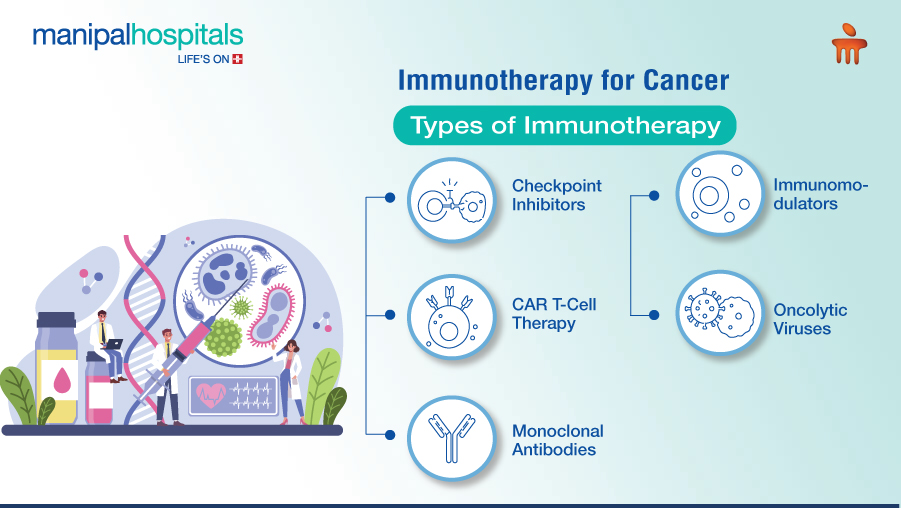
Types of Immunotherapy
Different types of immunotherapy may be used for the treatment of cancer. They include:
-
Checkpoint Inhibitors: These drugs block proteins that cancer cells use to suppress the immune system, causing the immune system to attack these cells.
-
CAR T-Cell Therapy: A personalised therapy where a patient's T-cells are genetically modified to specifically target and destroy cancer cells.
-
Monoclonal Antibodies: Lab-made antibodies targeting specific proteins on cancer cells to mark them for destruction or block their growth.
-
Immunomodulators: Substances like cytokines that regulate and enhance the immune response against cancer cells.
-
Oncolytic Viruses: Viruses engineered to infect and destroy cancer cells while also stimulating an immune response.
Immunotherapy for Cancer
Immunotherapy for cancer has become a game-changer, particularly for cancers which were previously hard to treat, like melanoma and lung cancer. It has transformed prognoses, leading to significant improvements in patient outcomes and long-term survival, offering unprecedented hope.
Successful immunotherapy requires close partnership with your healthcare team. Always report any new or worsening symptoms to your doctor, adhere to treatment schedules, and avoid self-medicating without consulting your doctor. Open communication with your medical team is vital for managing treatment safely and effectively.
Conclusion
Immunotherapy for cancer has shone a new light in cancer treatment, offering unprecedented hope and significant outcomes to cancer patients. At Manipal Hospitals Rangapani, our expert medical oncologists provide comprehensive, personalised treatment for the best possible outcomes. If you or a loved one is considering advanced treatment options, book your appointment at Manipal Hospitals Rangapani. Our expert oncologists and immunologists are equipped with the latest knowledge and technology to guide you through your journey.
FAQ's
No, its applicability depends on the type of cancer, its genetic profile, and individual patient factors. An oncologist determines if is it suitable for the patient.
Side effects, known as immune-related adverse events, result from an overactive immune system attacking healthy tissues. These can include fatigue, rashes, diarrhoea, and organ inflammation, which are typically manageable.
Duration varies significantly, from several months to several years, depending on the cancer type, treatment regimen, and patient response.
Yes, it is often combined with other treatments, like chemotherapy, radiation, targeted therapy, or surgery, in order to achieve better overall outcomes by attacking cancer from multiple angles.
Success rates vary by cancer type, stage, and patient factors. For some advanced cancers, it has led to durable responses and long-term survival in a significant percentage of patients.
Share this article on: