4 Min Read
Informed patients are empowered patients! Oral cancer, or mouth cancer, is a serious form of cancer that frequently presents with visible and detectable early signs. Recognising these initial indicators can make a profound difference in treatment outcomes. This blog aims to shed light on the crucial mouth cancer symptoms, helping you understand what to look for and when to seek professional advice.
Synopsis
Why is Early Detection of Oral Cancer So Crucial?
Oral cancer refers to any cancerous growth found in the mouth, lips, tongue, gums, or roof of the mouth. Its impact is significantly reduced when caught in its initial stages. Studies show that when oral cancer is detected early, the 5-year survival rate can be as high as 85% to 90%. This statistic underscores the immense value of timely identification and intervention. With over 300,000 new cases diagnosed globally each year, awareness and early detection of mouth cancer symptoms are vital.
What Mouth Cancer Signs Should I Look Out For?
The earliest oral cancer symptoms can be subtle. However, persistence and progression indicate a potential issue. It is vital to pay attention to any unusual changes in your mouth that do not heal within two weeks. Early intervention leads to less invasive oral cancer treatment options and a high quality of life post-treatment.
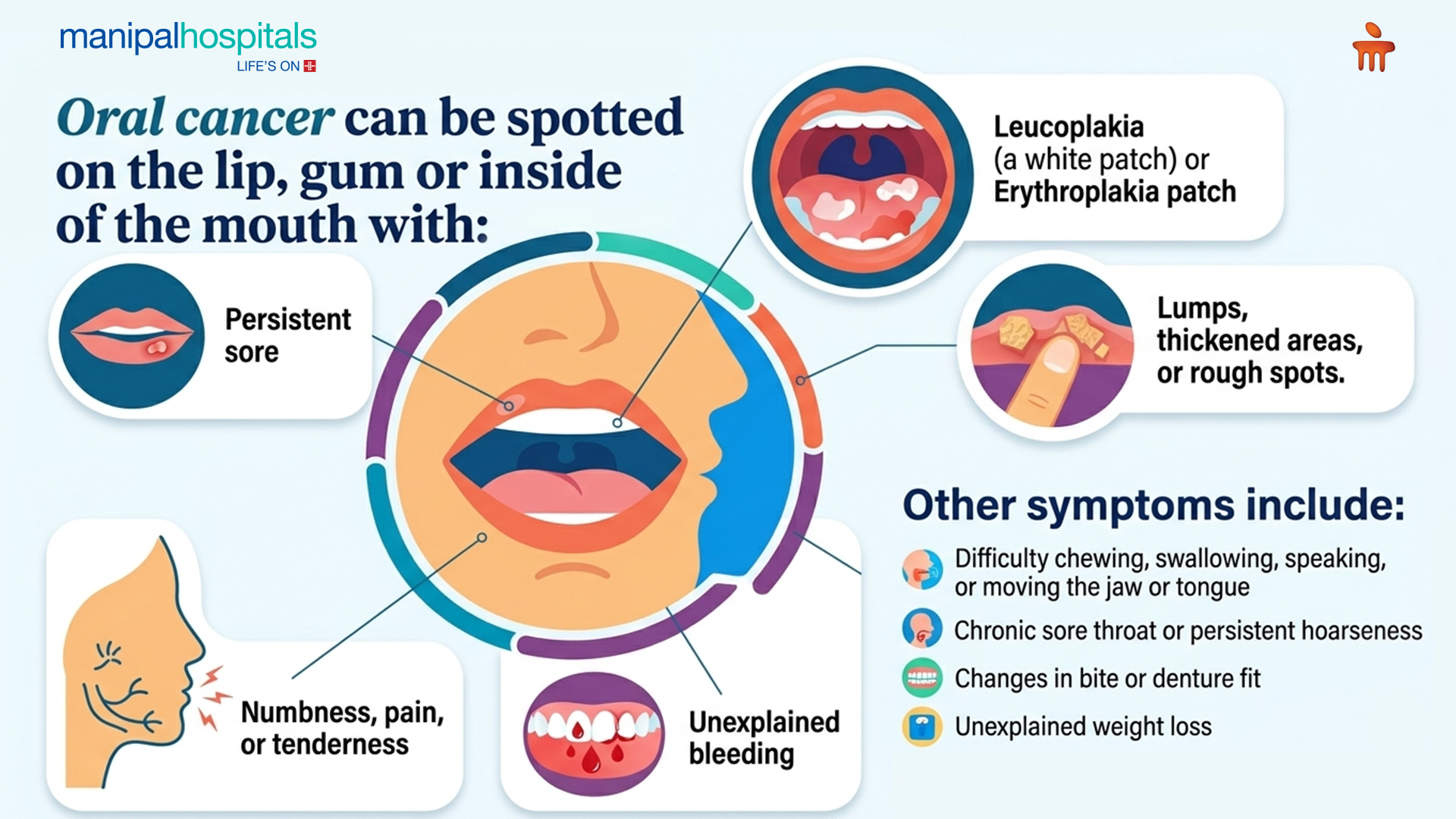
The following are the primary mouth cancer signs to be aware of:
-
Persistent sore or irritation in the mouth, lip, or throat
-
A white patch in mouth (leucoplakia) or a red patch (erythroplakia) on the gums, tongue, or lining of the mouth that does not resolve. These can be precancerous
-
Lumps, thickened areas, or rough spots in the mouth or on the lips.
-
Unexplained bleeding in the mouth
-
Numbness, pain, or tenderness in the face, mouth, or neck
-
Difficulty chewing, swallowing, speaking, or moving the jaw or tongue (these can also be tongue cancer symptoms)
-
Chronic sore throat or persistent hoarseness
-
Changes in bite or denture fit
What Causes Oral Cancer?
Understanding the oral cancer causes and risk factors can aid in prevention and early detection. Primary risk factors include:
-
Tobacco use- Smoking (cigarettes, cigars, pipes) or smokeless tobacco
-
Heavy alcohol consumption- Regular and excessive alcohol intake
-
Human Papilloma Virus (HPV)- Certain strains, particularly HPV-16
-
Sun exposure- Prolonged sun exposure, especially for the lips
-
Poor nutrition- A diet low in fruits and vegetables
-
Genetic predisposition- A family history of cancer
Why Is Regular Oral Cancer Screening Important?
Regular oral cancer screening is a simple yet powerful tool for early detection of mouth cancer. Your dentist or doctor can perform a quick, painless visual and physical examination of your mouth, neck, and throat during routine check-ups. This proactive approach significantly increases early detection chances by over 70%. Remember that early diagnosis often means simpler, more effective oral cancer treatment and a much higher chance of a full recovery.
Conclusion
Oral cancer is a serious condition that can affect the mouth, tongue, and surrounding tissues, and delayed diagnosis may impact treatment outcomes. Early detection and timely treatment play a crucial role in improving recovery and quality of life. At Manipal Hospitals, our experienced cancer specialists provide comprehensive evaluation, advanced treatment options, and personalised care for every stage of oral cancer. If you notice persistent symptoms or have concerns about your oral health, book an appointment with our surgical oncologist at Manipal Hospitals Rangapani today for expert guidance and timely care.
FAQ's
Anyone can get oral cancer, but the risk is higher for those who use tobacco or alcohol, have HPV, or have prolonged sun exposure to the lips. Age also plays a role, with most diagnoses occurring in people over 40.
Not always. Early stages of oral cancer may present without pain, making regular oral screenings and self-examinations important for early detection. Pain or discomfort may develop as the condition progresses to a more advanced stage.
Yes, dentists are often the first healthcare professionals to spot potential signs of oral cancer during routine check-ups. They perform visual and tactile examinations of the mouth, tongue, and throat.
Early detection and timely treatment can significantly improve oral cancer outcomes. When diagnosed at an early, localised stage, oral cancer has a much higher survival rate, which highlights the importance of regular check-ups and prompt medical care.
Leukoplakia is a thick, white patch that forms on the tongue, gums, or inside of the cheek. While not always cancerous, it can be precancerous and should always be evaluated by a healthcare professional.
Share this article on: