5 Min Read
A diagnosis of colon or rectal cancer can be daunting! It brings with it a myriad of questions and concerns. Colon cancer surgery remains a cornerstone of effective treatment for many individuals, offering the best chance for cure and long-term recovery. Clear, compassionate information is crucial in empowering the patients and their families. This guide will walk you through every stage of the surgical journey for colorectal cancer, from meticulous preparation to the crucial post-operative recovery, ensuring you feel informed and supported every step of the way.
Synopsis
Understanding colorectal cancer surgery
Colorectal cancer surgery involves the removal of the cancerous part of the colon or rectum, along with nearby lymph nodes to check for spread. The primary goal is to remove all cancerous tissue and prevent its recurrence, thereby improving patient outcomes and quality of life.
There are several types of treatment procedures, tailored to the location, size, and stage of the cancer. These include:
-
Colectomy, which essentially involves the removal of part or all of the colon.
-
Low Anterior Resection for removing the lower rectum and a portion of the sigmoid colon to treat rectal cancers, and potentially ostomy creation.
-
Minimally invasive techniques, such as laparoscopic colectomy, are increasingly common for many patients.
Before the surgery (Pre-operative phase)
Thorough preparation is key to a successful outcome in colon cancer surgery. A team of skilled specialists ensures personalised care during this crucial phase. This includes:
A comprehensive medical evaluation (physical exams, blood tests, imaging)
-
Nutritional assessment
-
Bowel preparation
-
A detailed medication review
-
A pre-anesthetic check-up
If an ostomy is anticipated, consultation with a specialised nurse follows
It is vital to follow all dietary and bowel prep instructions meticulously, inform the medical team about all medications, and arrange for home support. Avoidance of eating or drinking after the specified time before surgery, and refrain from smoking or consuming alcohol are important.
During the operation (Intra-operative phase)
On the day of the surgery, the patient is given general anesthesia. A skilled surgical oncology team, comprising colorectal surgeons, anesthesiologists, and nurses, work meticulously to ensure the best possible outcome.
The cancerous section of the colon or rectum is carefully removed, along with surrounding lymph nodes. Whenever possible, the remaining healthy ends of the bowel are reconnected (anastomosis) to restore normal digestive function. If reconnection is not immediately safe or feasible, a temporary or permanent ostomy may be created.
Surgical approaches include-
-
Open surgery which involves a single, larger incision
-
Minimally invasive techniques including laparoscopic surgery and robotic-assisted surgery
-
Laparoscopic surgery- this uses several small incisions, often leading to less pain, smaller scars, and faster recovery.
-
Robotic-assisted surgery- this offers enhanced precision and dexterity for the surgeon.
After the surgery (Post-operative phase)
The post-operative period focuses on pain management, monitoring for complications, and facilitating your return to normal activities. Hospital stays typically range from 3 to 7 days, often shorter for minimally invasive procedures.
-
The patient is closely monitored in a recovery room, with pain medication administered as needed.
-
Early mobilisation, such as walking, is strongly encouraged to prevent complications like blood clots.
-
Diet gradually progresses from clear liquids to a regular diet.
-
Detailed wound care instructions are provided. (For example, during a hemicolectomy recovery, following discharge instructions carefully is vital for optimal healing. In case of an ostomy, a stoma nurse educates the patient on its management.)
-
Before discharge, instructions on medication, diet, activity restrictions, and signs of potential complications are explained in detail.
-
Regular follow-up appointments are crucial to monitor recovery and discuss further treatment if necessary.
Benefits of colorectal cancer surgery
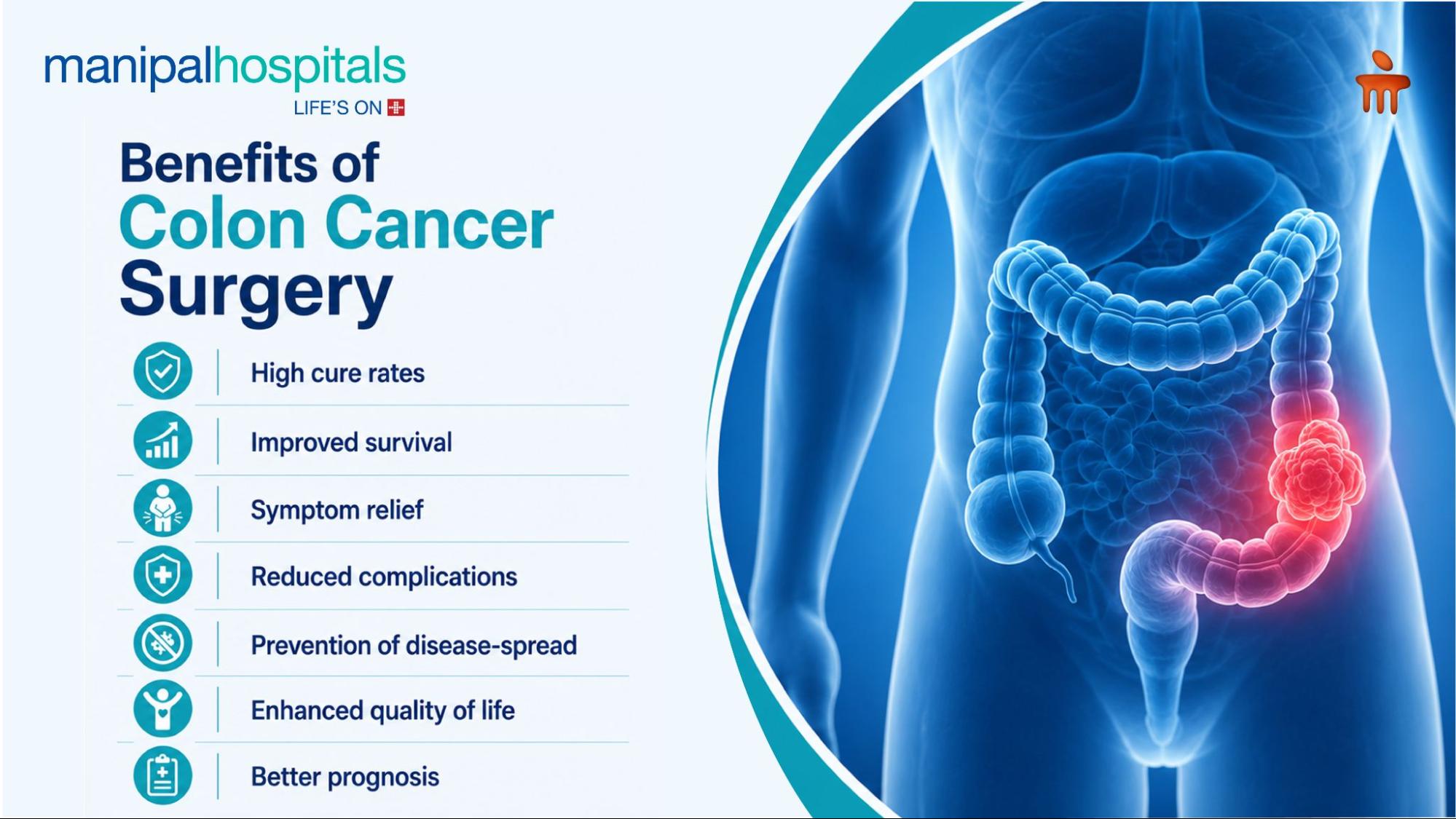
Undergoing colon cancer surgery offers significant advantages:
-
High cure rates for early-stage cancers- It helps remove cancerous growths from the colon or rectum, reducing the spread of disease and improving the chances of successful treatment.
-
Improved survival- Early surgical intervention significantly increases survival rates, especially when colorectal cancer is diagnosed in its initial stages.
-
Relief from symptoms- Colorectal cancer surgery can reduce symptoms like abdominal pain, rectal bleeding, bowel obstruction, constipation, and discomfort caused by the tumour.
-
Reduced risk of complications- Timely surgery can prevent complications such as intestinal blockage, severe bleeding, perforation, and infection caused by tumour growth.
-
Prevention from spread of cancer- Surgery can help stop cancer from spreading to nearby lymph nodes and distant organs such as the liver or lungs.
-
Enhanced quality of life and better prognosis- By eliminating or reducing the cancer burden, patients often experience improved digestion, bowel function, and overall well-being after recovery.
With advanced laparoscopic and robotic techniques, added benefits include:
-
Improved precision
-
Smaller incisions
-
Minimal scarring
-
Less pain
-
Reduced blood loss
-
Faster recovery
-
Shorter hospital stay
-
Lower risk of infection
Conclusion
Colon cancer surgery plays a vital role in removing cancerous tumours from colon or rectum, preventing disease progression, and improving long-term survival and quality of life.Our multidisciplinary specialists at Manipal Hospitals provide personalised, comprehensive care with a strong focus on effective cancer treatment and preserving bowel function whenever possible. If you are experiencing symptoms of colorectal cancer or exploring treatment options, consult our experienced surgical oncology team at Manipal Hospitals Rangapani.
FAQ's
Not always. Blood in the stool can also occur due to piles, fissures, or infections. However, persistent or unexplained bleeding should never be ignored and requires medical evaluation.
Yes, although colorectal cancer is more common in older adults, cases among younger individuals have been increasing in recent years. Persistent digestive symptoms should not be ignored regardless of age.
Colon cancer develops in the large intestine, while rectal cancer occurs in the rectum, which is the last few inches of the digestive tract. Both are collectively referred to as colorectal cancer but may differ in treatment approaches.
Yes, both piles and colon cancer can cause symptoms such as rectal bleeding, discomfort, pain during bowel movements, and changes in bowel habits. Hence, persistent or unexplained bleeding should never be ignored and must be evaluated by a doctor promptly.
Colon polyps are abnormal growths that develop on the inner lining of the colon or rectum. Although many polyps are non-cancerous and harmless initially, certain types can gradually develop into colorectal cancer over time if they are not detected.
Share this article on: