7 Min Read
Breast cancer is the most common form of cancer in women in India, both in urban and rural areas. It is reported that about 14% of all cancers in women is breast cancer, and more than 2,00,000 such cases are reported each year. Surgery is often the gold standard treatment modality, and breast cancer surgery may be performed to remove the full breast (mastectomy) or partial breast or breast lump (lumpectomy). This blog highlights the key differences between both breast cancer surgery procedures to help you make the best decisions for your health.
Synopsis
Understanding Breast Cancer Surgery
The primary goal of breast cancer surgery is to remove cancerous tissue in your breast to stop it from spreading further in your body. Breast cancer surgery is a personal approach, and it is determined from considering several factors, including tumour specifications (size, location, and stage), lymph node involvement, general health, genetics, and eligibility. Irrespective of treatment choice, early detection of breast cancer is crucial for successful outcomes.
Lumpectomy or Segmental Mastectomy
Also known as breast-conserving surgery or segmental mastectomy, a lumpectomy removes only the cancerous lump and a small margin of healthy tissue, preserving most of the breast tissue. It typically requires post-operative radiation therapy to reduce recurrence risk. This procedure is less invasive, with a shorter breast cancer recovery time, offering survival rates comparable to mastectomy when cancer is detected at early stages.
Mastectomy: A More Extensive Path
A mastectomy involves removing the entire breast and it is usually the preferred mode of breast cancer surgery for more advanced stages. Types of mastectomy include simple, modified radical (the most common), skin-sparing, and nipple-sparing mastectomy. It is often recommended for larger tumours, multiple tumours in different areas, previous radiation therapy, or specific genetic risks (e.g., BRCA1/BRCA2). Though mastectomy removes the entire breast, it reduces risk of recurrence of localised cancer.
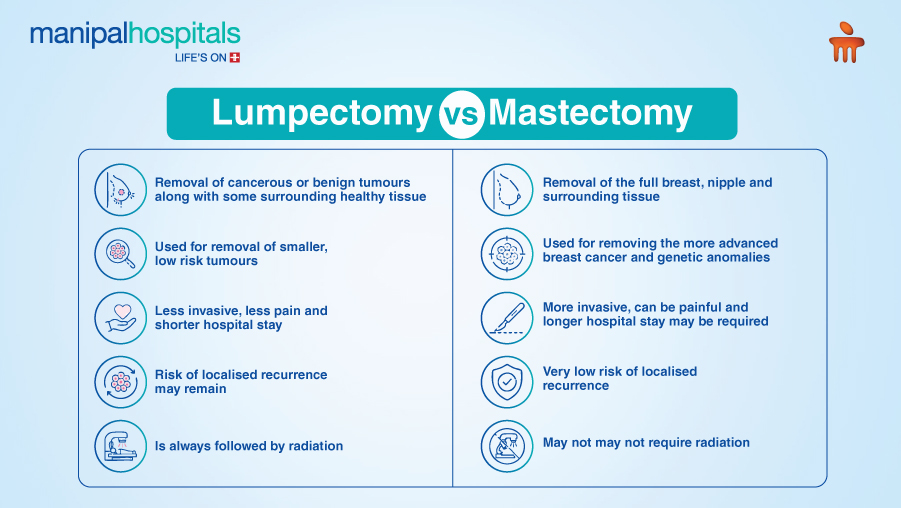
Lumpectomy vs Mastectomy: Key Differences
Understanding the key differences between Lumpectomy and Mastectomy will help you make a more informed decision about your health.
|
Lumpectomy |
Mastectomy |
|
Removes only the cancerous portion of the breast and small amount of healthy tissue around it. |
Removes the entire breast, nipple and surrounding tissue. |
|
Mainly performed for smaller tumours relative to breast size and benign breast tumours. |
Performed for more advanced stages of breast cancer, multiple breast tumours or genetic anomalies. |
|
Always followed by radiation. |
May or may not be followed by radiation. |
|
Shorter span of surgery; may be performed under local anaesthesia |
Longer duration of surgery; can take several hours and performed under general anaesthesia. |
|
Shorter hospital stay; patient may be released on the same day. |
Patient may need to spend some days at the hospital. |
|
Risk of localised recurrence. |
Low to no risk of localised recurrence. |
Recovery Time of Breast Cancer Surgery
Breast cancer recovery time varies significantly. Lumpectomy recovery typically takes 1-3 weeks, with less pain and a shorter hospital stay. Mastectomy recovery usually takes 3-6 weeks, potentially longer with reconstruction, involving more pain and a longer hospital stay (1-3 days). Drains may be placed, and physical therapy is often needed for arm movement.
Care Essentials: Do's and Don'ts
Do’s:
-
Diligent post-operative care is crucial.
-
Do engage in gentle exercises,
-
Wear supportive clothing,
-
Maintain a healthy diet, and
-
Attend all follow-up appointments.
Don’ts:
-
Do not lift heavy objects prematurely
-
Do not ignore pain or discomfort, or
-
Do not skip appointments.
-
Do not hold back any concerns from your care team.
Conclusion
A breast cancer diagnosis can rightly be a cause of worry, but early detection and timely treatment can significantly improve patient outcomes. Choosing the right surgical path for breast cancer is a significant decision. At Manipal Hospitals Rangapani, our priority is your health and well-being. Our expert surgical oncology team provides the latest treatments and empathetic support for your breast cancer journey, helping you make the best choice. Early detection and advanced treatments have improved 5-year survival rates for localised breast cancer to an impressive 99%.
FAQ's
Generally, yes. Radiation after a lumpectomy helps destroy remaining cancer cells and reduces recurrence risk. Exceptions like very small, low-risk tumours in older patients are to be discussed with your oncologist.
Yes, absolutely. Many women opt for immediate or delayed breast reconstruction, and it happens with plastic surgeons collaborating closely with your oncology team.
For a lumpectomy, it is often an outpatient procedure or involves an overnight stay at the hospital. Mastectomy, especially with reconstruction, typically requires 1 to 3 days. Specifics depend on your individual procedure.
Common side effects include pain, swelling, bruising, and temporary numbness around the surgical site. Lymphedema (arm swelling) can occur with lymph node removal, though precautions minimise this risk.
Breast cancer recovery time varies. For a lumpectomy, most individuals can resume light activities within 1-2 weeks and return to work within 2-3 weeks. Mastectomy typically requires 3-6 weeks for a full return to normal activities, with guidance from your team.
Share this article on: