8 Min Read
Neck pain is a remarkably common ailment, affecting a significant portion of the population at some point in their lives. While often dismissed as a minor stiffness or muscle strain from a long day or awkward sleep, persistent or severe neck pain can be a signal of underlying issues that require medical attention. At Manipal Hospitals, we understand the profound impact neck pain can have on your daily life, productivity, and overall well-being. This comprehensive guide aims to shed light on the diverse causes of neck pain, helping you understand when it’s time to seek expert care.
Synopsis
Understanding Neck Pain: The Basics
Your neck, or cervical spine, is a marvel of engineering. Comprising seven small vertebrae, it supports the weight of your head (which can be over 5 kg!), allows for an incredible range of motion, and protects the delicate spinal cord. This complex structure, with its intricate network of bones, ligaments, muscles, and nerves, is also highly susceptible to injury and degenerative changes, making it a frequent site of discomfort.
What is Neck Pain?
Neck pain refers to discomfort anywhere in the neck region, from the base of the skull down to the shoulders. It can manifest in various ways – a dull ache, sharp stabbing pain, stiffness, tingling, numbness, or even weakness radiating into the arms. Understanding the nature and location of your neck pain symptoms is the first step towards accurate diagnosis.
Delving into Common Neck Pain Causes
While acute neck pain often resolves within a few days or weeks with rest and conservative management, chronic or recurrent pain necessitates a deeper investigation into its origins. Here are the primary neck pain causes:
Musculoskeletal Issues
-
Muscle Strain or Sprain: This is arguably the most frequent cause. Overuse, poor posture (e.g., "tech neck" from looking down at devices), sudden movements, or sleeping in an awkward position can strain neck muscles and ligaments.
-
Whiplash: A common injury from car accidents or other traumas where the head is suddenly forced backward and then forward, stretching and tearing muscles and ligaments in the neck.
-
Poor Posture: Prolonged slouching or incorrect desk ergonomics places undue stress on the cervical spine, leading to muscle fatigue and misalignment over time. Studies indicate that up to 70% of individuals experiencing chronic neck pain attribute it to poor posture.
Degenerative Conditions (Cervical Pain Causes)
As we age, the structures in our cervical spine naturally undergo wear and tear. These degenerative changes are a significant cervical pain causes.
-
Cervical Spondylosis (Neck Osteoarthritis): This is an age-related condition affecting the joints and discs in your neck. The cartilage that cushions the bones wears down, leading to bone spurs and reduced joint mobility. Over 85% of people over the age of 60 show signs of cervical spondylosis on X-rays, though not all experience symptoms.
-
Herniated Disc (Slipped Disc): The intervertebral discs act as shock absorbers. If one ruptures or bulges, the soft inner material can press on nearby nerves, causing pain, numbness, or weakness in the neck, shoulder, arm, or hand.
-
Spinal Stenosis: This refers to the narrowing of the spinal canal, which can put pressure on the spinal cord and nerve roots. It can be caused by bone spurs, thickened ligaments, or disc bulges.
Nerve Compression
When nerves exiting the spinal cord in the neck are compressed, it can lead to radiating pain and other neurological symptoms.
-
Cervical Radiculopathy: Often caused by a herniated disc or bone spur, this condition involves a "pinched nerve" in the neck. Symptoms include sharp, shooting pain, tingling, numbness, or weakness that travels down the arm into the hand. Early diagnosis and treatment can lead to significant improvement in up to 90% of cases.
Less Common, More Serious Causes
While rare, some neck pain can indicate more serious underlying conditions:
-
Infections: Conditions like meningitis or osteomyelitis (bone infection) can cause severe neck stiffness and pain, often accompanied by fever.
-
Tumours: Benign or malignant growths in the spine can compress nerves or weaken bones, leading to pain.
-
Rheumatoid Arthritis: This autoimmune disease can affect the joints in the neck, causing pain, stiffness, and inflammation.
-
Fibromyalgia: A chronic condition characterised by widespread pain, including in the neck, along with fatigue and tenderness in specific areas.
-
Cardiac Issues: In some rare instances, neck pain, particularly on the left side, can be referred pain from a heart attack, especially in women.
Recognising Neck Pain Symptoms
The neck pain symptoms you experience can offer valuable clues about the underlying cause:
-
Localised Pain: Dull ache or sharp pain in one spot in the neck.
-
Stiffness: Difficulty moving the head, especially turning it from side to side.
-
Headaches: Often originating from the base of the skull and radiating to the front of the head (cervicogenic headaches).
-
Radiating Pain: Pain that travels down the arms, sometimes into the hands or fingers.
-
Numbness or Tingling: "Pins and needles" sensation in the arms, hands, or fingers.
-
Weakness: Difficulty gripping objects or lifting arms.
-
Muscle Spasms: Involuntary contraction of neck muscles.
-
Loss of Balance: In severe cases of spinal cord compression.
Effective Neck Pain Treatment Options at Manipal Hospitals
The good news is that most forms of neck pain are treatable, and many patients experience significant relief with conservative approaches. At Manipal Hospitals, our multidisciplinary team of orthopaedists, neurologists, physiotherapists, and pain management specialists work collaboratively to provide personalised neck pain treatment plans.
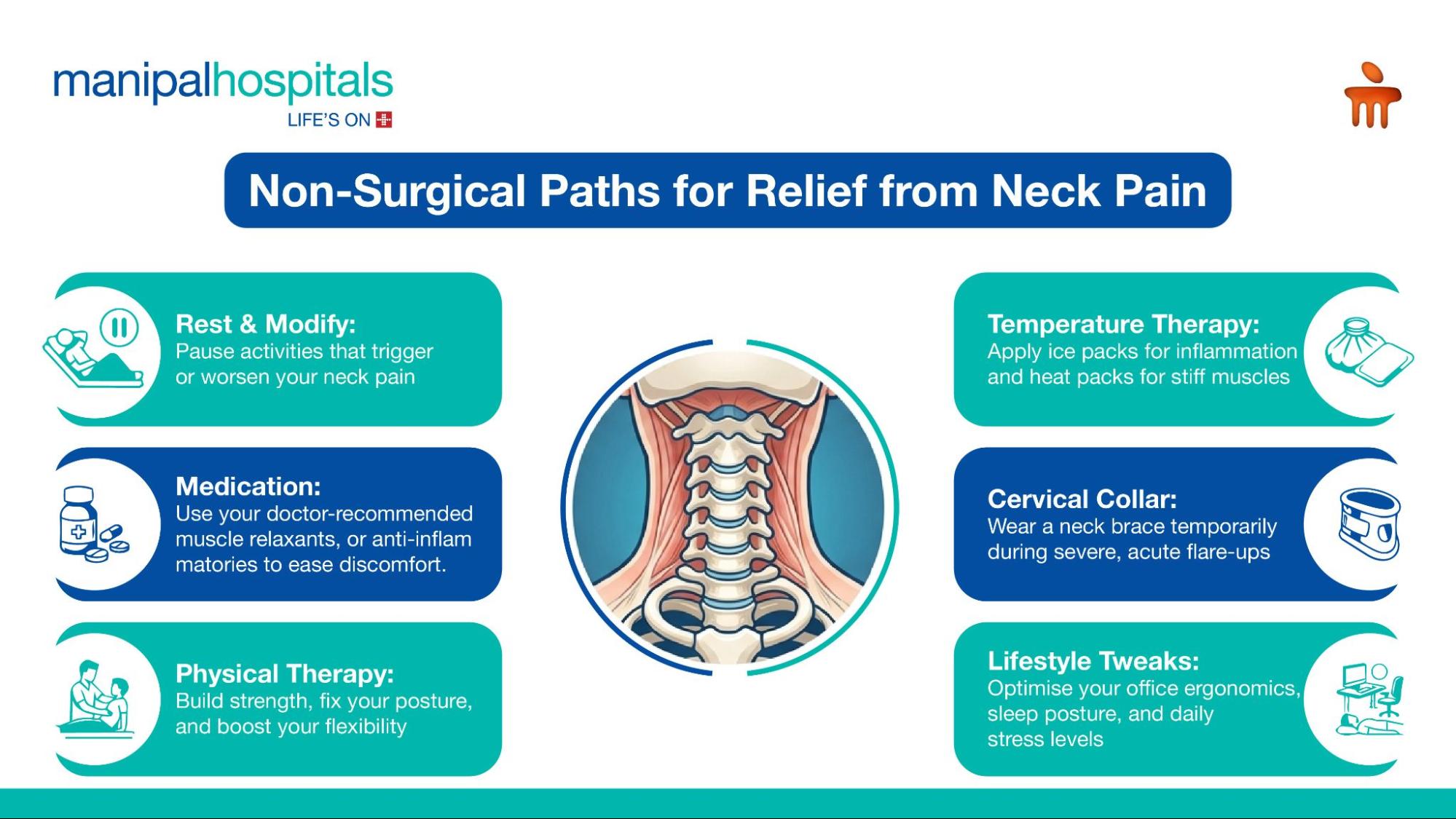
Conservative Management
-
Rest and Activity Modification: Avoiding activities that aggravate pain.
-
Medication: Over-the-counter pain relievers, muscle relaxants, or anti-inflammatory drugs.
-
Physical Therapy: Tailored exercises to strengthen neck muscles, improve posture, and increase flexibility. Our rehabilitation programs have an impressive success rate, with over 80% of patients reporting significant functional improvement.
-
Heat and Cold Therapy: Applying packs to reduce pain and inflammation.
-
Cervical Collar: Short-term use to immobilise the neck in acute cases.
-
Lifestyle Adjustments: Ergonomic changes at work, proper sleep posture, and stress management.
Advanced Interventions
For persistent pain or severe nerve compression, more advanced treatments may be considered:
-
Steroid Injections: Epidural steroid injections or nerve block injections can reduce inflammation and provide pain relief. Many patients experience relief lasting several months, with success rates often exceeding 70%.
-
Radiofrequency Ablation: A procedure that uses heat to temporarily "turn off" nerve signals causing pain. This can provide long-term relief for certain types of chronic neck pain.
-
Surgery: In rare cases, such as severe spinal cord compression, persistent nerve impingement that doesn't respond to conservative treatments, or instability, surgery may be necessary. Surgical success rates for conditions like cervical disc herniation are high, with over 90% of patients experiencing significant pain reduction and improved function.
Care Essentials: Do's and Don'ts for Neck Pain
Do's:
-
Maintain Good Posture: Be mindful of your posture while sitting, standing, and using digital devices.
-
Take Regular Breaks: If you work at a desk, stand up, stretch, and move your neck gently every 30-60 minutes.
-
Use a Supportive Pillow: Choose a pillow that keeps your head and neck in neutral alignment.
-
Stay Active: Engage in regular low-impact exercise like walking or swimming to strengthen core and back muscles.
-
Apply Heat or Cold: Use ice packs for acute injuries (first 48 hours) and heat for chronic muscle stiffness.
-
Seek Medical Advice: Consult a doctor if pain is severe, persistent, or accompanied by numbness, weakness, or fever.
Don'ts:
-
Ignore Persistent Pain: Don't dismiss chronic or worsening neck pain as normal.
-
Crack Your Neck Excessively: This can lead to hypermobility and instability.
-
Slouch or Hunch: Avoid prolonged poor posture that strains the neck.
-
Carry Heavy Bags on One Shoulder: Distribute weight evenly to prevent muscle imbalance.
-
Sleep on Your Stomach: This position forces your neck to twist, leading to strain.
-
Self-Diagnose and Self-Treat Aggressively: Always get a professional diagnosis before attempting radical treatments.
If you are experiencing persistent or severe neck pain, it's crucial to seek timely medical advice. Our experts at Manipal Hospitals are dedicated to providing compassionate, comprehensive care to help you regain comfort and mobility. Book an appointment with our top orthopaedic Doctors in Ranchi orthospecialist team at Manipal Hospitals today.
FAQ's
You should seek medical attention if your neck pain is severe, constant, radiates down your arm, is accompanied by numbness or weakness, follows an injury, or comes with fever, headache, or unexplained weight loss.
Yes, stress often leads to muscle tension in the neck and shoulders, which can contribute to or worsen neck pain.
"Tech neck" is neck pain and stiffness caused by prolonged periods of looking down at smartphones or other digital devices. To prevent it, hold your device at eye level, take frequent breaks, and stretch your neck regularly.
Absolutely. Physical therapy is a cornerstone of neck pain treatment, helping to strengthen muscles, improve posture, increase flexibility, and reduce pain. Many patients experience significant relief, with up to 80% reporting functional improvement.
Yes, an unsupportive or old pillow can put your neck in an awkward position for hours, leading to stiffness and pain. Choose a pillow that supports the natural curve of your neck.
Acute neck pain from muscle strain often resolves within a few days to a few weeks. However, pain related to underlying conditions like disc issues or spondylosis may require longer-term management and can sometimes be chronic.
Share this article on: