8 Min Read
A cancer diagnosis can be a life-altering moment, often bringing with it a whirlwind of emotions and questions about treatment options. For decades, surgery, chemotherapy, and radiation therapy have been the cornerstones of cancer care. However, the landscape of oncology is rapidly evolving, ushering in groundbreaking approaches that harness the body's own defence mechanisms to fight cancer. Among these, immunotherapy for cancer stands out as a revolutionary, advanced cancer treatment, offering new hope and improved outcomes for countless patients.
At Manipal Hospitals, we are at the forefront of delivering cutting-edge cancer immunotherapy treatment, understanding its profound potential and guiding our patients through every step of their journey. This powerful approach leverages your immune system, which is naturally designed to protect you from diseases, to identify and destroy cancer cells more effectively.
Synopsis
- Understanding Immunotherapy: How It Works
- Eligibility for Cancer Immunotherapy Treatment
- Key Types of Immunotherapy and Their Impact
- The Benefits of Immunotherapy for Cancer Treatment
- Targeted Therapy vs. Immunotherapy: A Crucial Distinction
- Care Essentials: Do's and Don'ts During Immunotherapy
- The Future of Immunotherapy and Manipal's Commitment
- Conclusion
Understanding Immunotherapy: How It Works
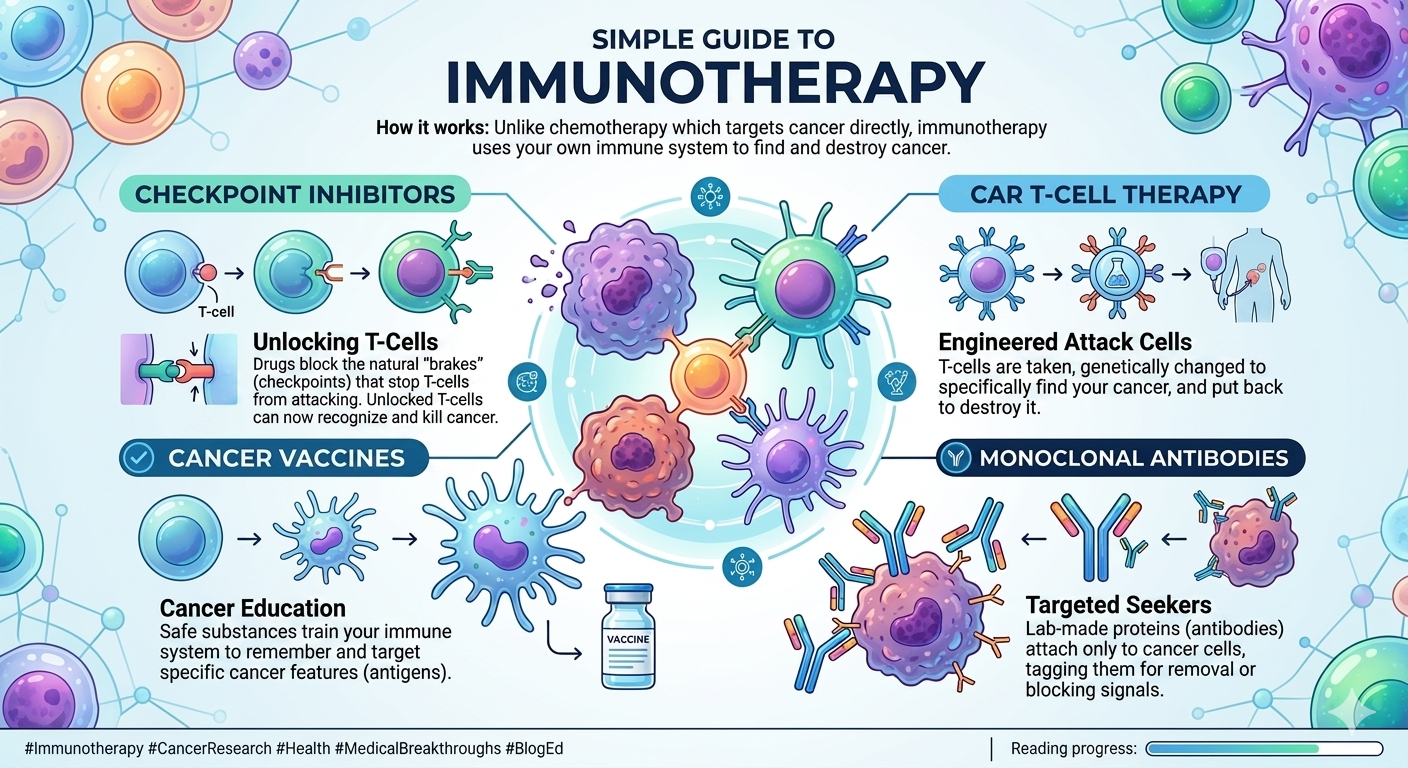
Immunotherapy isn't a single treatment but a diverse range of therapies designed to boost or alter the immune system's ability to combat cancer. Unlike traditional treatments that directly attack cancer cells, immunotherapy empowers your body to do the attacking. Cancer cells often develop clever ways to evade detection by the immune system. Immunotherapy works by:
-
Unleashing the Immune System: Some immunotherapies act like a key that unlocks the immune system's brakes, allowing it to recognise and attack cancer cells. These are often referred to as checkpoint inhibitors.
-
Boosting Immune Cells: Other methods involve enhancing the number or activity of specific immune cells, such as T-cells, to make them more effective cancer fighters.
-
Targeting Cancer-Specific Markers: Certain immunotherapies use engineered antibodies to deliver toxic substances directly to cancer cells or to block signals that cancer cells need to grow.
The goal is to restore and amplify the immune system's natural ability to distinguish between healthy cells and cancerous cells, leading to a more precise and potentially longer-lasting response against the disease.
Eligibility for Cancer Immunotherapy Treatment
While immunotherapy offers immense promise, it's not universally suitable for all cancer types or all patients. Eligibility is determined by a comprehensive evaluation by a multidisciplinary team, including a medical oncologist Delhi at Manipal Hospitals. Key factors considered include the following:
-
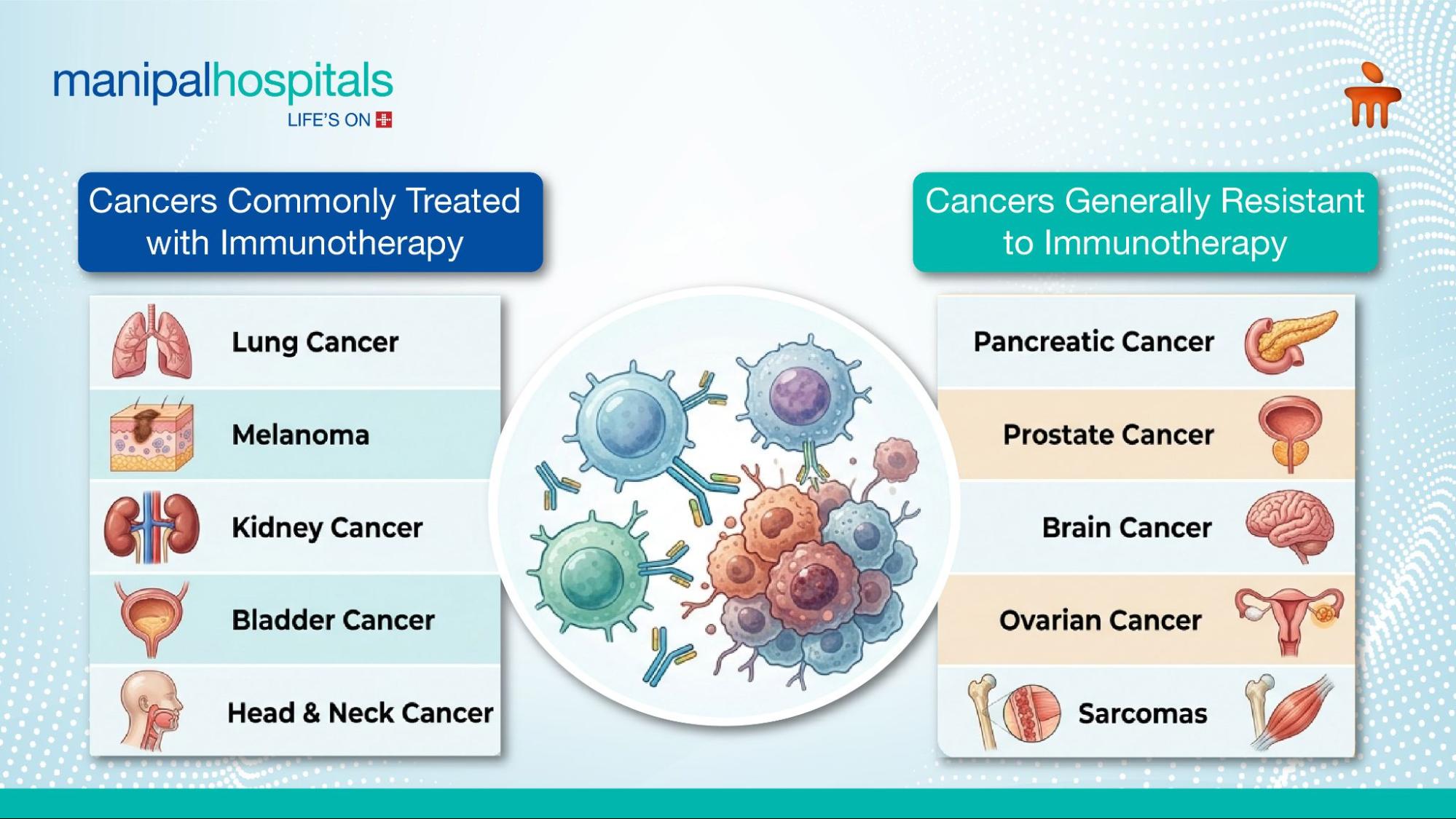
Cancer Type and Stage: Immunotherapy has shown remarkable success in treating various cancers, including melanoma, lung cancer, kidney cancer, bladder cancer, and certain types of head and neck cancers. It is often considered for advanced or metastatic cancers.
-
Biomarker Testing: Tumours are often tested for specific biomarkers (e.g., PD-L1 expression, MSI, TMB), which can predict how likely a patient is to respond to certain immunotherapies, particularly checkpoint inhibitors.
-
Overall Health: Patients need to be healthy enough to tolerate the treatment, which, while often less toxic than chemotherapy, can still have significant side effects.
-
Prior Treatments: Previous treatments, their effectiveness, and any existing autoimmune conditions are important considerations.
A detailed discussion with your oncologist is crucial to determine if immunotherapy for cancer is the right path for you, tailoring a treatment plan that aligns with your unique health profile and cancer characteristics.
Key Types of Immunotherapy and Their Impact
The field of immunotherapy is dynamic, with several approaches currently available:
-
Immune Checkpoint Inhibitors: These are a cornerstone of modern cancer immunotherapy treatment. They block proteins (checkpoints) that prevent the immune system from attacking cancer cells. By lifting these "brakes," checkpoint inhibitors (like PD-1, PD-L1, and CTLA-4 inhibitors) allow T-cells to destroy cancer cells. Clinical studies show these can lead to significantly improved survival rates in certain advanced cancer treatment settings, with response rates in some lung cancer cases reaching up to 40-50% and durable responses.
-
CAR T-cell Therapy: A revolutionary approach where a patient’s own T-cells are genetically modified in a lab to better recognise and fight cancer cells, then infused back into the patient. This has shown remarkable success, achieving complete remission rates of over 80% in some blood cancers.
-
Monoclonal Antibodies: Man-made proteins designed to attach to specific targets on cancer cells, either directly killing them or blocking growth signals.
The Benefits of Immunotherapy for Cancer Treatment
The introduction of immunotherapy for cancer has brought about several profound benefits, transforming patient outcomes:
-
Durable Responses: One of the most striking advantages is the potential for long-lasting responses, even in patients with advanced cancer treatment. Immunotherapy can lead to sustained remission and, in some cases, complete eradication of the disease. For instance, in metastatic melanoma, 5-year survival rates have more than doubled from around 10-15% with traditional therapies to over 40-50% with immunotherapy.
-
Broader Applicability: Immunotherapy's utility is expanding to a wider range of tumour types beyond its initial successes.
-
Reduced Side Effects (in some cases): While immunotherapy has unique side effects (immune-related adverse events), they can often be different and sometimes less severe than the systemic toxicity associated with traditional chemotherapy.
-
"Memory" Effect: The immune system can develop a "memory" against cancer cells, meaning it can continue to protect against recurrence even after treatment stops, offering lasting immunity.
Targeted Therapy vs. Immunotherapy: A Crucial Distinction
It's common to hear about both targeted therapy vs immunotherapy as modern cancer treatments, but they operate on different principles:
-
Targeted Therapy: This approach focuses on specific molecular targets (like genes or proteins) involved in cancer cell growth. It acts like a sniper, hitting a particular weak point in the cancer cell's machinery.
-
Immunotherapy: Immunotherapy doesn't directly attack the cancer cell's machinery. Instead, it empowers the body's own immune system to do the fighting, like training and arming an army to seek and destroy the enemy.
Often, these two powerful approaches are used in combination to achieve even better results. Your medical oncologist in Delhi at Manipal Hospitals will determine the most effective strategy based on your cancer's specific profile.
Care Essentials: Do's and Don'ts During Immunotherapy
Undergoing cancer immunotherapy treatment requires proactive self-care and close communication with your medical team. Here are some essential guidelines:
Do's:
-
Communicate Symptoms Promptly: Report any new or worsening symptoms to your healthcare team immediately.
-
Stay Hydrated and Nourished: Maintain a healthy diet and drink plenty of fluids.
-
Follow Medication Instructions: Adhere strictly to your oncologist's instructions for all medications.
-
Attend All Appointments: Regular check-ups are crucial for monitoring progress and managing side effects.
-
Engage in Gentle Activity: Unless advised otherwise, light exercise can help manage fatigue.
Don'ts:
-
Self-Medicate: Avoid taking any new medications, supplements, or herbal remedies without consulting your oncologist.
-
Ignore Side Effects: Do not downplay or ignore any symptoms, especially rashes, diarrhea, or changes in breathing.
-
Avoid Sun Exposure Without Protection: Some immunotherapies can increase sun sensitivity.
-
Overexert Yourself: Listen to your body and rest when needed.
-
Hesitate to Ask Questions: Your medical team is there to support you.
The Future of Immunotherapy and Manipal's Commitment
The field of immunotherapy for cancer is continually evolving, with ongoing research exploring new targets and combination therapies. Manipal Hospitals remains committed to bringing these innovations to our patients. Our team of highly experienced medical oncologists, researchers, and support staff works tirelessly to provide personalised, evidence-based care. We pride ourselves on offering comprehensive advanced cancer treatment options, ensuring that patients have access to the latest breakthroughs.
Our dedicated team of medical oncologists in Delhi possesses in-depth expertise in managing complex cancer cases and implementing precision medicine approaches, including advanced immunotherapy protocols. With state-of-the-art facilities and a patient-centric philosophy, we strive to achieve the best possible outcomes for every individual.
Conclusion
If you or a loved one is exploring options for advanced cancer treatment, particularly immunotherapy for cancer, understanding these facts is the first step towards informed decision-making. Our expert team at Manipal Hospitals is dedicated to providing compassionate care and innovative treatments to help you fight cancer effectively.
FAQ's
While immunotherapy has led to remarkable and durable remissions in many patients, allowing them to live long and healthy lives, it's generally not referred to as a "cure" in the absolute sense for all cancers. It significantly improves prognosis and quality of life for many.
Immunotherapy side effects, known as immune-related adverse events (irAEs), occur when the boosted immune system attacks healthy tissues. These can include fatigue, skin rash, diarrhea, and inflammation of the lungs, liver, or endocrine glands. Most irAEs are manageable with prompt medical intervention.
The duration of cancer immunotherapy treatment varies widely depending on the type of cancer, the specific drug, and the patient's response and tolerability. Some regimens may last for a fixed period (e.g., one to two years), while others may continue as long as the patient is benefiting.
Absolutely. Immunotherapy is often used in combination with chemotherapy, radiation therapy, or targeted therapy to enhance its effectiveness. Combining treatments can lead to synergistic effects, improving overall response rates and survival; for instance, combination therapy has shown up to 30% improved overall survival in certain lung cancers.
Immunotherapy drugs can be expensive, reflecting the significant research and development involved. However, many insurance providers cover immunotherapy, and financial assistance programs may be available. Manipal Hospitals also strives to make advanced treatments accessible, and our team can guide you through the financial aspects.
Share this article on: