8 Min Read
A brain abscess is a serious and potentially life-threatening condition where pus collects within the brain tissue, often surrounded by inflammation. While relatively rare, it demands immediate medical attention. At Bhagwan Mahavir Manipal Hospitals, our dedicated team of neurologists and neurosurgeons emphasises early diagnosis and aggressive treatment, which significantly improves outcomes. Understanding the causes and recognising the subtle yet critical brain infection symptoms and brain abscess symptoms can be lifesaving. This blog is a comprehensive guide that features an introduction to this medical condition, its causes, symptoms, and treatment options.
Synopsis
What is a Brain Abscess?
Imagine a localised pocket of infection forming inside your brain, much like an abscess that might develop on your skin. This is essentially what a brain abscess is. It's usually caused by bacteria or fungi that travel to the brain from another site of infection in the body or enter directly through trauma or surgery. Left untreated, a brain abscess can exert pressure on brain tissue, disrupt normal brain function, and lead to severe complications, including permanent neurological damage or even death. Fortunately, with advancements in medical science and prompt intervention, the prognosis for patients has improved dramatically, with timely treatment offering a success rate of up to 90% in many cases.
Understanding the Causes of Brain Abscess
The development of a brain abscess typically begins when microorganisms penetrate the protective barriers of the brain. Identifying the source of infection is crucial for effective brain abscess treatment. Here are the primary ways these infections can arise:
-
Spread from Nearby Infections: This is a common route. Infections in areas close to the brain can spread directly. These include:
-
Chronic ear infections (otitis media) or mastoiditis.
-
Sinusitis (frontal or ethmoid sinuses).
-
Dental infections or abscesses.
-
-
Statistics show that approximately 25-50% of brain abscesses originate from contiguous sites of infection.
-
Hematogenous Spread (Bloodstream): Bacteria or fungi from infections elsewhere in the body can travel through the bloodstream to the brain. Common distant sources include:
-
Lung infections (e.g., pneumonia, empyema).
-
Heart infections (e.g., endocarditis).
-
Abdominal infections.
-
Skin infections.
-
-
Around 20-30% of brain abscesses are caused by this method.
-
Direct Entry through Trauma or Surgery:
-
Head injuries, especially penetrating ones, can introduce bacteria directly into the brain.
-
Neurosurgical procedures, though rare due to strict sterile protocols, can sometimes lead to infection.
-
-
Compromised Immune System: Individuals with weakened immune systems due to conditions like HIV/AIDS, cancer, organ transplantation, or prolonged steroid use are at a higher risk. Their bodies struggle to fight off infections, making them more susceptible to a brain abscess.
-
Congenital Heart Disease: In some cases, especially in children, certain congenital heart defects can allow bacteria to bypass the lungs' filtering system and reach the brain.
Recognising Brain Abscess Symptoms
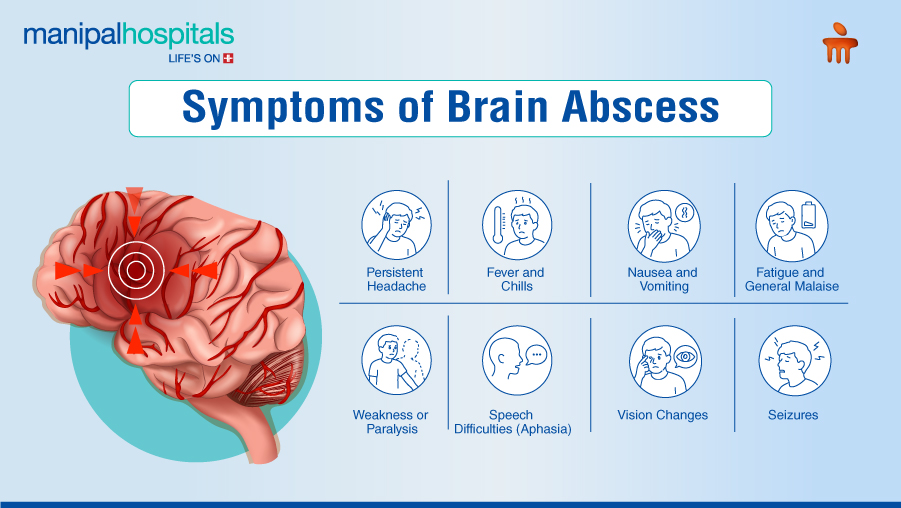
The brain abscess symptoms can vary widely depending on the size, location, and rate of growth of the abscess. They often mimic other neurological conditions, making early and accurate diagnosis critical. Vigilance for these signs is paramount:
- General Symptoms (related to infection and inflammation):
-
Persistent Headache: Often severe, progressive, and not relieved by standard pain medications. It's the most common symptom, present in over 70% of cases.
-
Fever and Chills: Though sometimes absent, particularly in immunocompromised patients.
-
Nausea and Vomiting: Often accompanied by a severe headache, indicating increased pressure within the skull.
-
Fatigue and General Malaise: A feeling of being unwell.
-
-
Focal Neurological Symptoms (related to specific brain area affected):
-
Weakness or Paralysis: On one side of the body (hemiparesis or hemiplegia).
-
Speech Difficulties (Aphasia): Trouble speaking, understanding, or finding words.
-
Vision Changes: Blurred vision, double vision, or visual field loss.
-
Seizures: Occurring in about 25-50% of patients, sometimes as the first symptom.
-
Coordination Problems: Unsteadiness, difficulty walking (ataxia).
-
-
Symptoms of Increased Intracranial Pressure:
-
Altered Mental State: Confusion, drowsiness, lethargy, or even coma.
-
Stiff Neck (Nuchal Rigidity): Though less common than in meningitis.
-
If you or someone you know experiences a combination of these brain infection symptoms, especially a severe, persistent headache accompanied by neurological changes, it’s crucial to seek emergency medical care immediately. Early intervention is key to preventing irreversible damage.
Diagnosis: A Race Against Time
Diagnosing a brain abscess requires prompt and accurate assessment. Our experts at Manipal Hospitals utilise a combination of clinical evaluation and advanced imaging techniques:
-
Neurological Examination: To assess mental status, motor skills, sensory function, reflexes, and coordination.
-
Blood Tests: To look for signs of infection and inflammation.
-
Imaging Studies:
-
Computed Tomography (CT) Scan: Often the first line of investigation, revealing the presence and location of the abscess.
-
Magnetic Resonance Imaging (MRI) Scan: Provides more detailed images of the brain, helping to differentiate the abscess from other conditions and determine its size and extent. MRI has a diagnostic accuracy of over 95% for brain abscesses.
-
-
Stereotactic Biopsy/Aspiration: In some cases, a small sample of the abscess fluid may be taken under image guidance to identify the specific pathogen causing the infection, which guides targeted antibiotic therapy.
Emergency Treatment for Brain Abscess
Emergency brain abscess treatment is aggressive and typically involves a combination of medical and surgical approaches, often initiated without delay:
-
Antibiotic or Antifungal Therapy:
-
Broad-spectrum medications are administered intravenously immediately upon suspicion of a brain abscess, even before the specific pathogen is identified.
-
Once the causative organism is known from culture results (from blood or abscess fluid), the therapy is tailored with specific, highly effective agents. This course of treatment can last for several weeks to months, with close monitoring.
-
Studies show that a well-chosen antibiotic regimen can resolve the abscess in about 30-50% of cases without surgery, especially if detected early and if the abscess is small.
-
-
Surgical Intervention:
-
Aspiration: If the abscess is large or causing significant pressure, neurosurgeons may drain the pus using a needle guided by CT or MRI. This reduces pressure and allows for direct sampling of the pus for culture. This minimally invasive approach has a high success rate, often exceeding 85% for symptom relief and infection control.
-
Excision (Removal): In some cases, particularly for encapsulated abscesses or those resistant to aspiration, surgical removal of the entire abscess may be necessary. This procedure is complex but can be curative.
-
-
Supportive Care:
-
Medications to reduce brain swelling (e.g., corticosteroids).
-
Anticonvulsants to prevent seizures.
-
Close monitoring in an intensive care unit (ICU) may be required.
-
The coordinated expertise of neurosurgeons, neurologists, infectious disease specialists, and critical care teams at Manipal Hospitals ensures comprehensive care, leading to favourable outcomes for many patients. Our rapid response protocols are designed to initiate treatment within hours of diagnosis, critical for patient recovery and minimising long-term complications.
Care Essentials: Do's and Don'ts
Navigating a serious condition like a brain abscess requires careful attention and adherence to medical advice. Here’s a quick guide:
-
Do's:
-
Seek Immediate Medical Attention: At the first sign of severe, persistent headaches or unexplained neurological symptoms.
-
Communicate All Symptoms: Provide a complete medical history to your doctor, including any recent infections or injuries.
-
Adhere strictly to Treatment: Complete the full course of antibiotics or antifungals, even if you start feeling better.
-
Attend All Follow-Up Appointments: Regular check-ups and imaging are crucial to ensure the infection is fully resolved and to monitor for any complications.
-
-
Don'ts:
-
Don't Self-Diagnose or Self-Medicate: Brain abscess symptoms can mimic other conditions. Never delay professional medical evaluation.
-
Don't Ignore Persistent Symptoms: A headache that won't go away or new neurological deficits are not normal.
-
Don't Stop Medication Prematurely: Halting treatment can lead to recurrence and antibiotic resistance.
-
Don't Dismiss Risk Factors: If you have a compromised immune system or a chronic infection, be extra vigilant.
-
Prevention: Steps Towards a Healthier Brain
While not all cases can be prevented, you can significantly reduce your risk of developing a brain abscess by:
-
Promptly treating ear infections, sinusitis, and dental abscesses.
-
Maintaining good oral hygiene.
-
Seeking immediate medical care for head injuries, especially those that break the skin.
-
Managing chronic health conditions that compromise the immune system under medical supervision.
If you or a loved one is experiencing any concerning brain infection symptoms or brain abscess symptoms, do not hesitate. Every moment counts. Book an emergency consultation with our expert neurologists in Ranchi and neurosurgeons at Bhagwan Mahavir Manipal Hospitals today. Our advanced facilities and multidisciplinary team are equipped to provide the highest standard of care.
FAQ's
Brain abscesses are relatively rare, affecting about 1 to 2 people per 100,000 population annually. However, their incidence can be higher in specific patient groups, such as those with weakened immune systems or certain chronic conditions.
Yes, with early diagnosis and appropriate, aggressive brain abscess treatment, most brain abscesses can be cured completely. The key is timely medical intervention and adherence to the full treatment regimen, which often includes a prolonged course of antibiotics and sometimes surgery.
Not always. While many patients experience severe headaches, fever, and neurological deficits, the initial symptoms can sometimes be subtle and progress gradually. This is particularly true in immunocompromised individuals, where symptoms might be masked.
An untreated brain abscess can lead to devastating consequences, including rupture of the abscess, widespread brain infection (meningitis or encephalitis), permanent neurological damage (like paralysis or speech impairment), coma, and ultimately, death. This is why immediate emergency treatment is crucial.
Recovery time varies greatly depending on the size and location of the abscess, the extent of brain damage, and the patient's overall health. While initial treatment might resolve the infection in weeks, full recovery of neurological function can take months, often requiring physical therapy, occupational therapy, or speech therapy.
Share this article on: