6 Min Read
An irregular heartbeat, medically known as arrhythmia, is something many people experience at least once in their lives. Sometimes it feels like a flutter, sometimes like a skipped beat, and at times, a racing heart that doesn’t seem to slow down. While occasional changes in heartbeat may not always be serious, frequent or persistent symptoms should never be ignored.
At Bhagwan Mahavir Manipal Hospital Ranchi, specialists often see patients who initially dismiss these signs only to discover an underlying heart rhythm issue later. Understanding the causes and symptoms of an irregular heartbeat, and when to seek help, can make a life-saving difference.
Synopsis
- What Is an Irregular Heartbeat (Arrhythmia)?
- Irregular Heartbeat Causes
- Irregular Heartbeat Symptoms
- When Should I Be Worried About an Irregular Heartbeat?
- How Is Arrhythmia Diagnosed? (ECG Test Explained)
- Other Diagnostic Tests
- Treatment Options for Irregular Heartbeat
- Pacemaker Basics: What You Need to Know
- A Real-Life Example
- Tips to Maintain a Healthy Heart Rhythm
- Why Choose Bhagwan Mahavir Manipal Hospital Ranchi?
- Conclusion
What Is an Irregular Heartbeat (Arrhythmia)?
An arrhythmia occurs when the electrical signals that control your heartbeat don’t function properly. This can cause your heart to beat:
-
Too fast (tachycardia)
-
Too slow (bradycardia)
-
Irregularly (fluttering or skipping beats)
Your heart’s rhythm is controlled by electrical impulses, and any disturbance in this system can lead to an irregular heartbeat.
Irregular Heartbeat Causes
There are several irregular heartbeat causes, ranging from harmless triggers to serious heart conditions:
1. Lifestyle Factors
-
Excess caffeine or alcohol
-
Smoking
-
Stress and anxiety
-
Lack of sleep
2. Medical Conditions
-
Coronary artery disease
-
Thyroid disorders
-
Diabetes
3. Heart-Related Causes
-
Previous heart attack
-
Heart valve problems
-
Congenital heart defects
4. Electrolyte Imbalance
Low levels of potassium, sodium, or calcium can interfere with the heart’s electrical activity.
5. Medications
Certain medicines for asthma, cold, or allergies may trigger irregular heart rhythms.
Irregular Heartbeat Symptoms
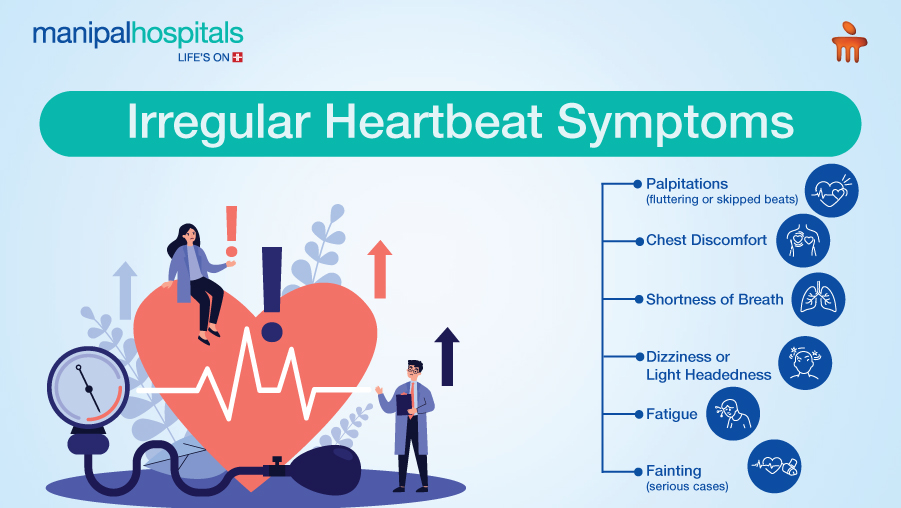
Recognising irregular heartbeat symptoms early can help prevent complications. Common symptoms include:
-
Palpitations (feeling of skipped or extra beats)
-
Chest discomfort
-
Shortness of breath
-
Dizziness or lightheadedness
-
Fatigue
-
Fainting (in severe cases)
Sometimes, arrhythmias may not cause noticeable symptoms and are detected during routine check-ups.
When Should I Be Worried About an Irregular Heartbeat?
A very common question patients ask is, "When should I be worried about an irregular heartbeat?”
You should seek immediate medical attention if you experience:
-
Persistent palpitations
-
Chest pain or pressure
-
Sudden shortness of breath
-
Fainting spells
-
A history of heart disease with new symptoms
Even if symptoms seem mild, it is always safer to consult a cardiologist, especially if they occur repeatedly.
How Is Arrhythmia Diagnosed? (ECG Test Explained)
One of the most important tools for diagnosing arrhythmia is an electrocardiogram (ECG).
What Is an ECG Test?
An ECG is a simple, painless test that records the electrical activity of your heart.
How It Works:
-
Small electrodes are placed on your chest, arms, and legs
-
The machine records heart signals
-
Results are displayed as waves, showing heart rhythm patterns
Why It Is Important
An ECG helps doctors:
-
Detect irregular heart rhythms
-
Identify heart damage
-
Monitor ongoing heart conditions
At Bhagwan Mahavir Manipal Hospital Ranchi, ECG testing is often the first step in diagnosing patients with suspected arrhythmia.
Other Diagnostic Tests
If needed, doctors may recommend additional tests, such as:
-
Holter Monitoring – Continuous ECG recording over 24–48 hours
-
Stress Test – Measures heart function during exercise
-
Echocardiogram – Uses ultrasound to view the heart structure
-
Electrophysiology Study – Advanced test to map electrical activity
Treatment Options for Irregular Heartbeat
Treatment depends on the severity and type of arrhythmia.
1. Lifestyle Changes
-
Reduce caffeine and alcohol
-
Manage stress
-
Maintain a healthy diet
-
Exercise regularly
2. Medications
-
Doctors may prescribe medicines to
-
Control heart rate
-
Restore normal rhythm
-
Prevent blood clots
3. Medical Procedures
-
Cardioversion – Restores normal rhythm using electrical shock
-
Catheter Ablation – Destroys abnormal electrical pathways
Pacemaker Basics: What You Need to Know
In some cases, especially when the heart beats too slowly, a pacemaker may be required.
What Is a Pacemaker?
A pacemaker is a small device implanted under the skin that helps regulate your heartbeat.
How It Works:
-
Sends electrical signals to the heart
-
Ensures the heart beats at a normal rate
-
Activates only when needed
Who Needs a Pacemaker?
-
Patients with bradycardia (slow heart rate)
-
Those with heart block
-
Individuals with recurrent fainting due to rhythm issues
Procedure Overview
-
Minimally invasive surgery
-
Usually takes 1–2 hours
-
Short hospital stay
Life After Pacemaker
Most patients return to normal activities with a few precautions, such as:
-
Avoiding strong magnetic fields
-
Regular follow-ups
-
Monitoring device function
A Real-Life Example
A 58-year-old patient visited Bhagwan Mahavir Manipal Hospital, Ranchi, complaining of frequent dizziness and fatigue. Initially, he ignored the symptoms, assuming it was stress. However, an ECG revealed a slow heart rhythm. After evaluation, a pacemaker was implanted. Within weeks, he noticed a significant improvement in his energy levels and quality of life.
Tips to Maintain a Healthy Heart Rhythm
-
Stay physically active
-
Eat a heart-healthy diet rich in fruits and vegetables
-
Avoid smoking and limit alcohol
-
Manage stress through yoga or meditation
-
Get regular health checkups.
Why Choose Bhagwan Mahavir Manipal Hospital Ranchi?
-
Advanced cardiac diagnostics like ECG and Holter monitoring
-
Experienced cardiologists and a support team
-
Personalised treatment plans
-
Modern infrastructure and patient-focused care
Early diagnosis and timely treatment can prevent complications and improve outcomes.
Conclusion
An irregular heartbeat may seem harmless at first, but it can sometimes signal a serious underlying condition. Understanding irregular heartbeat causes, irregular heartbeat symptoms, and knowing when I should be worried about an irregular heartbeat is crucial.
With advanced diagnostic tools like ECG and effective treatments including pacemakers, managing arrhythmia has become safer and more effective than ever. If you notice any unusual heart symptoms, don’t ignore them; seek expert care at Bhagwan Mahavir Manipal Hospital, Ranchi.
FAQ's
Common causes include stress, caffeine, heart disease, thyroid issues, and electrolyte imbalance.
Palpitations, dizziness, fatigue, and shortness of breath are common early signs.
If symptoms are frequent, severe, or accompanied by chest pain or fainting, seek medical help immediately.
No, an ECG is completely painless and takes only a few minutes.
A pacemaker doesn’t cure arrhythmia but helps regulate heart rhythm and manage symptoms effectively.
Share this article on: