6 Min Read
Let me tell you something: if your shoulder ever slips out of place, you won’t mistake it for anything else. The pain is sudden, sharp, and honestly, quite scary. Many patients walking into Bhagwan Mahavir Manipal Hospital, Ranchi, say the same thing: “It just popped out, and I didn’t know what to do.”
This blog is written just like how a doctor would explain it to you in person: simple, clear, and practical. So if you or someone around you ever faces a shoulder joint dislocation, you’ll know exactly what steps to take.
Synopsis
- What really happens in a dislocated shoulder?
- How does it usually happen?
- Symptoms you should never ignore
- First aid at home: what you should (and shouldn’t) do
- What happens at the hospital?
- Recovery is where the real work begins
- When does surgery become necessary?
- Surgery options explained simply
- How long does it take to recover?
- Can it happen again?
- Simple tips to protect your shoulder
- When should you see a doctor immediately?
- A real-life lesson
What really happens in a dislocated shoulder?
Think of your shoulder like a ball sitting in a shallow socket. It gives you amazing movement, but that flexibility also makes it easy to slip out.
A dislocated shoulder happens when this ball (your upper arm bone) comes out of the socket. In most cases, it moves forward, which doctors call an anterior dislocation.
How does it usually happen?
In real life, it’s rarely complicated. At Bhagwan Mahavir Manipal Hospital, Ranchi, most cases come from everyday situations, like:
-
A bad fall, especially while trying to balance yourself
-
Sports injuries during cricket, football, or gym workouts
-
Road accidents
-
Even a simple wrong movement if the shoulder is already weak
I remember a young patient who dislocated his shoulder while diving to catch a cricket ball. It didn’t look serious, but the impact was enough.
Symptoms you should never ignore
Here’s the thing: your body gives very clear signals:
-
Suddenly, intense pain
-
Shoulders looking out of shape
-
You simply can’t move your arm
-
Swelling or bruising starts quickly
-
Sometimes, numbness in the arm
One patient described it perfectly: “It felt like my arm didn’t belong to me anymore.”
First aid at home: what you should (and shouldn’t) do
This is where most people make mistakes, especially after searching “how to fix a dislocated shoulder.”
First rule: Don’t try to push it back
It might look easy in videos, but in reality, you can damage nerves or blood vessels.
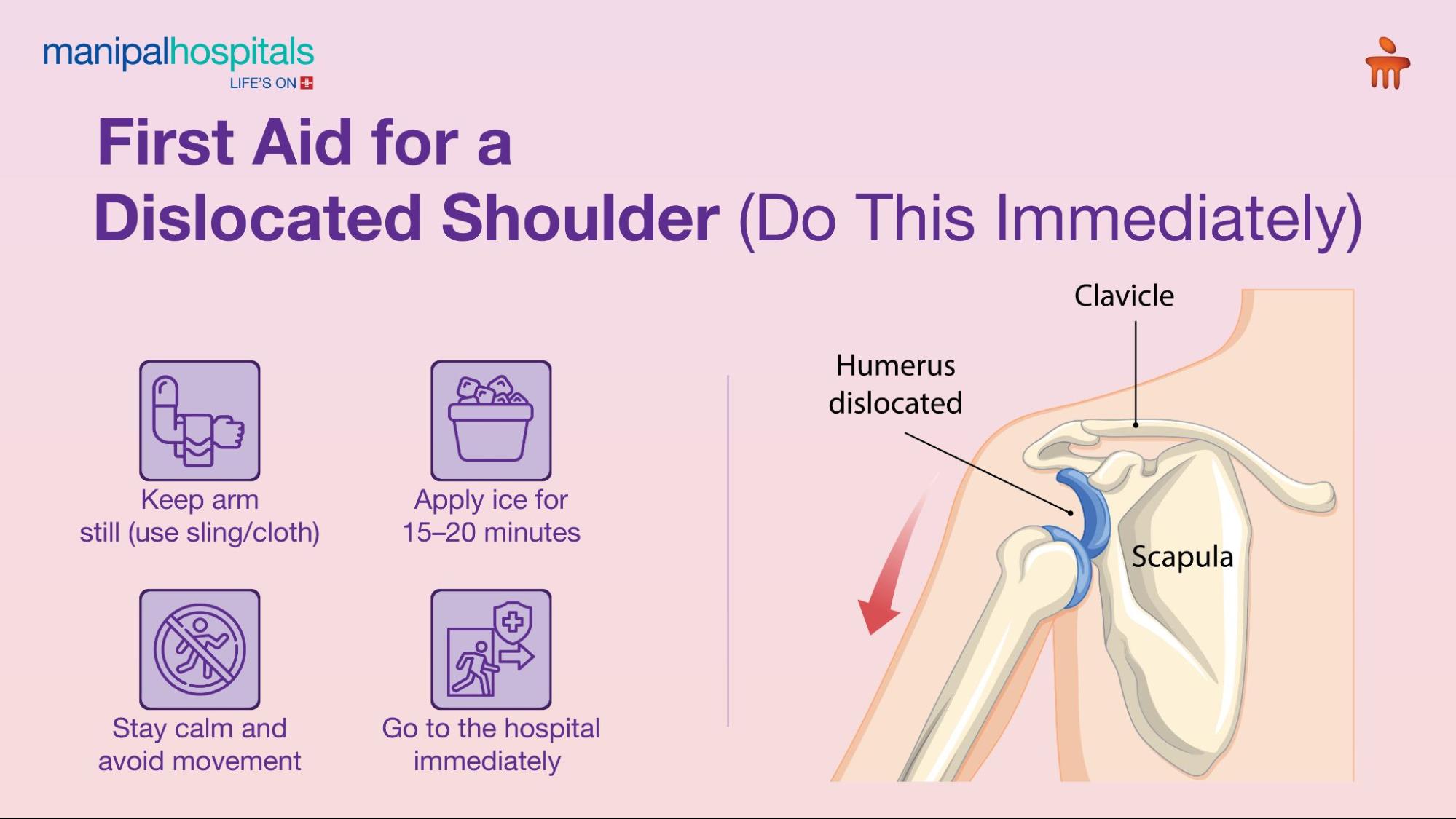
What you should do instead
-
Keep the arm still - use a sling or even a dupatta
-
Apply ice for 15–20 minutes to reduce swelling
-
Avoid movement completely
-
Go to a hospital immediately
Getting proper shoulder dislocation treatment quickly makes a huge difference in recovery.
What happens at the hospital?
At Bhagwan Mahavir Manipal Hospital, Ranchi, doctors usually start with a quick assessment and X-ray.
Closed reduction (non-surgical treatment)
In many cases, the doctor gently puts the joint back in place.
-
Done under sedation (so you don’t feel pain)
-
Immediate relief once the joint is back
-
Followed by a sling for support
Most patients feel better almost instantly, but recovery still takes time.
Recovery is where the real work begins
Many people think the problem is solved once the shoulder is back in place. Not true.
Step 1: Rest and immobilisation
You’ll need to wear a sling for a few weeks.
Step 2: Physiotherapy
This is the most important part. It helps:
-
Strengthen muscles
-
Restore movement
-
Prevent future dislocations
Skipping physio is one of the biggest reasons people face repeat injuries.
When does surgery become necessary?
Not everyone needs surgery, but sometimes it’s the best option.
Doctors may suggest surgery if:
-
The shoulder keeps dislocating again and again
-
Ligaments are badly torn
-
There’s a fracture
-
You’re young and physically active
At Bhagwan Mahavir Manipal Hospital, Ranchi, advanced surgical options are available for such cases.
Surgery options explained simply
Arthroscopic (keyhole) surgery
-
Small cuts, minimal pain
-
Faster recovery
-
Repairs damaged tissues
Open surgery
-
Used in more complex cases
-
Provides stronger stability
Your doctor will guide you based on your condition.
How long does it take to recover?
Recovery is different for everyone, but generally:
-
Mild cases: about 6–8 weeks
-
With proper physiotherapy: 2–3 months
-
After surgery: 3–6 months
The timeline depends on how well you follow instructions.
Can it happen again?
Yes, and this is important.
Once you’ve had a shoulder joint dislocation, the chances of it happening again are higher, especially if:
-
Muscles are weak
-
Rehab is incomplete
-
You return to sports too early
Simple tips to protect your shoulder
According to what doctors commonly advise:
-
Strengthen your shoulder regularly
-
Warm up before exercise
-
Avoid sudden jerky movements
-
Don’t ignore minor pain
Small precautions can save you from a major injury.
When should you see a doctor immediately?
Don’t wait if
-
Pain is unbearable
-
The shoulder looks visibly out of place
-
You can’t lift your arm
-
There’s numbness or weakness
Early shoulder dislocation treatment always leads to better results.
A real-life lesson
A college athlete once ignored his first dislocation, thinking it was “just a minor issue.” Within months, it happened again and again. Eventually, he needed surgery.
After proper treatment and disciplined physiotherapy at Bhagwan Mahavir Manipal Hospital, Ranchi, he recovered well, but his journey was longer than it needed to be.
Sometimes, taking the first injury seriously makes all the difference.
A dislocated shoulder may feel overwhelming in the moment, but with the right care, recovery is absolutely possible.
Stay calm, avoid trying to fix it yourself, and seek proper medical help. With timely shoulder dislocation treatment and the right rehabilitation, you can get back to your normal life safely.
FAQ's
You shouldn’t try. Immobilise the arm and go to a hospital immediately.
No, many cases are treated without surgery.
Very painful and usually limits all arm movement.
Basic use may return in a few weeks, but full recovery takes longer.
Yes. But only after proper healing and physiotherapy.
Share this article on: