9 Min Read
Blood pressure is a vital sign, a fundamental indicator of our cardiovascular health. While high blood pressure often makes the news, low blood pressure, medically known as hypotension, can also be a concern. It's a condition where the force of blood against your artery walls is unusually low. For some, low blood pressure is a normal state, causing no issues. However, for others, it can lead to troubling symptoms and, in severe cases, indicate an underlying health problem requiring immediate medical attention.
In this blog, a top interventional cardiologist in Mysore discusses in detail what low BP is, the causes of low BP, identifying the signs of low BP, and when it should be considered a medical concern.
Synopsis
What is Low Blood Pressure (Hypotension)?
Blood pressure readings are given as two numbers: systolic (the top number, measuring pressure when your heart beats) and diastolic (the bottom number, measuring pressure when your heart rests between beats). A reading of 120/80 mmHg is generally considered ideal. Low blood pressure is typically defined as a reading below 90/60 mmHg.
It's important to understand that what is considered "low" for one person might be normal for another, especially for young, healthy individuals or athletes. The seriousness of hypotension often depends on whether it causes symptoms and what is causing it.
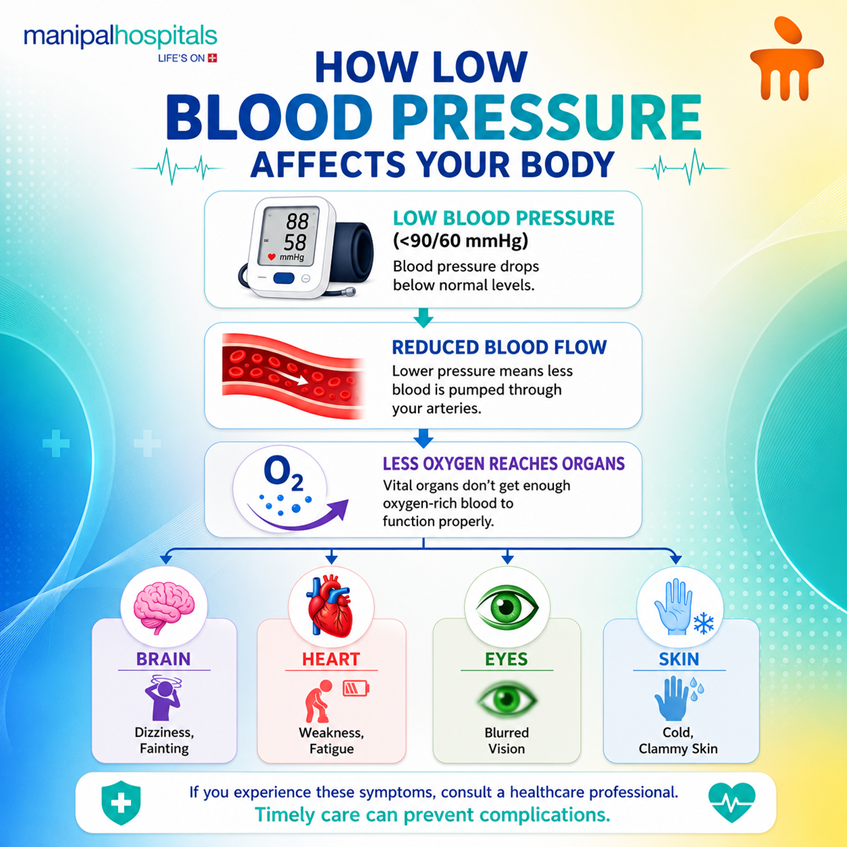
Common Signs of Low BP
When blood pressure drops significantly, vital organs like the brain, heart, and kidneys may not receive enough blood flow, leading to a range of symptoms.
Recognising the common signs of low BP is the first step in understanding whether your low blood pressure requires attention.
-
Dizziness or Lightheadedness: This is one of the most common symptoms, especially when standing up quickly.
-
Fainting (Syncope): A sudden, temporary loss of consciousness due to insufficient blood flow to the brain.
-
Blurred or Fading Vision: A temporary reduction in blood supply to the eyes can cause visual disturbances.
-
Nausea: Feeling sick to your stomach.
-
Fatigue or Weakness: A general feeling of tiredness and lack of energy.
-
Lack of Concentration: Difficulty focusing or feeling mentally foggy.
-
Rapid, Shallow Breathing: The body's attempt to compensate for reduced oxygen delivery.
-
Cold, Clammy, Pale Skin: Signs of reduced blood flow to the skin.
If you experience any of these symptoms frequently or severely, it's crucial to consult a healthcare professional at Manipal Hospitals for an accurate diagnosis.
Causes of Low BP
Low blood pressure can be caused by various factors, ranging from simple lifestyle issues to serious underlying medical conditions. Identifying the cause is key to effective management.
Primary Causes
-
Dehydration: Not drinking enough fluids can decrease blood volume, leading to a drop in blood pressure.
-
Prolonged Bed Rest: Inactivity can weaken the autoregulation mechanism, making it harder to maintain blood pressure with changes in posture.
-
Pregnancy: During pregnancy, the circulatory system expands rapidly, which can cause blood pressure to drop. This condition is usually temporary and normal.
-
Medications: Certain drugs, such as diuretics, alpha-blockers, beta-blockers, medications for Parkinson's disease, some antidepressants, and erectile dysfunction drugs, can cause hypotension as a side effect.
-
Heart Problems: Conditions like a very slow heart rate (bradycardia), heart valve problems, heart attack, or heart failure can prevent the body from circulating enough blood.
-
Endocrine Problems: Thyroid conditions (underactive or overactive), adrenal insufficiency (Addison's disease), and diabetes can all affect blood pressure regulation.
-
Severe Infection (Septic Shock): When an infection in the body enters the bloodstream, it can lead to a dangerous drop in blood pressure.
-
Allergic Reaction (Anaphylaxis): A severe, life-threatening allergic reaction can cause a sudden, dramatic drop in blood pressure.
-
Significant Blood Loss: Trauma, internal bleeding, or severe gastrointestinal bleeding can reduce blood volume, leading to hypotension.
-
Nutritional Deficiencies: A lack of vitamin B-12 and folate can lead to anaemia, which can cause low blood pressure.
Types of Hypotension
Low blood pressure can manifest in different ways:
-
Orthostatic Hypotension (Postural Hypotension): A sudden drop in blood pressure when you stand up from a sitting or lying position. This condition affects approximately 20% of the elderly population and many others temporarily.
-
Postprandial Hypotension: A drop in blood pressure 1-2 hours after eating, more common in older adults and those with certain conditions like Parkinson's disease.
-
Neurally Mediated Hypotension (NMH): A drop in blood pressure after long periods of standing, more common in young adults and children.
-
Severe Hypotension (Shock): A life-threatening condition where blood pressure drops so low that vital organs are deprived of oxygen and nutrients.
When is Low Blood Pressure Serious?
While occasional mild dizziness is common and often benign, low blood pressure becomes serious when it causes significant symptoms or indicates an underlying critical condition. A sudden, drastic drop in blood pressure can deprive your brain and other vital organs of oxygen, potentially leading to shock, organ damage, or even a stroke or heart attack.
Seek immediate medical attention if you experience:
-
Fainting episodes
-
Confusion, especially in older adults
-
Cold, clammy, pale skin
-
Rapid, shallow breathing
-
Weak and rapid pulse
At Manipal Hospitals, our emergency services are equipped to handle such critical situations with prompt and effective care. While many cases of low blood pressure are mild and resolve on their own, studies show that timely intervention for symptomatic hypotension can prevent complications in over 85% of patients, leading to better long-term health outcomes. Our Cardiology Department specialises in diagnosing and treating conditions that affect blood pressure regulation, ensuring comprehensive cardiovascular care
Management of Low BP
Accurate diagnosis is paramount to managing low blood pressure effectively. The cardiology experts at Manipal Hospital Mysore employ a comprehensive approach to understand the root cause of your hypotension.
Diagnostic Approach
Your doctor will conduct a thorough physical examination and review your medical history. Diagnostic tests may include:
-
Blood Pressure Monitoring: Both in-office and 24-hour ambulatory monitoring.
-
Blood Tests: To check for anaemia, electrolyte imbalances, blood sugar levels, and hormone levels (e.g., thyroid).
-
Electrocardiogram (ECG): To check for heart rhythm abnormalities, signs of heart damage, or abnormalities detected on an ECG.
-
Echocardiogram: An ultrasound of the heart to check its structure and function.
-
Stress Test: To assess heart function during physical activity. Tilt Table Test: To evaluate how your body responds to changes in position.
Treatment Strategies
Treatment for low blood pressure depends entirely on its underlying cause. Our specialists will tailor a treatment plan specifically for you, which may include:
-
Addressing the Underlying Condition: Treating the primary medical issue (e.g., heart disease, infection, endocrine disorder).
-
Medication Adjustment: Modifying existing prescriptions that might be causing low blood pressure.
-
Lifestyle Modifications: Simple changes can often make a significant difference.
-
Specific Medications: In some cases, if other measures aren't sufficient, medications may be prescribed to raise blood pressure.
Care Essentials: Do's and Don'ts
Managing low blood pressure often involves a combination of medical treatment and self-care. Here are some essential guidelines:
Do's
-
Stay Hydrated: Drink plenty of fluids throughout the day, especially water. This increases blood volume and helps prevent dehydration.
-
Eat Small, Frequent Meals: This can help prevent postprandial hypotension. Include healthy, balanced foods.
-
Stand Up Slowly: When moving from a lying or sitting position, do so gradually to allow your body time to adjust and prevent dizziness.
-
Wear Compression Stockings: If advised by your doctor, these can help improve blood circulation in your legs and prevent blood from pooling.
-
Regular, Moderate Exercise: Physical activity can improve overall cardiovascular health. Consult your doctor for appropriate exercises.
-
Monitor Your Symptoms: Keep a journal of your blood pressure readings and any symptoms you experience to share with your doctor.
Don'ts
-
Avoid Prolonged Standing: If you must stand for long periods, try to move your legs or shift your weight to encourage blood flow.
-
Don't Skip Meals: Regular eating helps maintain stable blood sugar and blood pressure levels.
-
Avoid Sudden Position Changes: Rapid movements can trigger a drop in blood pressure.
-
Avoid Alcohol Consumption: Alcohol can cause dehydration and widen blood vessels, both contributing to lower blood pressure.
-
Ignore Persistent Symptoms: If your symptoms worsen or become frequent, do not hesitate to seek medical advice.
Conclusion
Low blood pressure is not always a cause for concern, but when it is accompanied by symptoms such as dizziness, fainting, fatigue, or confusion, it should never be ignored. Understanding the underlying cause is essential, as hypotension can range from a harmless physiological variation to a sign of a serious medical condition requiring prompt attention.
Early evaluation, appropriate treatment, and simple lifestyle measures can help manage symptoms effectively and prevent complications. If you experience persistent or recurrent episodes of low blood pressure, consult our cardiology experts at Manipal Hospital Mysore for comprehensive evaluation and personalised care.
FAQ's
Yes, in severe cases, especially when it leads to shock, low blood pressure can be life-threatening, as vital organs may not receive enough blood flow, leading to damage or failure. Prompt medical attention is crucial in such situations.
Generally, a reading around 120/80 mmHg is considered ideal. However, blood pressure readings are not a single fixed value; they fall within a range. Your ideal blood pressure may vary based on factors such as age, overall health, and individual physiology. Your doctor at Manipal Hospitals can help determine the blood pressure range that is healthy for you.
While chronic stress is more commonly linked to high blood pressure, acute stress or anxiety can sometimes cause a temporary drop in blood pressure in some individuals, often through a vasovagal response.
You should worry and seek medical help if your low blood pressure causes persistent symptoms like frequent dizziness, fainting, blurred vision, severe fatigue, or any signs of shock. A sudden, significant drop in blood pressure also warrants immediate attention.
Yes, many young, healthy individuals, especially athletes, may naturally have blood pressure readings below 90/60 mmHg without experiencing any symptoms. In such cases, it is usually not a cause for concern.
Share this article on: