5 Min Read
What if noticing a small change today could protect you from something far more serious tomorrow?
Many cancers don’t announce themselves loudly at the start. They begin quietly, with subtle symptoms like feeling constantly tired, noticing a painless lump, or a generalised feeling that something just doesn't feel right inside the body. Although they are easy to brush aside, blame on stress, or postpone addressing, they matter.
The survival rate for patients with early-stage malignancies (Stage I or II) is two to three times higher than that of patients with later-stage diagnoses. In addition to improving results, early detection frequently makes treatment easier, recovery quicker, and quality of life higher.
Through this blog, an experienced cancer surgeon in Mysuru discusses early cancer warning signs of some common cancers seen in India, whose symptoms warrant medical care, and how prompt screening can make all the difference.
Synopsis
What Do Early Cancer Warning Signs Really Look Like?
Cancer doesn’t always cause severe pain or dramatic symptoms in the beginning. In fact, many early signs are vague, mild, and easy to ignore—which is exactly why awareness is so important.
-
Some changes to pay attention to include unexplained weight loss, fatigue that doesn’t improve with rest, or a new lump or thickening in areas like the breast, neck, armpit, or groin.
-
Ulcers or sores that don’t heal, new moles, or changes in size, colour, shape, or texture in the existing ones are some of the skin changes that should raise a warning.
-
Other symptoms may involve persistent pain without a clear cause, long-standing changes in bowel or bladder habits, unusual bleeding or discharge, or ongoing indigestion or difficulty swallowing.
-
A persistent cough, hoarse voice, or frequent throat infection are another set of symptoms that need detailed investigations.
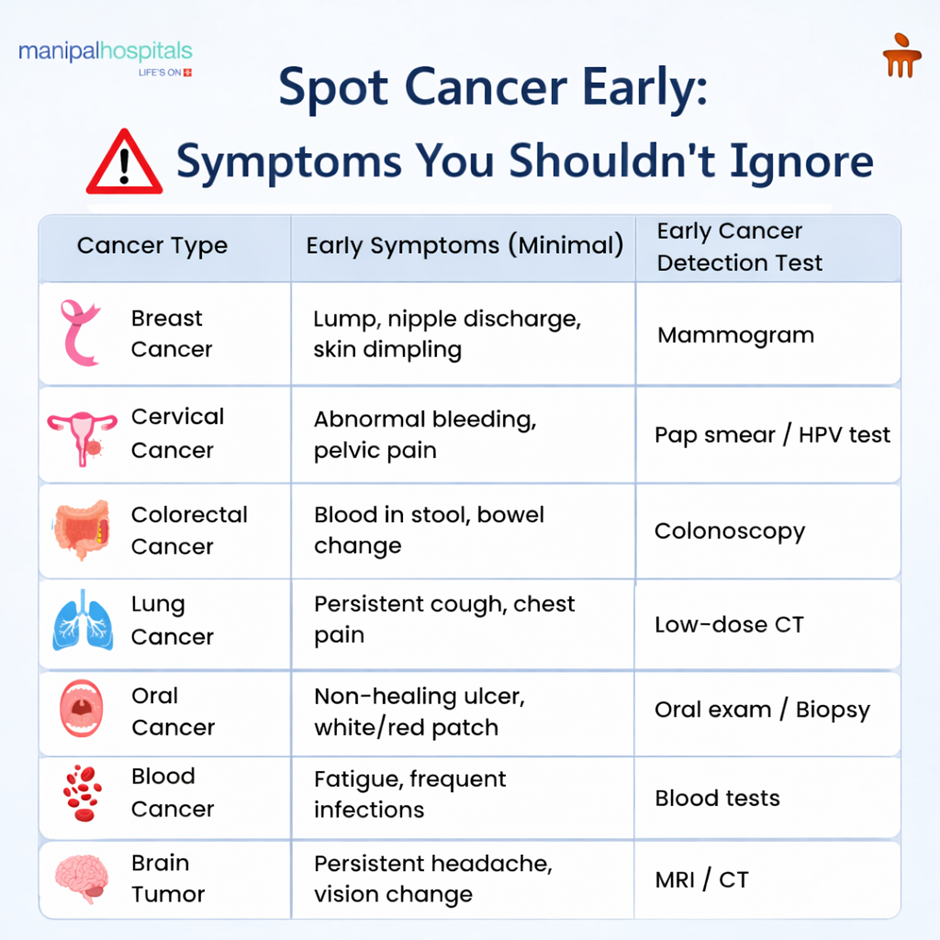
Here’s a quick visual guide to some early symptoms, the cancers they may indicate, and the screening tests your healthcare provider may suggest to confirm the diagnosis:
Recognising Early Signs of Common Cancers:
Different cancers can have different symptoms, and knowing what to look for can help people get care sooner.
-
Breast cancer, for instance, may begin with a painless lump, changes in breast shape, nipple discharge, or skin dimpling. Regular screening, including mammograms, helps detect changes before they become advanced.
-
In cervical cancer, early signs may include abnormal vaginal bleeding, bleeding after intercourse, or pelvic discomfort. Routine Pap smears and HPV testing remain the most effective screening tools.
-
Colorectal cancer often presents with blood in the stool, long-standing constipation or diarrhoea, or abdominal discomfort. A screening colonoscopy can detect precancerous polyps before cancer develops.
-
For lung cancer, a persistent cough, chest pain, or coughing up blood should never be ignored—especially in smokers or former smokers. Early evaluation can be life-saving.
-
Oral cancers may appear as mouth ulcers that don’t heal, red or white patches, or difficulty swallowing. Individuals with tobacco or alcohol use are at higher risk and should seek prompt assessment if symptoms appear.
Who Should Consider Cancer Screening?
Cancer screening isn’t one-size-fits-all. Recommendations depend on age, family history, lifestyle habits, and individual risk factors. You may benefit from regular screening if you are over 40 years old, have a family history of cancer, currently use or previously used tobacco, consume alcohol heavily, or live with obesity or a sedentary lifestyle. Chronic infections such as HPV or hepatitis can also increase cancer risk.
Speaking to an expert oncologist allows screening plans to be personalised, ensuring the right tests are done at the right time, without unnecessary anxiety.
What Happens After Early Cancer Detection?
Early detection leads to structured, planned, and more effective treatment. Once cancer is suspected, doctors first confirm the diagnosis through tests such as biopsies and imaging. This is followed by staging, which helps understand the extent of the disease.
Treatment may involve surgery to remove a localised tumour, radiation therapy to destroy remaining cancer cells, or systemic treatments like chemotherapy, immunotherapy, or targeted therapy when needed. Hormonal therapy is used for certain hormone-sensitive cancers.
Equally important is ongoing follow-up and supportive care, including nutrition guidance, pain management, and counselling, to help patients recover physically and emotionally.
When Should You Seek Medical Advice?
Timely medical consultation is essential for identifying potentially serious conditions at an early stage. Recognising warning signs and obtaining prompt assessment can support earlier diagnosis, appropriate intervention, and improved outcomes. Many of these symptoms may be associated with conditions evaluated within the Oncology Department.
You should arrange a medical review if you experience any of the following:
-
Symptoms that persist for more than two weeks
-
Unintentional or unexplained weight loss
-
A lump or swelling that enlarges or does not resolve
-
Unexplained bleeding from any site
-
Persistent cough, particularly if associated with blood
-
Ongoing fatigue without a clear cause
-
Changes in skin lesions or moles, including size, colour, or shape
Ignoring persistent symptoms may delay diagnosis and allow disease progression. Early clinical evaluation and recommended cancer screening provide clarity, reassurance, and access to treatment at a more manageable stage.
Conclusion
Early detection is one of the most powerful tools we have against cancer. Listening to your body, recognising warning signs, and choosing timely screening can truly change outcomes. Our cancer care experts at Manipal Hospital Mysore guide patients at every step from preventive screening and early diagnosis to advanced treatment and long-term support.
FAQ's
Early awareness encourages people to recognise warning signs, seek screening, and consult doctors sooner. This leads to earlier diagnosis, simpler treatment, and significantly better survival outcomes.
By paying attention to symptoms that don’t resolve, attending regular health check-ups, and following age- and risk-appropriate screening recommendations.
Tests like mammograms, Pap smears, and colonoscopies can identify cancer or precancerous changes before symptoms worsen, improving treatment success and survival rates.
People over 40, those with a family history of cancer, smokers, and individuals with chronic health risks should actively consider regular screening.
Manipal Hospital Mysore offers complete cancer care, including advanced diagnostics, multidisciplinary oncology treatment, preventive screening, and personalised patient support.
Share this article on: