6 Min Read
You bend down to pick something up, and a dull ache settles in your lower back. Is it just muscle strain, or could it be something more serious? Many people struggle to tell the difference between back muscle pain and kidney pain, especially at the start. That is because the two can feel surprisingly similar. Back pain is often linked to posture, overuse, or strained muscles, while kidney pain may point to an infection, kidney stones, or another internal issue that needs medical attention.
In this blog, a top nephrologist in Mysuru explains the key differences between kidney pain vs back pain, what usually causes each one, and when it is time to see a doctor.
Synopsis
Understanding Kidney Pain and Back Pain
One of the most reliable ways to identify the difference between back pain and kidney pain is to look at the specific location of the discomfort.
Kidney pain characteristics
-
Higher in the back: Usually felt just below the ribs, on either side of the spine
-
Deep and internal: It feels like it comes from inside, not from the outside
-
May radiate forward: Can move to the groin or abdomen
Back pain characteristics
-
Lower back area: Usually felt in the lower back
-
Surface-level discomfort: Related to muscles, joints, or the spine
-
Localised pain: Stays in one place most of the time
Knowing where the pain is coming from can help you tell the difference between back pain and kidney pain early on.
How to Recognise the Type of Pain
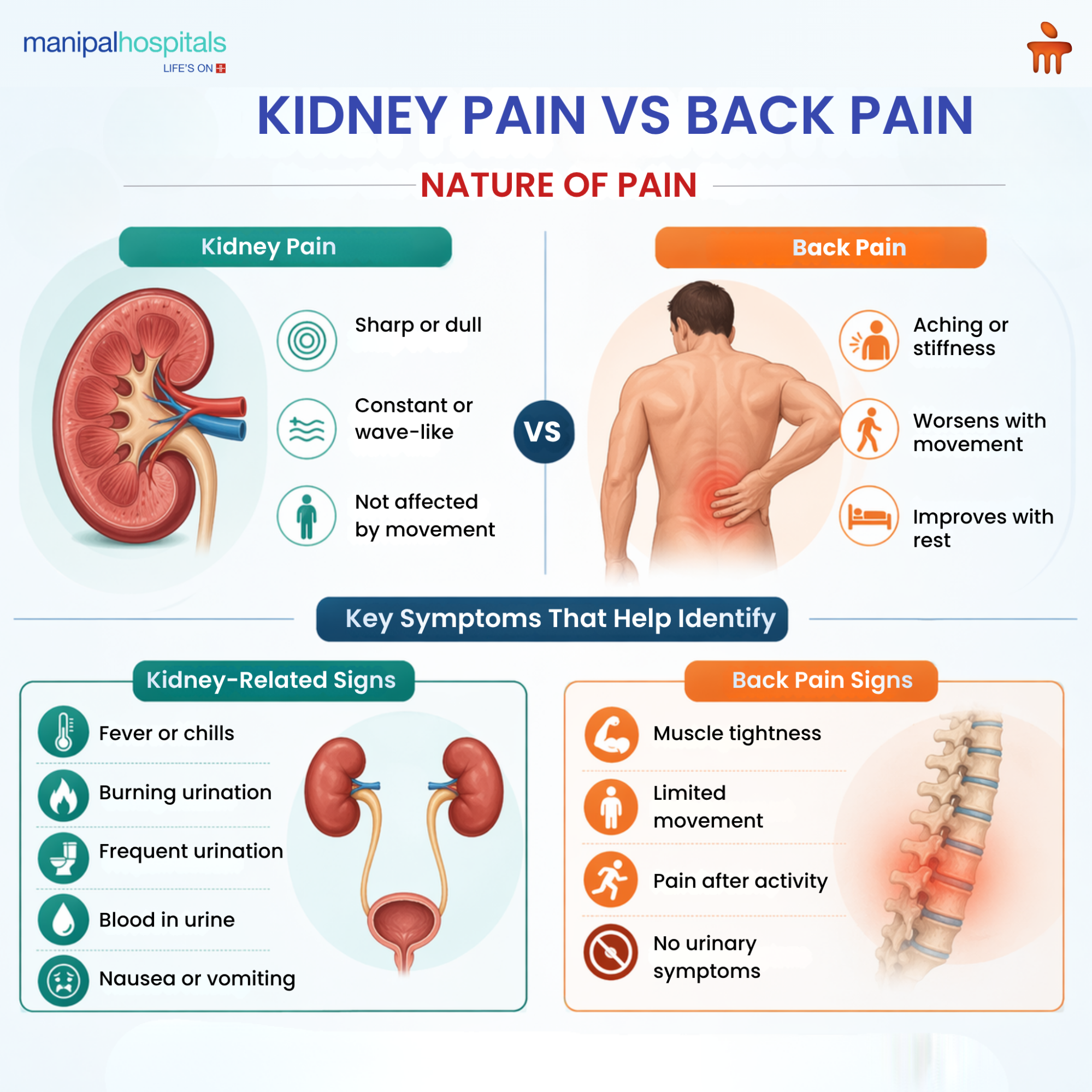
The nature of pain provides important diagnostic clues. This difference often gives the first real clue for kidney pain vs back pain.
Kidney pain
-
Dull or sharp ache: May be constant or come in waves
-
Not affected by movement: Pain stays the same whether you move or rest
-
Sudden severe pain: Especially in cases of kidney stones
Back pain
-
Aching or stiffness: Often linked to strain or posture
-
Worsens with movement: Bending or lifting may increase pain
-
Improves with rest: Usually settles over time
This is an important part of knowing the difference between back muscle pain and kidney pain.
Associated Symptoms: The Real Clue
Pain rarely exists in isolation. The symptoms that accompany the discomfort can often confirm whether back pain is related to kidneys or if it is purely musculoskeletal.
Signs of Kidney-Related Pain:
-
Fever or chills: Can be a sign of infection
-
Burning during urination: May indicate a urinary tract infection
-
Frequent urination: A common sign of infection or irritation.
-
Blood in urine: A sign that something is wrong and needs to be looked at right away
-
Nausea or vomiting: Often happens with kidney stones
Signs of Typical Back Pain:
-
Muscle tightness: Can make your back feel stiff
-
Limited mobility: Hard to bend or twist your back
-
Pain after working out: Often caused by muscle strain
-
No urinary problems: Urinary problems usually do not occur with regular back pain.
Common Causes of Kidney Pain vs Back Pain
The causes behind kidney pain and back pain are very different, and knowing them can help you identify the problem early.
Common Causes of Kidney Pain
Understanding what causes kidney pain and back pain can help you tell the difference. Kidney-related causes include the following:
-
Kidney infections: Bacterial infections that cause pain, fever, and problems with urination
-
Kidney stones: Hard deposits that can cause sudden and severe pain.
-
Urinary blockage: Obstruction of urine flow increases pressure within the kidneys
-
Polycystic kidney disease: It makes the kidneys bigger and causes pain.
-
Injury or trauma: Can directly damage the kidney area.
This is one of the most common questions patients ask in clinics. Yes, kidney stones can cause a lot of pain that may feel like back pain, but usually spreads out and comes in waves.
Common Causes of Back Pain
Back pain is much more common and is usually less severe. Typical causes include the following:
-
Muscle strain: Can happen if you lift heavy objects or move too quickly.
-
Poor posture: Sitting for long periods or using unsupportive furniture can cause back pain.
-
Intervertebral disc prolapse: Happens when a spinal disc bulges out and presses on nerves, which causes pain.
-
Arthritis: Causes changes in the spine that can worsen over time.
-
Physical inactivity: Can weaken your back muscles over time.
-
Sciatica: A pain in the leg that happens when a nerve is irritated or compressed.
These causes can help you understand the difference between muscle pain in your back and pain from your kidneys.
Kidney Pain vs Back Pain
The table below breaks down kidney pain vs back pain in a simple, easy-to-follow way. This can help you quickly spot the key differences between back pain and kidney pain and understand what your body might be trying to tell you:
|
Feature |
Kidney Pain |
Back Pain |
|
Location |
Upper back or flank (below ribs) |
Lower back |
|
Nature of pain |
Deep, sharp, or constant |
Dull, aching, or stiffness |
|
Movement effect |
No change with movement |
Worsens with movement |
|
Associated symptoms |
Fever, urinary issues, nausea |
Muscle tightness, stiffness |
|
Common causes |
Infection, stones, blockage |
Muscle strain, posture issues |
|
Urgency |
May require urgent medical evaluation |
Often improves with rest |
Treatment Options: What Helps?
The right treatment depends on what is causing the pain.In cases where kidney-related issues are suspected, the Nephrology Department plays a key role in evaluating the condition and guiding appropriate management.
For kidney pain
-
Antibiotics: To treat infections
-
Pain management: Used for kidney stones or swelling.
-
Drinking plenty of water: Can help flush out small kidney stones.
Procedures may be required for large stones or urinary obstruction
People who need specialised care can look into getting treatment for kidney infections in Mysore, where they can get personalised treatment plans.
For back pain
-
Rest and adjust your activities: Avoid pushing yourself too hard.
-
Pain relief medicine: Used to reduce swelling.
-
Physiotherapy: Helps strengthen muscles and improve posture.
-
Hot or cold therapy: Can help relieve pain and stiffness.
Getting the right diagnosis ensures you receive the best treatment for kidney or back pain.
When Should You See a Doctor?
Not all pain can be ignored. Sometimes, it may be a sign that something more serious is going on. You should consult a doctor if:
-
The pain is severe or starts suddenly
-
You also have a fever or chills
-
There is blood in your urine
-
The pain spreads towards your groin
-
It doesn’t get better even after rest
-
You feel nauseous or keep vomiting
If you’re unsure whether the pain is coming from your kidneys or your back, it’s better to get it checked instead of waiting it out.
Conclusion
Kidney pain and back pain can feel similar at first, but they have different causes and levels of seriousness. Knowing the difference helps you respond in time and choose the right care. If your pain is deep, lasts longer, or comes with symptoms like fever or changes in urination, it may not be just a muscle issue. Paying attention to these signs early can make a difference.
If symptoms continue or you notice warning signs, you can explore options for kidney infection treatment in Mysore, such as Manipal Hospital, for proper evaluation and care.
FAQ's
Yes, kidney pain can come and go, especially when you have kidney stones. But unlike back pain, it often comes with symptoms like nausea, changes in urination, or pain that spreads.
Yes, early kidney pain can feel like back pain. Kidney pain usually does not change much with movement, unlike muscle pain, though posture may slightly influence discomfort in some cases.
No, some kidney problems cause mild or dull pain at first. Infections or stones can cause severe pain that usually needs prompt evaluation and treatment.
No, bad posture hurts muscles and causes back pain, not kidney pain. Kidney pain relates to organ problems and is not affected by how you sit or move.
Yes, if the pain is severe, sudden, or comes with fever, vomiting, or blood in the urine, you should see a doctor immediately to prevent complications and start treatment quickly.
Share this article on: