7 Min Read
In recent years, cardiologists have been seeing a steady rise in heart attacks in young people, especially those under 40 years. This trend is concerning because many of these events happen without warning and lead to tremendous suffering and loss of young people.
Understanding the cause of a heart attack at a young age is important for prevention. Factors like a sedentary lifestyle, stress, and co-existing health conditions can increase the risk. This blog an experienced cardiologist in Mysuru, explains the causes of myocardial infarction among youth, early warning signs, and ways to reduce the risk.
Synopsis
- Why Are Heart Attacks Increasing in Young People?
- Early Warning Signs That Are Often Ignored
- Major Risk Factors for Heart Attacks in Young People
- The Role of Mental Health and Stress
- Prevention Tips: How to Protect Your Heart Early
- Importance of Early Screening and Awareness
- When to Seek Medical Attention
- Conclusion
Why Are Heart Attacks Increasing in Young People?
-
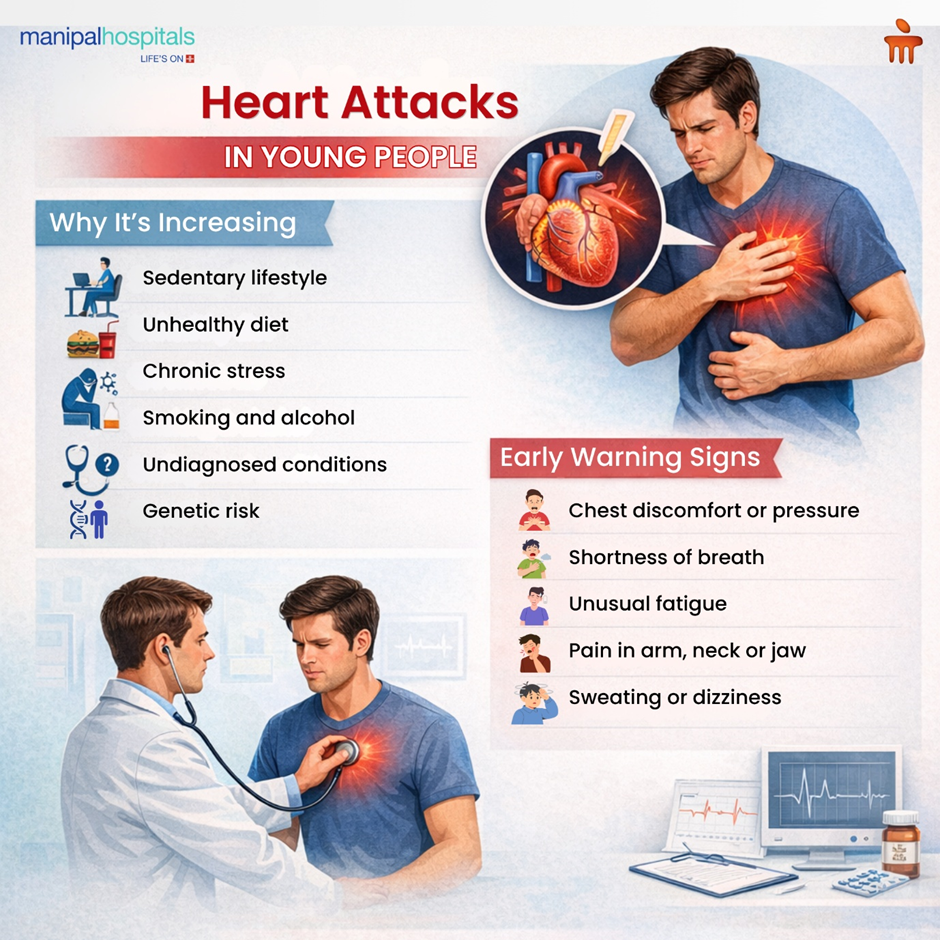
Sedentary life: Modern work routines often involve long hours of sitting and minimal physical activity. Not getting enough exercise raises your risk of high cholesterol, high blood pressure, and obesity, all of which are major risk factors for heart attacks in younger people.
-
Unhealthy Diet Patterns: High consumption of processed foods, soft drinks, and fatty foods increases bad cholesterol levels, which leads to poor cardiovascular health. Poor dietary patterns are a major cause of heart attack at a young age, especially in urban populations.
-
Rising Stress Levels: Chronic stress increases stress hormones like cortisol and can raise blood pressure. It also leads to unhealthy coping habits such as smoking or overeating, which further increase risk.
-
Smoking and Alcohol Consumption: Tobacco damages blood vessels and accelerates plaque formation in arteries. Drinking too much alcohol may impair your heart muscle and raise your blood pressure. These habits are among the strongest contributors to the reason of heart attack in young age.
-
Undiagnosed Medical Conditions: Diabetes, hypertension, and high levels of cholesterol may not always be apparent at a young age. These factors remain undetected without proper screening and can result in heart problems.
-
Genetic Predisposition: Genetics also play a major role in the risk for heart attacks. If close relatives have had heart disease early in life, the likelihood of heart attacks in young people increases significantly.
Early Warning Signs That Are Often Ignored
One of the most concerning aspects is that symptoms can be subtle and easily overlooked. Some of the early warning signs are:
-
Chest discomfort: Pressure, tightness, or pain in the chest. Many young people mistake it for acidity or muscle strain.
-
Shortness of breath: Breathlessness during normal activities can signal a heart-related problem.
-
Unusual fatigue: Feeling tired without a clear reason may indicate reduced blood flow to the heart.
-
Pain in arms, neck, or jaw: Pain spreading to the left arm, neck, or jaw is a classic sign but often ignored.
-
Sweating and dizziness: Sudden cold sweats or light-headedness can be early warning signs of a cardiac event.
Recognising these heart attack symptoms at a young age can make a life-saving difference.
Major Risk Factors for Heart Attacks in Young People
Understanding risk factors helps identify individuals who are more vulnerable to a heart attack at a young age.
-
Obesity: Overweight people put more stress on their hearts and have a number of health risks, such as diabetes and high blood pressure.
-
High Blood Pressure: Also known as the silent killer, high blood pressure causes damage to arteries that eventually become blocked.
-
High Cholesterol: High levels of LDL cholesterol cause the formation of plaque within arteries, limiting blood circulation.
-
Diabetes: Diabetes, when untreated, is harmful to blood vessels and can cause heart problems.
-
Insomnia: Insufficient sleep impacts the metabolic rate and causes the secretion of high levels of stress hormones.
-
Substance Abuse: Recreational drugs can trigger sudden heart attacks, even in otherwise healthy individuals.
Each of these factors plays a role in the reason for a heart attack in young age, and often, multiple factors coexist.
The Role of Mental Health and Stress
Mental health has a direct impact on heart health. Chronic anxiety, depression, and high stress levels can increase inflammation and blood pressure. Young professionals today face constant pressure, which significantly contributes to heart attacks in young people.
Ignoring mental well-being not only affects emotional health but also increases the risk of a heart attack at a young age through physical pathways.
Prevention Tips: How to Protect Your Heart Early
Preventing heart disease requires consistent lifestyle changes. Understanding how to prevent a heart attack at a young age can significantly reduce risk.
-
Maintain a Balanced Diet: Include a variety of fruits, vegetables, whole grains, proteins, and healthy fats in your diet. Avoid eating junk food and sweets.
-
Engage in Physical Activity: Exercise for at least 150 minutes weekly to improve heart health. Some of the physical activities include walking, cycling, and swimming.
-
Manage Stress Effectively: Activities like yoga, meditation, and deep breathing minimise your stress levels and keep your heart healthy.
-
Avoid Smoking and Limit Alcohol: Smoking cessation and abstaining from alcohol are some of the best methods of lowering risks.
-
Regular Health Check-ups: Blood pressure, cholesterol, and glucose tests will be helpful in identifying problems.
-
Maintain Your Weight: Keeping a healthy body weight ensures that there is less strain on your heart.
These steps provide a clear roadmap for how to prevent heart attacks at a young age and promote long-term well-being.
Importance of Early Screening and Awareness
Many young individuals believe they are not at risk, which leads to delayed diagnosis. Awareness about what causes heart attacks in young people encourages proactive health management.
Testing plays a major role in identifying any issues among people who have a genetic predisposition or underlying health issues.
When to Seek Medical Attention
The table below highlights key situations when seeking medical attention is important and why timely action can prevent serious complications.
|
Condition/Aspect |
Details |
|
Immediate symptoms |
Seek urgent care if you experience chest pain, breathlessness, or sudden fatigue. |
|
Risk of ignoring symptoms |
Delaying medical attention can lead to severe complications or fatal outcomes. |
|
Importance of awareness |
Understanding the reason for a heart attack at a young age helps individuals recognise the seriousness and seek timely care. |
Conclusion
The increase in heart attacks in young people is a significant public health issue that necessitates attention and intervention. People can significantly lower their chances of getting heart disease by knowing the cause of a heart attack at a young age, spotting early signs, and dealing with risk factors.
Adopting a healthy lifestyle, managing stress, and undergoing regular health check-ups are key steps in prevention. If you notice any warning signs or have risk factors, promptly consult our cardiology specialists at Manipal Hospital Mysore for expert cardiac care and personalised guidance.
FAQ's
Habits like smoking, junk food diets, constant stress, and skipping exercise often trigger heart attacks in young adults. Genetics and coexisting, unrecognised high cholesterol, high blood sugar, and high blood pressure make the risk even higher.
Common symptoms include chest pain, breathlessness, fatigue, and pain in the arm or jaw. These signs are often mild and easily ignored.
Yes, Long-term stress pushes up blood pressure and triggers inflammation that harms the heart over time. It rarely causes problems alone, but it greatly raises the overall risk.
Live healthier by staying active, keeping stress in check, and steering clear of tobacco products. These simple steps do more to protect your heart than most people realise.
In India, 25% of heart attacks occur in people below the age of 40, and 50% occur in those below the age of 50.
Share this article on: