7 Min Read
The ease of breathing is something we rarely notice until something is not right. When breathing becomes a struggle, even the simplest moments can feel overwhelming. Asthma and COPD are common breathing problems affecting millions of people worldwide. Still, many people ask, “Are COPD and asthma the same?”
Although both conditions involve airflow limitation and breathing difficulties, they are not identical. It becomes crucial to know about the difference between COPD and asthma in order to diagnose them in a timely manner and treat them properly. In this blog, a leading pulmonologist in Mysuru explains in detail about COPD and asthma including the causes, symptoms, and how to differentiate between the two.
Synopsis
- Asthma Explained: What You Need to Know
- What Is COPD?
- Key Differences Between Asthma and COPD
- How Symptoms Differ in Asthma and COPD
- Diagnosis: How Doctors Tell Them Apart
- Treatment Approaches
- Can Someone Have Both Asthma and COPD?
- Risk Factors and Prevention
- Living with Asthma or COPD
- When to See a Pulmonologist
- Conclusion
Asthma Explained: What You Need to Know
Asthma is a long-term inflammation of the airways. It causes the air passages to narrow and swell, leading to symptoms such as wheezing, breathlessness, chest tightness, and coughing. These symptoms can change in strength and can be brought on by allergens, exercise, cold air, or infections.
A key feature of asthma is that it is usually reversible. With proper treatment, airway narrowing can improve significantly. Another important distinction between bronchial asthma and COPD is the age of onset.
It commonly develops during childhood, but adults can also be asthmatic. Many patients experience symptom-free periods between episodes, especially when the condition is well controlled.
What Is COPD?
COPD is a progressive lung disease that includes conditions such as chronic bronchitis and emphysema. Unlike asthma, it is associated with persistent airflow limitation that is not fully reversible. COPD usually develops due to long-term exposure to harmful irritants, especially smoking. Environmental pollution and occupational dust exposure can also contribute to its development.
An interesting question arises about these two respiratory diseases. The question asks: “Is COPD similar to asthma?” No, these two respiratory diseases differ greatly from each other. Understanding the COPD and asthma difference helps in recognising that COPD requires long-term management rather than intermittent treatment.
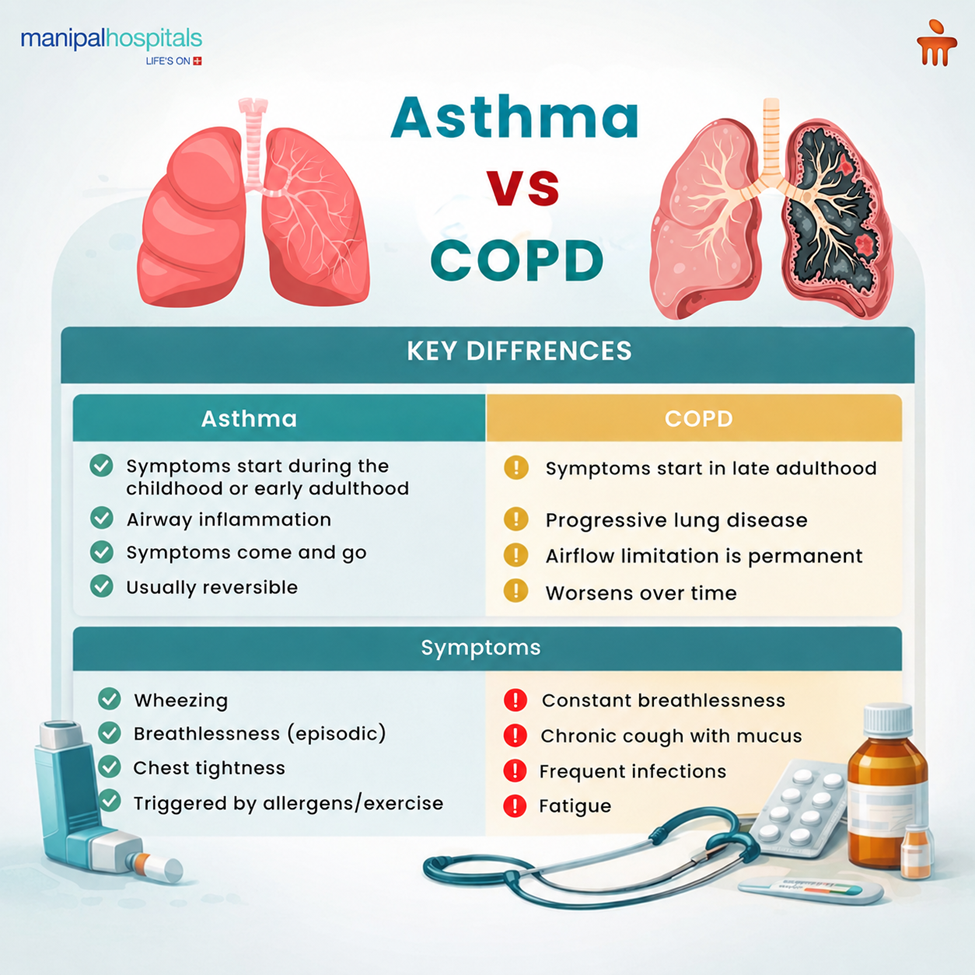
Key Differences Between Asthma and COPD
To clearly understand the difference between asthma and COPD, it is helpful to compare them across several important factors:
-
Age of Onset: Asthma often begins in childhood; in some cases even occurs during childhood. COPD symptoms begin much later in life, usually after age 40.
-
Cause: Asthma can be caused by allergies, genetics, or being around certain things in the environment. Long-term exposure to tobacco smoke is the primary cause of COPD.
-
Reversibility: One of the biggest points in the COPD vs asthma difference is reversibility. Asthma symptoms can often be reversed with medication. COPD airflow limitation is largely irreversible.
-
Symptom Pattern: Symptoms related to asthma are variable and often worse during nighttime or early morning hours. Conversely, COPD symptoms are fairly consistent and gradually deteriorate over time.
-
Inflammation Type: The type of inflammation related to asthma includes eosinophils, whereas that of COPD includes neutrophils.
Understanding these distinctions helps clarify the difference between asthma and COPD in a practical, clinical way.
How Symptoms Differ in Asthma and COPD
Both asthma and COPD share common symptoms, but their patterns differ significantly.
|
Asthma Symptoms |
COPD Symptoms |
|
Intermittent breathlessness |
Persistent breathlessness |
|
Wheezing |
Chronic cough with mucus |
|
Chest tightness |
Frequent respiratory infections |
|
Symptoms triggered by allergens or exercise |
Fatigue |
In asthma, symptoms may come and go. In COPD, symptoms are more constant and worsen gradually. This distinction is central to understanding the COPD vs asthma comparison.
Diagnosis: How Doctors Tell Them Apart
Pulmonologists use a combination of clinical history, physical examination, and tests to determine the difference between bronchial asthma and COPD.
-
Spirometry: This is the most important test. It measures how much air a person can exhale and how quickly.
-
In asthma, airflow improves significantly after bronchodilator use
-
In COPD, improvement is limited
-
-
Medical History: A history of allergies or childhood symptoms points towards asthma. A long smoking history suggests COPD.
-
Imaging: Chest X-rays and/or CT scans can assist in determining structural abnormalities within the lungs, characteristic of COPD. Correct diagnosis is important since management varies significantly, further stressing the necessity of differentiating between COPD and asthma.
Treatment Approaches
The range of treatments that can be used to treat both these conditions is enormous, which makes the understanding of how they differ from each other quite essential.
1. Asthma Treatments: Treatment for asthma aims at reducing inflammation and preventing an attack.
-
Inhaled corticosteroids
-
Bronchodilators
-
Avoidance of triggers
Specialised medical services like asthma treatment in Mysore can be investigated by patients looking for advanced treatments.
2. COPD Treatment: The goal of COPD treatment is to slow the disease's progression and make life better.
-
Long-acting bronchodilators
-
Inhaled steroids (in select cases)
-
Pulmonary rehabilitation
-
Oxygen therapy in advanced stages
Unlike asthma, COPD requires continuous management rather than episodic care.
Can Someone Have Both Asthma and COPD?
Yes, a condition known as Asthma-COPD Overlap (ACO) exists. Patients with ACO show features of both diseases. This further complicates the COPD vs. asthma difference, as symptoms and treatment responses may overlap. These patients require careful evaluation by a pulmonologist to create a personalised treatment plan.
Risk Factors and Prevention
Understanding risk factors helps in prevention and early intervention.
|
Asthma Risk Factors |
COPD Risk Factors |
|
Family history |
Smoking |
|
Allergies |
Air pollution |
|
Environmental pollutants |
Occupational exposure |
Avoiding smoking and reducing exposure to pollutants are two important steps in preventing COPD. Early diagnosis also helps manage both conditions effectively.
Living with Asthma or COPD
Both conditions require lifestyle adjustments, but the approach differs.
With Asthma
-
Identify and avoid triggers
-
Use inhalers correctly
-
Monitor symptoms regularly
With COPD
-
Quit smoking
-
Stay physically active
-
Attend pulmonary rehabilitation
Understanding the difference between asthma and COPD ensures patients follow the right management plan and avoid complications
When to See a Pulmonologist
The table below highlights common symptoms that may indicate the need to consult a pulmonologist for proper evaluation and timely treatment. For specialised respiratory care, you can visit the Pulmonology Department for expert diagnosis and treatment.
|
Symptoms |
Description |
|
Persistent breathlessness |
Ongoing difficulty in breathing |
|
Chronic cough |
A cough that lasts for a long time |
|
Frequent wheezing |
Regular whistling sound while breathing |
|
Reduced exercise tolerance |
Getting tired or breathless easily during physical activity |
Early consultation helps distinguish the difference between asthma and COPD and ensures timely treatment.
Conclusion
Asthma and COPD are different due to their causes, course of development, and treatment methods. Unlike asthma, which is usually reversible, COPD is a progressive disease, mostly resulting from prolonged irritation of the lungs by environmental factors such as smoking.
Knowing the difference between COPD and asthma is crucial in diagnosing and treating them. If you are suffering from either of the conditions, you will be guided effectively by a pulmonologist to help make a big difference. For specialised treatment and expert guidance, consult our experienced pulmonologists at Manipal Hospital Mysore.
FAQ's
Asthma symptoms are usually variable and triggered by factors like allergens, exercise, or cold air, and they often improve with medication. COPD symptoms, on the other hand, are more persistent, gradually worsen over time, and are commonly linked to long-term smoking or exposure to irritants. A spirometry test is often needed for a clear diagnosis.
Asthma often begins in childhood or early adulthood, although it can occur at any age. COPD usually develops later in life, most commonly after the age of 40, especially in individuals with a history of smoking or prolonged exposure to pollutants.
Asthma does not directly turn into COPD, but long-term uncontrolled asthma combined with smoking may increase the risk of developing COPD-like changes.
Both can be serious if untreated. However, COPD is generally more progressive and may lead to long-term disability.
You can explore advanced asthma treatment in Mysore through specialised pulmonology centres that offer personalised care and long-term management plans.
Share this article on: