6 Min Read
--When-Is-Surgery-Needed-.webp "Total Hip Replacement for Chronic Hip Pain Relief")
Chronic hip pain can significantly impact your daily life. Persistent discomfort, stiffness, and reduced mobility may become chronic issues for you if non-surgical treatments have failed to help. A total hip replacement might be the life-changing solution you need in such a case. This highly effective procedure can restore function and dramatically alleviate pain, guiding you towards recovery. Patients often consider total hip replacement surgery after exhausting all other treatment options. This blog explores the indicators and benefits of this significant procedure.
Synopsis
Understanding Total Hip Replacement (THR)
Total hip replacement (Total Hip Arthroplasty) is a surgical procedure to replace damaged bone and cartilage in the hip with prosthetic components to create a smooth, pain-free, functional joint. These components typically include a metal stem in the thigh bone, a ball made of ceramic or metal for the femoral head, and a metal or plastic, or ceramic-lined socket in the pelvis.
Common conditions leading to THR
Several underlying joint disorders and injuries can progressively damage the hip joint, ultimately leading to pain, stiffness, and loss of mobility—making Total Hip Replacement (THR) a necessary and effective treatment option.
-
Osteoarthritis- The primary reason for total hip replacement is the wearing away of the cartilage, which causes bone-on-bone friction.
-
Rheumatoid Arthritis- This autoimmune inflammation damages cartilage and bone.
-
Post-traumatic Arthritis- this type of arthritis develops after severe hip injuries.
-
Avascular Necrosis (AVN)- This is a condition leading to bone tissue death due to a lack of blood supply.
-
Childhood Hip Disease- These early-life conditions can lead to arthritis in the future.
When is Total Hip Replacement surgery needed?
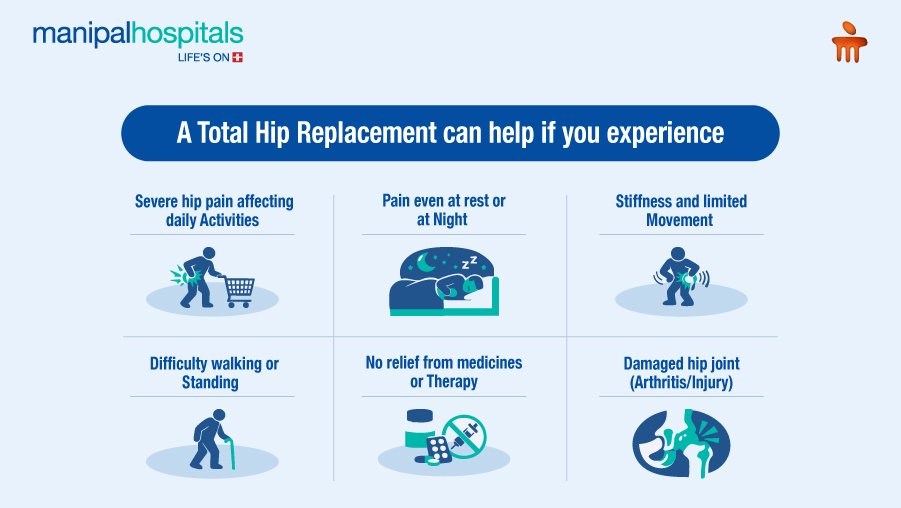
The decision for total hip replacement surgery is taken in consultation with your orthopaedic specialist when non-surgical treatments have failed, and hip pain significantly interferes with your daily life. These signs indicate that Total Hip Replacement (THR) may be the most effective next step for long-term relief and improved mobility:
-
Persistent, debilitating pain that remains unrelieved, even at rest.
-
Limited mobility due to difficulty faced while walking, bending, and performing daily tasks.
-
Stiffness and loss of/reduced hip range of motion.
-
Failure of conservative treatments, including medication, physical therapy, or injections.
-
X-ray evidence of significant joint damage (e.g., severe arthritis).
Total Hip Replacement cost and expectations
The total hip replacement price varies based on factors like implant type, hospital stay, and rehabilitation. Beyond cost, the significant long-term benefit is a return to an active, pain-free life. Most patients walk with assistance soon after surgery, followed by rehabilitation, with full recovery taking several months.
Total Hip Replacement complications
Though highly safe, Total Hip Replacement (THR) may carry rare risks, including:
-
Infection
-
Blood clots (deep vein thrombosis or pulmonary embolism)
-
Dislocation of the hip joint
-
Nerve injury
-
Implant loosening or wear over time
-
Leg length discrepancy
-
Fracture around the implant (periprosthetic fracture)
-
Joint stiffness or reduced range of motion
-
Persistent pain
-
Allergic reaction to implant materials
Conclusion
Total Hip Replacement (THR) is a highly effective procedure, with over 95% of patients experiencing significant pain relief and improved mobility. With long-lasting implants, it offers a reliable solution for chronic hip pain.
If you have persistent pain or stiffness in the hip that does not respond to conservative treatment, it might be time to explore the benefits of total hip replacement or THR. With high success rates and a patient-centric approach, our expert orthopaedic specialists and surgeons at Manipal Hospitals Mukundapur provide comprehensive care, from diagnosis to full recovery, helping you regain your mobility and enjoy life free from pain. Book a consultation with our orthopaedic team at Manipal Hospitals today and take the first step towards a pain-free life.
FAQ's
Most patients are walking with assistance within a day or two. Significant recovery occurs within the first 3 weeks, but full recovery and return to all activities can take 2 months to a year, depending on individual factors and rehabilitation adherence.
Yes, physical therapy is a critical component of recovery. It helps restore strength, flexibility, and range of motion, ensuring the best possible long-term outcome.
Modern hip implants are very durable. Over 90% of total hip replacements are still functioning well 15-20 years after surgery. Factors like patient activity level and implant type can influence longevity.
Many patients can return to most low-impact activities they enjoyed before surgery, such as walking, swimming, and cycling. High-impact sports like running or jumping are generally discouraged to protect the implant.
While there is some post-operative pain, it is well-managed with medication. The goal of the surgery is to relieve the chronic pain you experienced before, leading to a much more comfortable life.
Share this article on:


.webp "Deep Brain Stimulation: Are You the Right Candidate")