6 Min Read
For an athlete, an injury can impact more than just physical health – it can disrupt performance, routine, confidence, and goals. Although returning to the game quickly may seem important, a rushed recovery can increase the risk of re-injury and prolonged setbacks. A structured sports injury rehabilitation programme focuses on safe healing, rebuilding strength, restoring mobility, and improving overall performance. Studies show that following a personalised rehabilitation plan can reduce the risk of re-injury by up to 50%. This blog focuses on the significant aspects of sports injury rehabilitation step by step.
Synopsis
- Step 1: Immediate Injury Assessment and Accurate Diagnosis
- Step 2: Pain Management And Protection Of The Injured Area
- Step 3: Restoring Range Of Motion And Building Strength
- Step 4: Proprioception, Agility, And Sport-specific Training
- Step 5: Gradual Return To Play And Performance Monitoring
- Care essentials
- Conclusion
Step 1: Immediate Injury Assessment and Accurate Diagnosis
The first and most crucial step after any sports injury is immediate medical attention. Self-diagnosis or delaying professional assessment can complicate recovery and prolong your time away from the sport. These days, state-of-the-art diagnostic tools can accurately identify the nature and extent of your injury. Early intervention within 48 hours of an injury can shorten your overall recovery time by up to 30%, allowing for a more efficient start to your rehabilitation journey. It is important to –
-
Seek professional medical evaluation without delay.
-
Avoid continuing to play through pain, as this can worsen the injury.
-
Understand your diagnosis thoroughly and ask questions.
Step 2: Pain Management And Protection Of The Injured Area
Once your injury is diagnosed, the initial phase of rehabilitation focuses on reducing pain and inflammation while protecting the injured tissues from further damage. This typically involves a combination of rest, ice application, compression, and elevation (RICE principles), along with gentle, controlled movements as advised by your physiotherapist. The goal here is to create an optimal healing environment, allowing the natural repair processes of your body to begin effectively. You need to –
-
Adhere to prescribed rest periods to allow tissue healing.
-
Manage pain and swelling with non-pharmacological methods and guidance from your doctor.
-
Protect the injury with bracing or support as recommended.
Step 3: Restoring Range Of Motion And Building Strength
As pain subsides, the next phase of sports injury rehabilitation targets regaining full range of motion and rebuilding strength in the affected area and surrounding musculature. This is where the centres for tailored sports rehab exercises in Kolkata come into play. Under the expert guidance of the physiotherapists, you will perform specific exercises designed to improve flexibility, restore mobility, and progressively strengthen weakened muscles. Consistency and proper technique are vital during this phase. Patients who diligently follow their prescribed exercise regimen during this stage often see significant improvements in functional strength within 6-8 weeks. Focus lies in –
-
Engaging in guided flexibility and mobility exercises.
-
Progressively increasing resistance and intensity in strength training.
-
Concentrating on proper form to prevent compensation and re-injury.
Step 4: Proprioception, Agility, And Sport-specific Training
With strength and range of motion restored, rehabilitation progresses to more functional training. This involves exercises that enhance proprioception (your body's awareness in space), balance, agility, and coordination. This phase integrates movements specific to your sport, gradually preparing your body for the demands of competition. Implementing a structured return to play protocol is crucial here. Athletes who undergo this sport-specific conditioning are 2.5 times less likely to experience a second injury within the first year of returning to sport. This requires –
Incorporation of balance and proprioceptive exercises.
Practice of sport-specific drills at reduced intensity.
Gradual increase of the complexity and speed of movements.
Step 5: Gradual Return To Play And Performance Monitoring
The final step is the carefully monitored reintegration into your sport. This isn't a sudden leap but a phased approach, starting with light training, progressing to full practice, and eventually, competitive play. This essentially involves comprehensive guidance on your return-to-play protocol, including benchmarks and criteria for advancing through each stage. Experts monitor your progress closely, adjusting your programme as needed, to ensure a safe and successful return. Dedicated specialists can help over 90% of athletes successfully return to their pre-injury performance levels or even surpass them. This is done by
-
Following a phased return-to-play schedule developed with your therapist.
-
Listening to your body and reporting any discomfort immediately.
-
Continuing with maintenance exercises to prevent recurrence.
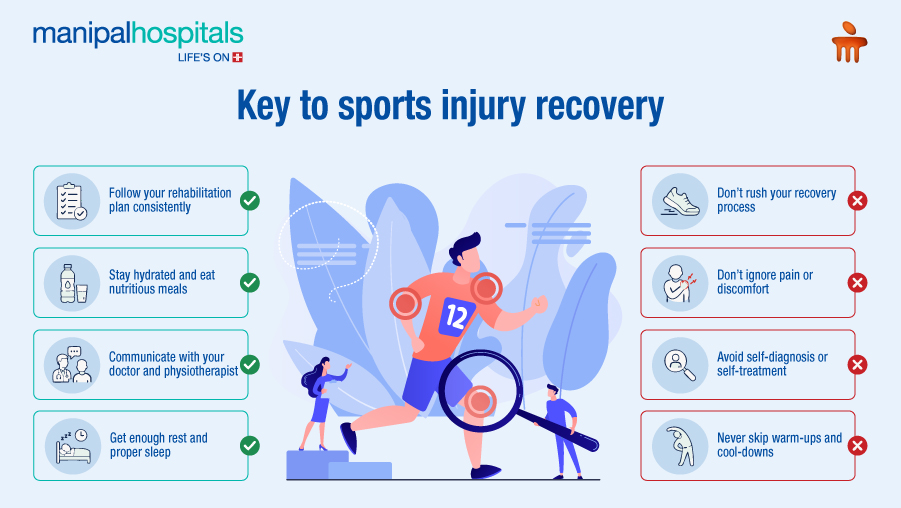
Care essentials
|
DO'S |
DON'TS |
|
Follow your programme diligently: Adherence to your prescribed exercises and restrictions is paramount for effective recovery. |
Rush the process: Trying to speed up recovery often leads to re-injury or incomplete healing. |
|
Communicate with your team: Keep your physiotherapist and doctor informed about your pain levels, progress, and any concerns. |
Ignore pain: Pain is your body's signal; never push through acute or sharp pain. |
|
Prioritise nutrition and hydration: A well-balanced diet supports tissue repair and overall recovery. |
Self-diagnose or self-treat: Always rely on the expertise of medical professionals. |
|
Get adequate rest: Sleep is crucial for bodily repair and regeneration. |
Neglect warm-ups and cool-downs: These are vital components of injury prevention and performance. |
Conclusion
Returning to sport after an injury is a journey that requires patience, dedication, and expert guidance. At Manipal Hospitals, our dedicated sports medicine hospital, Mukundapur facility and team of specialists are here to support you every step of the way, ensuring a safe and strong comeback. Remember, your health and long-term athletic career are our top priorities.
If you have sustained a sports injury or are looking for expert rehabilitation guidance, it's crucial to seek timely medical advice. Book an appointment with our expert orthopaedic specialists at Manipal Hospital Mukundapur today.
FAQ's
The duration varies significantly depending on the type and severity of the injury, as well as individual healing rates and adherence to the rehabilitation program. It can range from a few weeks to several months.
Often, yes. Your physiotherapist will design a program that allows you to maintain fitness in uninjured areas without compromising the healing of the injured site. This is often referred to as "active rest" or "cross-training."
It's important to differentiate between muscle soreness and sharp, acute pain. Mild discomfort or fatigue is normal during rehabilitation. However, if you experience sharp or increasing pain, stop the exercise and consult your physiotherapist immediately.
While not all injuries can be prevented, a significant number can be avoided through proper warm-ups, cool-downs, appropriate conditioning, correct technique, adequate rest, and proper equipment. Regular assessment by a sports medicine professional can also identify and address potential risk factors.
A return to play protocol is a structured, progressive set of guidelines and tests used by medical professionals to determine when an athlete can safely resume sport-specific activities after an injury. It ensures that the athlete meets specific functional and strength criteria at each stage before advancing, minimizing the risk of re-injury.
Share this article on:


--When-Is-Surgery-Needed-.webp "Total Hip Replacement for Chronic Hip Pain Relief")