7 Min Read
.webp "Deep Brain Stimulation: Are You the Right Candidate")
Deep Brain Stimulation (DBS) is a revolutionary neurosurgical procedure that has transformed the lives of many individuals suffering from debilitating neurological conditions. The profound impact these conditions can have on daily life, often leading to persistent tremors, stiffness, slowed movements, and reduced independence despite optimal medical therapy, makes advanced treatment options like DBS a crucial consideration for improving quality of life. This blog guides you through the answers to queries like, what is Deep Brain Stimulation, who is an ideal candidate for deep brain stimulation surgery, and what signs indicate its potential benefit.
Synopsis
What is Deep Brain Stimulation?
Deep Brain Stimulation is a surgical procedure that involves implanting a small, pacemaker-like device in the brain. This device delivers targeted electrical impulses precisely to the specific brain areas that control movement, modulate abnormal activity, and significantly reduce symptoms. Unlike some other surgical interventions, DBS is a reversible and adjustable treatment, offering long-term symptom control for several conditions. Deep Brain Stimulation aims to improve quality of life by alleviating severe, medication-resistant symptoms.
Who is eligible for Deep Brain Stimulation?
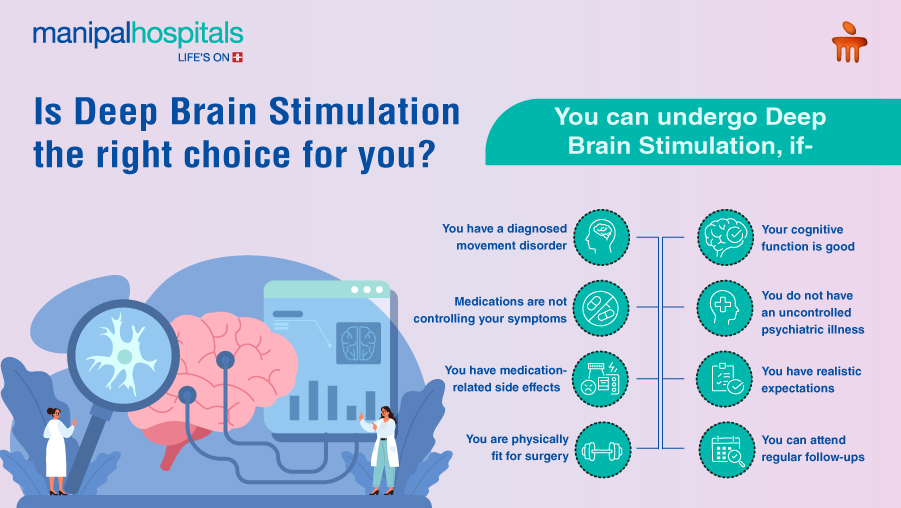
Determining the eligibility of a patient for undergoing deep brain stimulation surgery is a comprehensive process involving a multidisciplinary team. These experts come together to meticulously evaluate each patient to ensure this procedure is the most appropriate and beneficial deep brain stimulation treatment for them. The primary signs and criteria considered are:
Conditions that may benefit from Deep Brain Stimulation
-
Parkinson's Disease- Candidates with motor symptoms like tremor, rigidity, and bradykinesia, who initially responded to medication but lately experience motor fluctuations or dyskinesias that are not controlled by adjustments, can be considered. These motor symptoms can be significantly improved with Deep Brain Stimulation surgery.
-
Essential Tremor- Individuals with severe, medication-resistant essential tremor that significantly interferes with daily activities are often excellent candidates. Deep Brain Stimulation has shown an impressive success rate in reducing essential tremor.
-
Dystonia- Patients with primary generalised or segmental dystonia unresponsive to medication or other therapies may also be considered. DBS can lead to remarkable improvement in muscle spasms and abnormal postures.
-
Obsessive-Compulsive Disorder (OCD)- For severe, treatment-resistant OCD, where other conventional treatments have failed, DBS is an approved therapy with promising outcomes.
-
Epilepsy- In specific cases of medically refractory epilepsy, DBS can be an effective adjunctive or additional treatment to reduce seizure frequency.
Response to medication and symptom profile
-
For Parkinson's Disease, a positive response to levodopa (even if no longer sustained) indicates motor symptoms will respond well to Deep Brain Stimulation. For other conditions, failure to achieve adequate symptom control with optimum medication therapy management is a key consideration.
-
Symptoms must be debilitating enough to impact daily activities, work, or social life, and respond well to Deep Brain Stimulation.
Overall health and cognitive status
-
Candidates should be in sound health, capable of undergoing brain surgery and subsequent programming. Uncontrolled severe medical conditions or severe psychiatric conditions (like unmanaged depression or anxiety) can affect outcomes.
-
A candidate with significant cognitive impairment or dementia typically disqualifies as a candidate, as Deep Brain Stimulation may not improve these symptoms.
Patient motivation and expectations
A thorough understanding of the Deep Brain Stimulation treatment, its potential benefits, and limitations is essential for an individual before they go for it. Patients should have realistic expectations, understanding that DBS manages symptoms rather than curing the underlying disease. Adherence to follow-up appointments for device programming and ongoing care is crucial for the success of Deep Brain Stimulation treatment.
In Kolkata, the Deep Brain Stimulation cost generally ranges between ₹8,00,000 and ₹14,00,000 on average, with cost variations based on factors including the hospital, type of implant used, and the patient’s specific medical condition.
Conclusion
Identifying the right candidate for Deep Brain Stimulation (DBS) requires careful assessment of symptoms, medication response, and overall health status. Patients with persistent movement-related challenges despite optimal treatment often benefit the most. At Manipal Hospitals, we offer advanced DBS options with transparent pricing and expert guidance. While the cost may vary, many patients experience significant improvements in quality of life and reduced medication dependence, making DBS a valuable, life-changing investment. If you or your loved one is experiencing symptoms of a movement disorder or another neurological condition, book a consultation with our neurosurgery experts at Manipal Hospitals Mukundapur today to explore if DBS is the right option for you.
FAQ's
Deep Brain Stimulation (DBS) is not a cure, but an advanced and highly effective treatment that helps manage and significantly reduce debilitating symptoms of neurological disorders, ultimately improving daily functioning and enhancing overall quality of life for patients.
Initial recovery from the deep brain stimulation surgery typically takes a few weeks. However, the full benefits of DBS are realised over several months as the device is programmed and adjusted in follow-up sessions.
Like any surgery, Deep Brain Stimulation (DBS) carries risks such as infection, brain bleeding, or lead displacement. At Manipal Hospitals, we take strict precautions to minimize complications and discuss all potential risks thoroughly during your treatment planning.
Patients with severe cognitive impairment, uncontrolled psychiatric disorders, or serious medical conditions that increase surgical risk are generally not considered suitable candidates for Deep Brain Stimulation (DBS), as these factors can affect both safety and overall treatment outcomes.
Age alone is not a strict barrier for Deep Brain Stimulation (DBS). Candidacy is primarily determined by a patient’s overall health, cognitive status, and ability to safely undergo and recover from surgery, rather than their chronological age.
Share this article on: