


 7 Min Read
We have all had those moments where we feel a bit "out of breath" after a few flights of stairs or notice a sudden, brief flutter in the chest while rushing through a busy morning. Usually, we dismiss these sensations as a sign of a poor night's sleep, too much caffeine, or perhaps just being “out of shape." We assume our bodies will simply reset once we catch our breath. However, for some, these small physical protests are not about fitness; they are the subtle signals of hypertrophic cardiomyopathy.
Understanding what is hypertrophic cardiomyopathy is the first step toward moving from uncertainty to a clear, managed path for heart health. In this blog, we explain what this condition is, its causes, warning signs, diagnosis, and treatment options.
Synopsis
- What is Hypertrophic Cardiomyopathy?
- Hypertrophic Cardiomyopathy Symptoms
- What Causes Hypertrophic Cardiomyopathy?
- Types of Hypertrophic Cardiomyopathy
- How Is Hypertrophic Cardiomyopathy Diagnosed?
- Hypertrophic Cardiomyopathy Treatment Options
- Living with Hypertrophic Cardiomyopathy
- Can Hypertrophic Cardiomyopathy Be Prevented?
- When Should You See a Doctor?
- Conclusion
What is Hypertrophic Cardiomyopathy?
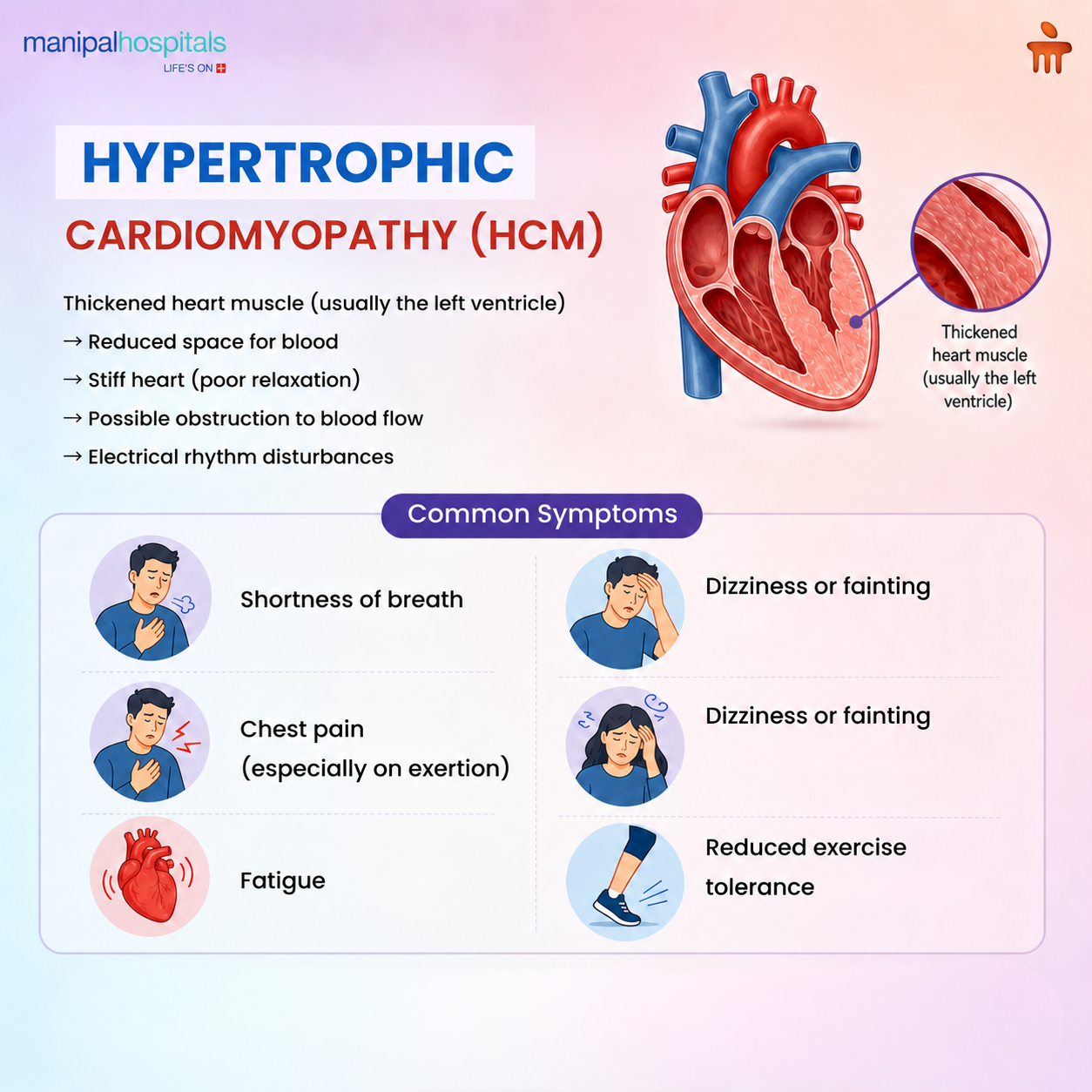
The heart works like a pump that needs enough space to fill with blood and push it out smoothly. In hypertrophic cardiomyopathy, the heart muscle becomes stiffer than normal, especially the left ventricle. As the muscle thickens, the heart finds it harder to relax and fill properly between beats.
This condition often develops in the background, sometimes for years, without making its presence loudly known. It can affect anyone, from the dedicated athlete to the person with a quiet, sedentary lifestyle. Because it often hides behind common symptoms like fatigue or mild breathlessness, many people are only diagnosed during a routine physical or when investigating a family history.
What happens inside the body?
-
Thickened heart walls: The walls become bulky, leaving less space inside the heart for blood.
-
Reduced filling capacity: The heart may still pump, but it does not fill efficiently, which can affect circulation.
-
Stiff heart muscle: The muscle becomes less flexible and cannot relax properly after each beat.
-
Electrical changes: The condition can disturb the heart’s normal rhythm.
Hypertrophic Cardiomyopathy Symptoms
Symptoms can vary greatly. Some people may not have any symptoms, while others may notice changes in physical activity.
Common hypertrophic cardiomyopathy symptoms:
-
Shortness of breath: Difficulty breathing during exercise.
-
Chest pain: Pain in the chest due to exercise.
-
Palpitation: A sensation of the heart racing or fluttering.
-
Fatigue: A feeling of extreme tiredness with little exercise.
-
Lightheadedness or fainting: It occurs because of a reduced blood supply to the brain.
-
Reduced ability to tolerate physical activity
What Causes Hypertrophic Cardiomyopathy?
Knowing the causes can help you know who might be at a higher risk.
Common causes include:
-
Genetic factors: The majority of cases are inherited through family genes.
-
Family history: A close relative with the condition increases risk.
-
Abnormal heart muscle growth: Uneven cell growth causing thickening.
-
Progression with time: Symptoms may develop or worsen over time.
Some people live with this condition for years without noticing anything unusual. The genetic tendency is present from birth, but the thickening often develops during adolescence or adulthood.
Types of Hypertrophic Cardiomyopathy
Doctors divide this according to the way the thickening affects blood flow.
|
Type |
Definition |
Effect on Heart |
|
Obstructive HCM |
Thickened muscle blocks blood flow |
Reduced blood flow out of the heart chamber |
|
Non-obstructive HCM |
Thickening without obstruction |
A stiff heart muscle affects filling |
|
Apical HCM |
Thickening at the bottom of the heart |
May cause mild or no symptoms |
This classification can help guide the appropriate treatment of hypertrophic cardiomyopathy.
How Is Hypertrophic Cardiomyopathy Diagnosed?
The diagnosis is based on a combination of clinical assessment and testing. Not every case is severe, but monitoring is important. So what can actually be done if you’re diagnosed?
Let’s look at the diagnostic methods:
-
Medical History: Facilitates the identification of symptoms and the presence of familial heart disease.
-
Physical Examination: Physicians assess for abnormal heart sounds through auscultation.
-
Echocardiography: Employs ultrasonic waves to evaluate cardiac size and function.
-
Electrocardiogram (ECG): Detects abnormal cardiac rhythms.
-
Magnetic Resonance Imaging (MRI): Provides detailed visualisation of cardiac structures.
-
Genetic Testing: Useful for identifying inherited cardiovascular risk factors in select cases.
Some patients may develop serious rhythm disturbances. Early diagnosis plays a crucial role in preventing complications.
Hypertrophic Cardiomyopathy Treatment Options
Treatment aims to relieve symptoms, improve heart function, and prevent complications.
1. Medications
-
Beta-Blockers: They are useful in reducing the heart rate.
-
Calcium channel blockers: They have a relaxing effect on the heart muscle, improving filling capacity.
-
Anti-arrhythmics: They assist in controlling heart rhythms.
2. Lifestyle Changes
-
Do not indulge in intense exercises: They reduce heart workload.
-
Keep yourself well-hydrated: It facilitates healthy blood circulation.
-
Handle your stress levels: It assists in managing heart diseases.
3. Medical Procedures
|
Procedure |
What It Does |
When It Is Used |
|
Septal myectomy |
Removes part of the thickened muscle |
Severe obstruction |
|
Alcohol septal ablation |
Shrinks thickened tissue using alcohol injection |
Selected patients |
|
Implantable cardioverter defibrillator (ICD) |
Prevents dangerous heart rhythms |
High-risk patients |
|
Mavacamten (Medical Management) |
Relatively new, first-in-class cardiac myosin inhibitor that reduces heart muscle hypercontractility to improve relaxation and lower obstruction |
Selected patients with symptomatic obstructive HCM |
4. Advanced Care
If you require specialist care, then you should consider hypertrophic cardiomyopathy in Malleshwaram, as the experts here can help diagnose and treat the problem effectively.
Living with Hypertrophic Cardiomyopathy
Hearing this diagnosis for the first time can feel overwhelming, but with the right treatment and lifestyle changes, many people can live active, fulfilling lives.
Helpful daily habits:
-
Monitor symptoms: These include any alteration in breathing, chest pains, and fatigue.
-
Adhere to the medication schedule: This will help control the symptoms effectively.
-
Engage in activities carefully: Moderate activities can be beneficial under the guidance of a physician.
-
Inform relatives: It may be necessary for genetic screening.
Can Hypertrophic Cardiomyopathy Be Prevented?
Most conditions are genetically acquired, thus rendering prevention totally impossible. However, some preventive steps can lower the chances of contracting this disorder.
Prevention measures:
-
Regular heart screening of family members: More so in case of any family history
-
Leading a healthy lifestyle: Eating a balanced diet and exercising to maintain an ideal body mass index
-
Non-smoking and moderate alcohol consumption: Are good for the heart
-
Controlling hypertension: Avoiding undue stress to the heart
When Should You See a Doctor?
It’s important not to ignore warning signs, especially when they involve your heart. You should consult a doctor if you notice any of the following:
-
Difficulty breathing, even during mild activity
-
Chest pain, especially during physical exertion
-
Episodes of fainting or loss of consciousness
-
Irregular or unusually fast heartbeats
If you have a family history of hypertrophic cardiomyopathy or heart problems, then you must seek your doctor’s opinion.
Conclusion
The first thing you have to do to protect your heart health is understand what this condition is. The condition sounds serious, but many people can live with it successfully with timely diagnosis and appropriate treatment.
Early detection of the warning signs, an understanding of their cause, and medical intervention by a specialist can play a major role in determining the prognosis. In case you exhibit symptoms or suffer from heart disease in your family, you may consider visiting a specialists in Malleshwaram at Manipal Hospitals.
FAQ's
Yes, it may happen to children, especially when it is hereditary. Checking regularly will allow for early detection and management of the disorder before things become too serious.
Not all forms of exercise are prohibited. Normally, mild to moderate physical activities are encouraged, but intense exercises must be discouraged until cleared by a cardiologist.
No, most of the cases can be managed by using medication and monitoring. Surgery will only be an option when there are severe symptoms or there is an obstruction in blood circulation.
This condition may result in an increased risk of sudden cardiac arrest in high-risk individuals. The risk can be greatly minimised by using an implantable defibrillator. Rarely, sudden cardiac death in young people during intense physical activities may be the only sign of hypertrophic cardiomyopathy.
The frequency of visits will be determined by how severe hypertrophic cardiomyopathy is. Most people suffering from this condition are required to undertake checkups every 6 to 12 months.
Share this article on:


.webp "Understanding Cardiophobia (Heart Anxiety): When Your Mind Tricks Your Heart")


