


 8 Min Read
Most people are quick to address a sharp headache or a visible injury, but internal digestive changes often get pushed to the back of our minds. We tend to blame a heavy meal, a stressful week, or “just getting older” for vague stomach discomfort. Unlike some other conditions, pancreatic problems can be subtle and easy to ignore.
Pancreatic cancer, in particular, tends to develop quietly. By the time the pancreatic cancer symptoms become noticeable, they may be confused with common digestive issues or even conditions like acute pancreatitis. Understanding pancreatic cancer and how it differs from acute pancreatitis symptoms is essential for timely intervention.
This blog examines the risk factors, the nature of pancreatic discomfort, and the steps to take if you notice persistent changes.
Synopsis
- What is pancreatic cancer?
- Why Pancreatic Cancer is Often Missed Early?
- Common Symptoms of Pancreatic Cancer
- Difference Between Pancreatic Cancer and Acute Pancreatitis
- Causes of Pancreatic Cancer
- Risk Factors You Should Know
- Understanding Pancreatic Pain
- Diagnostic Approach in Gastroenterology
- Prevention and Lifestyle Measures
- When Should You See a Doctor?
- Conclusion
What is pancreatic cancer?
Pancreatic cancer is a condition in which the cells of the pancreas grow out of control. Over time, this cell development becomes a tumour which impacts the function of the organ.
The pancreas is a crucial part of the human body. This gland participates in the process of digestion thanks to enzymes as well as regulates the levels of blood glucose via hormones such as insulin. Hence, the function of this gland is severely impacted when cancer develops.
Detection of cancer of the pancreas in its early stages might prove difficult since this gland is located deep inside the abdomen, and therefore, early symptoms may not be easily recognisable. In some cases, people may notice vague digestive discomfort, but these symptoms are not always specific. This is why awareness and timely evaluation are important.
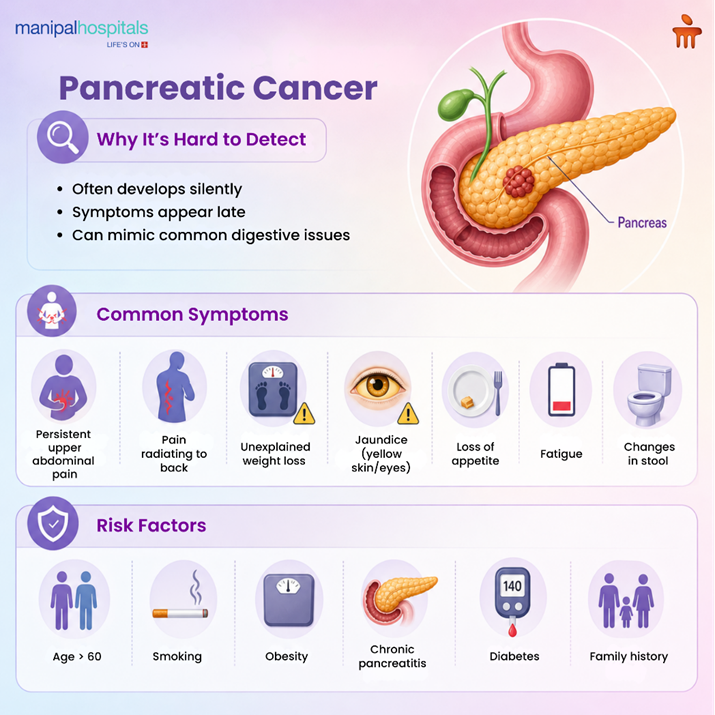
Why Pancreatic Cancer is Often Missed Early?
Pancreatic cancer is often diagnosed at a later stage, mainly because the early signs are easy to miss.
-
At first, a person may feel tired, have mild stomach discomfort, notice a reduced appetite, or have back pain. These symptoms are quite common and are often mistaken for routine digestive issues.
-
Another challenge is that these signs can overlap with other conditions, including problems like gastritis or even acute pancreatitis. This makes it harder to identify the cause early on.
-
·Pancreatic pain may also come and go rather than stay constant, which can lead people to wait before seeing a doctor. Because of this, early detection can be difficult, and symptoms are often noticed only when they become more persistent.
Common Symptoms of Pancreatic Cancer
Pancreatic cancer symptoms vary based on the location of the tumour and the stage of the cancer. It may be difficult for some people to detect any symptoms in its early stages.
Key Symptoms Include:
-
Persistent pain in the upper abdomen
-
Pain that spreads towards the back
-
Loss of appetite
-
Yellowing of the skin and eyes, known as jaundice
-
Changes in stool consistency
-
Ongoing fatigue
Pancreatic pain can be an early symptom in some cases, but it is not always present in the initial stages. The pain is normally described as dull rather than sharp. In most cases, the pain intensifies upon eating or lying flat. It is very important not to confuse these symptoms with those of acute pancreatitis, which occur abruptly and are more severe.
Difference Between Pancreatic Cancer and Acute Pancreatitis
Although both conditions involve the pancreas, they are quite different in how they present and progress. The following are the main differences:
|
Feature |
Pancreatic Cancer |
Acute Pancreatitis |
|
Onset |
Gradual development |
Sudden onset |
|
Nature of Pain |
Persistent and dull |
Severe and sharp |
|
Weight Loss |
Common |
Less frequent |
|
Jaundice |
Often present |
Rare |
|
Cause |
Tumour growth |
Inflammation, alcohol, and gallstones |
|
Course |
Progressive |
Usually reversible with treatment |
Recognising these differences is important because acute pancreatitis usually requires emergency stabilisation, while pancreatic cancer symptoms require a detailed oncology and gastroenterology evaluation.
Causes of Pancreatic Cancer
The exact cause of pancreatic cancer is not fully understood, but it is linked to changes in the DNA of pancreatic cells that affect how they grow and function. Certain factors can increase the risk:
-
Long-term inflammation of the pancreas (chronic pancreatitis), which can damage the tissue over time
-
Smoking, which is one of the strongest and most well-known risk factors
-
Obesity, which may increase the risk, especially over the long term
-
Lack of physical activity and an unhealthy lifestyle
-
Conditions like diabetes, which are sometimes linked with pancreatic changes
This does not mean that all such conditions will result in cancer; however, their presence could increase the probability of getting cancer.
Risk Factors You Should Know
Some individuals are more likely to develop pancreatic cancer than others. Knowing these risk factors can help with early detection. Major risk factors include:
-
Age above 60
-
Smoking
-
Obesity
-
Chronic pancreatitis
-
Diabetes
-
Family history of pancreatic disease
The clinical studies in relation to patients having pain in their pancreas have shown the impact that lifestyle habits have on the health of the organ. Inactivity and diet are some of the major contributing factors.
Understanding Pancreatic Pain
Pain related to the pancreas can be difficult to interpret. It does not always behave like typical abdominal pain. Pancreatic pain symptoms often include discomfort in the upper abdomen that may extend to the back. The pain may feel worse after meals and sometimes improves when the person leans forward. Because these symptoms overlap with other digestive issues, they are often misdiagnosed. Conditions such as gastritis or gallstones may be considered first.
However, persistent or recurring pancreatic pain symptoms should never be ignored. In some cases, what appears to be a minor issue may actually be an early sign of a more serious condition. Reports of pancreatic pain show that early consultation with a gastroenterologist can make a significant difference in outcomes.
Diagnostic Approach in Gastroenterology
Diagnosing pancreatic cancer involves several steps. The process starts with a thorough review of the patient’s health history and physical examination. In case of suspected signs of pancreatic cancer, diagnostic tests will generally be suggested. They include CT scans, MRI scans, or ultrasounds. The procedure may involve an endoscopy that will help visualise the organ better. Blood tests may also be performed in order to find specific markers. Since signs of the disease can be confused with other disorders, diagnosis must necessarily combine different approaches.
Patients with ongoing pancreatic pain symptoms are usually investigated thoroughly to rule out both inflammatory and malignant causes.
Prevention and Lifestyle Measures
While not all cases can be prevented, certain steps can reduce risk.
Preventive Strategies:
-
Tobacco Cessation: Quitting smoking immediately lowers the toxic load on the pancreas. Government or private hospital programmes can help individuals with tobacco-related addictions.
-
Healthy Weight: Maintaining a balanced BMI reduces the metabolic stress on the organ.
-
Blood Sugar Management: Keeping diabetes under control is vital for pancreatic health.
-
Limit Alcohol: Chronic alcohol use is a leading cause of the acute pancreatitis symptoms that can eventually damage the organ permanently.
Addressing issues early is important. For instance, repeated acute pancreatitis symptoms should be evaluated properly to prevent long-term complications.
When Should You See a Doctor?
It is not always easy to decide when symptoms require medical attention in Malleshwaram. However, certain signs should not be ignored. It would be best if you sought advice from your physician in case you have any of the following:
-
Long-term stomach pain
-
Unexplained sudden loss of body weight
-
Yellow appearance of skin or eyes
-
Lingering issues with digestion
-
Symptoms similar to acute pancreatitis
These signs are often neglected for an extended period since they may seem harmless. If the patient does not get relief from the symptoms, a gastroenterologist will suggest additional testing.
Conclusion
Pancreatic cancer is a complex condition that often develops silently. Recognising pancreatic cancer symptoms and understanding how they differ from acute pancreatitis is essential for early diagnosis.
If you notice persistent pancreatic pain symptoms or unusual digestive changes, it is important not to delay medical consultation. Early evaluation can make a significant difference. For expert gastroenterology care and a detailed assessment of pancreatic pain, you can consult cancer care specialists at Manipal Hospital Malleshwaram, Bangalore.
FAQ's
Early pancreatic cancer symptoms may include mild abdominal discomfort, fatigue, and reduced appetite. These symptoms are usually subtle and easily overlooked without proper medical evaluation.
Acute pancreatitis symptoms appear suddenly with severe pain, while symptoms of pancreatic cancer develop gradually and are often less intense initially but persistent over time.
Not always. Pancreatic pain symptoms can result from inflammation or digestive issues. However, persistent or worsening pain should always be checked by a healthcare professional.
People above 60, smokers, those with obesity, diabetes, or chronic pancreatitis, and individuals with a family history of pancreatic disease are at higher risk.
If pancreatic pain symptoms last more than a few weeks, worsen gradually, or occur with weight loss or jaundice, it is important to consult a doctor promptly.
Share this article on:


