


 10 Min Read
Cervical cancer remains the second most common cancer among women in India, with over 1.2 lakh new cases and nearly 80,000 deaths annually. But, do you know that it is highly preventable? Thanks to increasing awareness and significant medical advancements, women today have many options for cervical cancer prevention. A key focus in this battle for women’s health is understanding the crucial connection between Human Papillomavirus (HPV) infection and cervical cancer. In this blog, let us explore the life-saving potential of both the HPV vaccine and early screening of cervical cancer.
Synopsis
- What Exactly is Cervical Cancer?
- Common Causes and Risk Factors for Cervical Cancer
- Understanding HPV (Human Papillomavirus)
- Symptoms of Cervical Cancer
- The Role of HPV Vaccine in Cervical Cancer Prevention
- Key Information on HPV Vaccination:
- Who Should Get the HPV Vaccine?
- Cervical Cancer Screening
- Comprehensive Prevention Tips
- Conclusion
What Exactly is Cervical Cancer?
Cervical cancer is a type of cancer that develops in the cells of the cervix, the lower part of the uterus that connects to the vagina. It typically develops slowly over time, often beginning with precancerous changes that, if left undetected and untreated for a long time, can progress into invasive cancer.
The journey from initial cell changes to full-blown cancer can take many years, which highlights the immense importance of early detection and intervention. But the good news is that advancements like HPV vaccination offer a robust shield, marking a new era in cervical cancer prevention.
Common Causes and Risk Factors for Cervical Cancer
Human Papillomavirus (HPV) Infection: Over 95% of cervical cancer cases are directly linked to persistent infection with high-risk types of HPV.
-
Smoking: Women who smoke are about twice as likely to get cervical cancer compared to non-smokers. The harmful chemicals in tobacco can damage cervical cell DNA, making them more susceptible to HPV infection and cancerous changes.
-
Weakened Immune System: A compromised immune system, due to conditions like HIV/AIDS or organ transplant, makes it harder for the body to fight off HPV infections.
-
Multiple Pregnancies: Giving birth to multiple children has been associated with an increased risk of cervical cancer.
-
Long-term Oral Contraceptive Use: Some studies suggest a small increase in cervical cancer risk with prolonged oral contraceptive use, particularly in women with persistent HPV infection.
-
Other factors: Other risk factors include a family history of cervical cancer and a diet low in fruits and vegetables.
Recognising these factors and the importance of early detection is the first step towards effective cervical cancer prevention.
Understanding HPV (Human Papillomavirus)
Human Papillomavirus (HPV) is a common group of viruses that can cause warts on various parts of the body. While many types of HPV exist, some are particularly significant for women's health. HPV is primarily spread through skin-to-skin contact, most commonly during sexual activity, making it one of the most prevalent sexually transmitted infections globally.
It's important to note that HPV is extremely common, with most sexually active individuals acquiring an HPV infection at some point in their lives. These infections are mostly asymptomatic and resolve on their own through the body's immune response. However, when a high-risk HPV infection persists, it can lead to abnormal cell changes in the cervix that can develop into cervical cancer. This makes HPV infection a critical area for cervical cancer prevention strategies, especially through initiatives like early screening for cervical cancer and HPV vaccination for women.
|
Transmission and Types of HPV |
|
|---|---|
|
How HPV Spreads |
HPV is highly contagious and spreads through direct skin-to-skin contact, often during vaginal, anal, or oral sex. It can be transmitted even when an infected person has no visible symptoms. |
|
Different Types of HPV |
There are over 100 types of HPV, but they are generally categorised into low-risk and high-risk types. Low-risk types can cause genital warts, while high-risk types are linked to cancer. |
|
High-Risk HPV Strains |
Specific high-risk HPV strains, such as HPV 16 and HPV 18, are responsible for approximately 70% of all cervical cancer cases. Other high-risk types include HPV 31, 33, 45, 52, and 58. |
Symptoms of Cervical Cancer
In early stages, cervical cancer often presents with no noticeable symptoms. However, as the cancer advances, several symptoms may emerge that warrant immediate medical attention.
Common symptoms to watch for:
-
Abnormal Vaginal Bleeding: This is the most common symptom. It can include bleeding after sexual intercourse, bleeding between periods, or bleeding after menopause.
-
Pelvic Pain: Persistent pain in the pelvic area that is not related to menstruation can be a sign.
-
Pain During Intercourse (Dyspareunia): Discomfort or pain during sexual activity may indicate advanced cervical changes.
-
Unusual Vaginal Discharge: Discharge that is watery, bloody, thick, and/or has a foul odour.
-
Other Advanced Symptoms: In later stages, symptoms may include weight loss, fatigue, leg pain, or swelling due to cancer spread.
While these symptoms can be indicative of cervical cancer, they can also be caused by other, less serious conditions. Therefore, experiencing any of these symptoms should prompt a visit to a doctor for proper diagnosis.
The Role of HPV Vaccine in Cervical Cancer Prevention
The development of the HPV vaccine represents a monumental leap in cervical cancer prevention. For a country like India, where the burden of cervical cancer is significant, widespread HPV vaccination is a crucial public health call to reduce incidence.
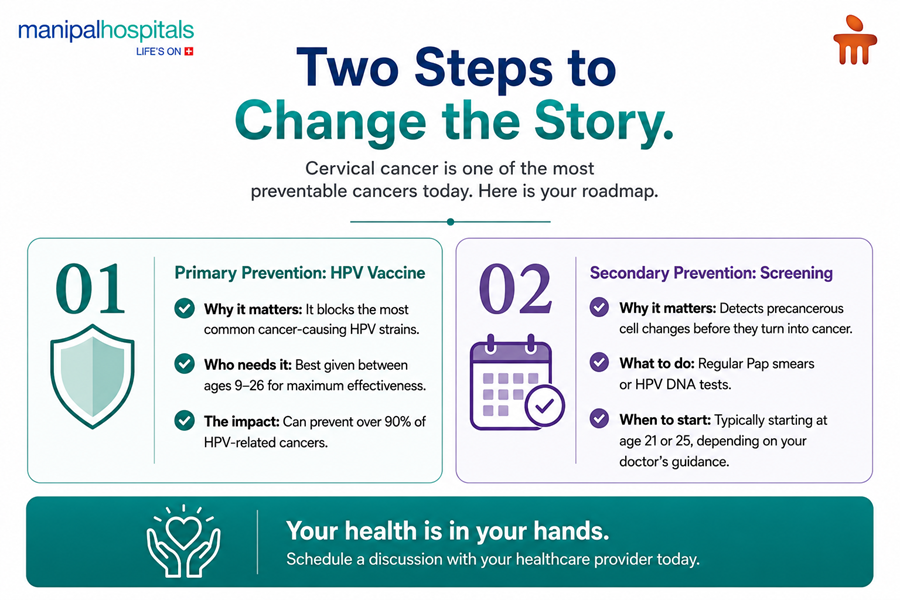
This vaccine works by protecting against the high-risk HPV types (e.g., HPV 16 and 18) that are responsible for the vast majority of cervical cancers and other HPV-related cancers like those of the anus, throat, and vulva/vagina, effectively preventing the infection before it can cause cellular changes. Also, administering the HPV vaccine before exposure to the virus (i.e., before sexual activity) provides the best possible protection. This is why vaccination is recommended for younger age groups.
Key Information on HPV Vaccination:
|
Recommended Age Group |
The vaccine is most effective when given to individuals aged 9–14 years, ideally before they become sexually active. |
|
Vaccine Doses |
For those aged 9-14, 2 doses are usually sufficient. For individuals aged 15 and older, 3 doses are generally recommended. Your doctor will advise the best schedule for you. |
|
Safety and Effectiveness |
Extensive research and real-world data have consistently demonstrated the safety and high effectiveness of the HPV vaccine. Studies show it can prevent over 90% of HPV-related cancers, making it a powerful tool in women's health. Millions of doses have been safely administered worldwide, significantly reducing HPV infections and precancerous lesions. |
Who Should Get the HPV Vaccine?
Understanding who benefits most from the HPV vaccine is crucial for maximising its protective impact on cervical cancer prevention. The guidelines are designed to ensure the highest efficacy by administering the vaccine before potential exposure to the virus in Malleshwaram.
Recommended vaccination groups:
-
Girls Aged 9–14 Years: This is the primary target group for HPV vaccination. Administering the vaccine at this age ensures protection before the onset of sexual activity, when exposure to HPV is most likely. Currently, India's National Immunisation Programme offers a single-dose HPV vaccination free of cost for girls aged 14, aiming to build early protection against cervical cancer.
-
Young Women and Boys: While the primary focus has been on girls, vaccination is routinely recommended up to age 26, especially for those not vaccinated earlier in life. Catch-up vaccination can still offer significant protection. It is also recommended for boys and young men, as HPV can cause other cancers and conditions in males, and vaccination helps reduce overall HPV transmission.
It is important to emphasise that vaccination before any sexual activity offers the best protection against HPV infection and subsequent cervical cancer. However, even if you are already sexually active, the vaccine can still protect you from HPV types you haven't been exposed to. Discussing the best age to take the HPV vaccine and eligibility with your doctor is a vital step in your cervical cancer prevention strategy.
Cervical Cancer Screening
Beyond vaccination, regular screening plays an equally critical role in early screening for cervical cancer and significantly improves outcomes. Despite its proven efficacy, India faces challenges with low cervical cancer screening rates, particularly in underserved regions, which often lead to diagnoses at advanced stages. Since cervical cancer develops slowly, screening tests can detect precancerous changes, allowing for timely intervention before cancer develops.
Key screening methods:
Pap Smear Test (Papanicolaou Test)
This test involves collecting cells from the cervix to examine them for abnormalities under a microscope. It can detect precancerous cells and early-stage cancer. Regular Pap tests are highly effective, reducing cervical cancer mortality rates by up to 80% when followed consistently.
HPV Test
This test identifies the presence of high-risk HPV types in cervical cells. It can be performed alongside a Pap smear (co-testing) or as a primary screening method, depending on age and guidelines. The HPV test is particularly good at identifying women at higher risk of developing cervical cancer.
The recommended frequency for these tests varies based on age, medical history, and previous results. Many current guidelines recommend beginning cervical cancer screening between ages 25–30. HPV DNA testing is increasingly preferred as the primary screening method, with screening intervals depending on the test used and individual risk factors.
Comprehensive Prevention Tips
Regular Gynaecology Check-ups: Beyond screening tests, annual visits to a gynaecologist ensure overall reproductive health monitoring and provide an opportunity to discuss any concerns.
-
Safe Sexual Practices: Using barrier methods like condoms can reduce the risk of HPV transmission and other sexually transmitted infections, although they do not offer 100% protection against HPV. Limiting the number of sexual partners can also reduce exposure risk.
-
Quit Smoking: As mentioned, smoking significantly increases the risk of cervical cancer. Quitting smoking is one of the most impactful steps you can take for your health.
-
Healthy Lifestyle: A balanced diet rich in fruits and vegetables, regular physical activity, and maintaining a healthy weight can boost your immune system, helping your body fight off infections like HPV.
Conclusion
Cervical cancer prevention is a powerful narrative of hope and proactive health. With the advent of the HPV vaccine and the sustained efficacy of early screening methods like the Pap and HPV tests, women today have unprecedented control over their cervical health. By embracing HPV vaccination, adhering to regular screening schedules, and adopting a healthy lifestyle, we can collectively work towards a future where cervical cancer is not a threat anymore.
So, if you are experiencing these symptoms or have questions about cervical cancer prevention, seek timely medical advice. Book an appointment with our expert cervical cancer specialists in Manipal Hospitals, Malleshwaram, Bangalore, today.
FAQ's
No, the HPV vaccine is purely preventive. It protects against future infections by specific HPV types but does not treat an existing HPV infection or cervical cancer.
Yes, extensive research and millions of doses administered worldwide have confirmed the HPV vaccine's safety and effectiveness for teenagers. Side effects are generally mild and temporary, similar to other common vaccines.
While the HPV vaccine is highly effective, it does not protect against all types of HPV that can cause cervical cancer. Therefore, regular cervical cancer screening, including Pap tests and potentially HPV tests, remains essential for cervical cancer prevention, as advised by your doctor.
In India, cervical cancer screening often begins around the age of 25-30, and typically continues until age 65, depending on guidelines and individual risk factors. ICMR and WHO-supported strategies increasingly favor HPV-based screening every 5 years where available, with recommendations adapted according to available resources and individual risk factors.
Yes, men can get HPV, and some types can cause genital warts and certain cancers (anal, throat, penile). Vaccination is recommended for boys and young men, typically up to age 26, to protect them and reduce transmission to partners.
Share this article on:


