


 7 Min Read
Pregnancy entails a multitude of changes in the body—some of these changes are expected, whereas some can be quite unexpected. Vaginal discharge during pregnancy is one such phenomenon that many women notice at different stages of pregnancy. However, they are usually unsure about it.
Most changes in the body during pregnancy are natural and indicate that the body is adapting and protecting the mother and the baby. However, in some instances, changes in vaginal discharge signal infections that warrant serious attention. Therefore, it is important to be aware of the changes that are taking place in the body and the various types of vaginal discharge that might be experienced.
This blog will take you through the various aspects of pregnancy and vaginal discharge in a way that is easy to understand and helps you take better care of yourself.
Synopsis
- Why Does Vaginal Discharge Change During Pregnancy?
- What Does Normal Pregnancy Discharge Look Like?
- Understanding Different Vaginal Discharge Types
- When Discharge Is Not Normal?
- Practical Care Tips for Healthy Vaginal Hygiene
- Discharge Changes Across Pregnancy Stages
- When Should You Speak to a Doctor?
- Conclusion
Why Does Vaginal Discharge Change During Pregnancy?
During pregnancy, hormonal changes, especially rising oestrogen levels, increase blood flow to the pelvic area. These changes affect your vaginal discharge, which is more noticeable than usual because of its thin, white, and milky appearance with a mild odour.
This discharge, medically known as leukorrhea, actually plays an important protective role. It maintains a healthy environment in your vagina, which helps reduce the risk of harmful bacteria reaching the uterus. As your pregnancy advances, the amount of discharge may increase, particularly in the third trimester.
While this is a normal part of pregnancy, recognising what is typical versus unusual becomes important as your body continues to change.
What Does Normal Pregnancy Discharge Look Like?
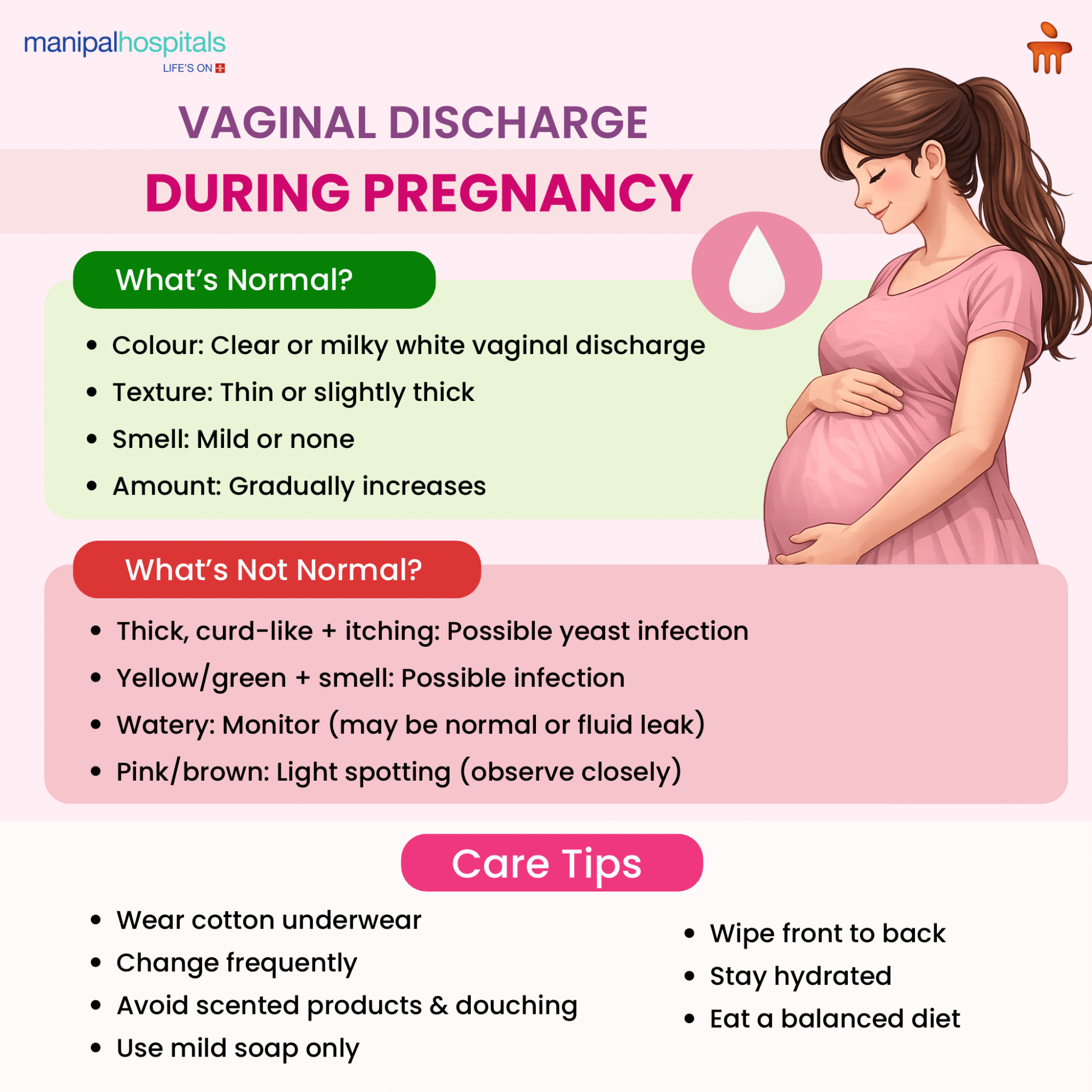
Normal vaginal discharge during pregnancy tends to follow a consistent pattern, even though the amount may fluctuate. It is also good to know these characteristics so you can feel reassured when discharge occurs. These include:
-
Thin or slightly thick consistency
-
Milky white or clear in colour (also known as white vaginal discharge)
-
Mild or no odour
-
Increase in amount over time
This type of vaginal discharge should not cause discomfort. You should not feel any burning, itching, or irritation with it. You may feel slightly damp during the day, but it usually should not be excessively heavy or soak through clothing regularly.
You should know that during the later weeks of your pregnancy, you may feel a thick, jelly-like vaginal discharge. This may be part of your mucus plug, and this is your body’s way of preparing for labour.
Understanding Different Vaginal Discharge Types
Not all discharge during pregnancy is the same. Some variations are harmless, while others may require closer attention. Recognising these differences can help you respond appropriately.
-
White, odourless discharge: This is the most common and usually harmless. It supports vaginal health and is expected throughout pregnancy.
-
Thick, curd-like discharge: Often associated with yeast infections, especially when paired with white vaginal discharge and itching.
-
Yellow or green discharge: This may indicate a bacterial or sexually transmitted infection, especially if accompanied by a strong odour.
-
Watery Discharge: Watery discharge in small amounts may be normal. However, it is advisable to monitor it in case it is leaking amniotic fluid.
-
Pink or brown discharge: Pink or brown spotting can also be experienced after sex or due to cervical sensitivity. However, it is advisable to investigate if it is bleeding.
Each of these types of vaginal discharge may point to a different underlying cause. Therefore, it is advisable to monitor these changes.
When Discharge Is Not Normal?
Some of these changes are normal, but some should be paid attention to. Your body is capable of sending signals whenever something is amiss, and different kinds of discharge are among these.
You should consider getting medical attention in case you experience:
-
Strong odour
-
Green, yellow, or grey colour
-
Thick texture
-
Continuous white discharge with itching
-
Burning sensation while urinating
-
Discomfort in the vaginal area
-
Sudden gushing or leaking of fluid
Some of the infections include yeast infections and bacterial vaginosis, among other infections. It is, therefore, important to think about getting medical attention to avoid any possible effects on your pregnancy.
Practical Care Tips for Healthy Vaginal Hygiene
There are various measures you can take to promote vaginal hygiene, thus reducing the chances of infections during your pregnancy. These measures are all gentle, effective, and easy to follow.
-
Wearing cotton underwear to promote air circulation
-
Changing your underwear frequently, especially in cases of heavy discharge
-
Avoiding the use of scented soaps, sprays, or douches
-
Using mild soap for cleaning
-
Wiping from front to back after using the toilet
-
Hydrating to promote body balance
-
Eating a healthy diet to boost immunity
All of the above promote body balance without interfering with your body’s natural protective mechanisms.
Discharge Changes Across Pregnancy Stages
As your pregnancy progresses, your body makes changes, some of which are noticeable, like changes in discharge. These shifts are closely linked to hormonal patterns and physical preparation for childbirth, which is why the nature of discharge may feel different in each trimester. Looking at these changes stage by stage can help you better understand what your body is doing and what deserves closer attention.
|
Pregnancy Stage |
Typical Discharge Pattern |
Hormonal Influence |
What to Monitor Closely |
|
First Trimester |
Light, milky discharge begins |
Rising oestrogen levels |
Sudden increase with discomfort |
|
Second Trimester |
Noticeable increase in volume |
Enhanced blood flow to the pelvic area |
Changes in colour or smell |
|
Third Trimester |
Heavier, thicker discharge |
Peak hormonal activity |
Mucus plug or fluid leakage |
|
Near Labour |
Thick, mucus-like discharge |
Cervical changes |
Blood-tinged discharge (show) |
When Should You Speak to a Doctor?
It is always advisable to trust your instincts in such cases. Even if the symptoms are subtle and feel insignificant, it is always best to discuss them.
You should consider a medical consultation in Malleshwaram in case of:
-
Discharge changing in colour or consistency
-
Discomfort or irritation persists
-
Discomfort or irritation failing to subside with basic care
-
Concerns of fluid leakage
A doctor can check and run some tests to ascertain what is causing these symptoms. Most of these conditions are easy to treat.
Conclusion
Vaginal discharge during pregnancy is a natural and often reassuring sign that your body is working as it should. While most changes are harmless, staying aware of what’s normal helps you quickly identify when something needs attention.
By understanding different vaginal discharge types, recognising warning signs, and following simple care practices, you can navigate this aspect of pregnancy with greater confidence and comfort. If anything feels unusual, seeking timely advice ensures both your well-being and your baby’s safety. For personalised care and expert guidance during pregnancy, you can consult specialists at Manipal Hospital Malleshwaram.
FAQ's
Yes, mild increases in discharge can occur after physical activity due to increased blood flow in the pelvic region. However, it should still remain odourless and not cause discomfort.
Yes, it is normal for discharge to feel sticky or thicker. As long as it does not change colour and does not irritate, it is not a cause of concern.
Stress can indirectly influence hormonal balance, which may slightly alter discharge patterns. However, noticeable changes should still be evaluated to rule out other causes.
Panty liners can be used for comfort if discharge is frequent, but they should be unscented and changed regularly to prevent moisture build-up and irritation.
After childbirth, discharge changes into postpartum bleeding (lochia), which gradually decreases over weeks. It is different from pregnancy discharge and follows its pattern of recovery.
Share this article on:


