


 7 Min Read
Neck stiffness that refuses to get better. A dull ache that creeps into your shoulders. And then, one day, a strange tingling in your fingers that makes you pause mid-task.
These are not uncommon complaints, especially as we move through our 30s and 40s. Yet when numbness in the hands appears alongside persistent neck discomfort, it often points towards cervical spondylosis.
For many people, the fear lies in not knowing whether this is “just age” or something that could worsen without attention. The good news is that most cases can be managed effectively when recognised early. This blog takes you through what is cervical spondylosis, the full spectrum of cervical spondylosis symptoms, and all available cervical spondylosis treatment options.
Synopsis
- Cervical Spondylosis: What is Happening in the Neck?
- Why Does Cervical Spondylosis Cause Numbness in the Hands?
- Cervical Spondylosis Causes: Why It Develops
- Recognising Cervical Spondylosis Symptoms
- Diagnostic Approach: How Doctors Confirm the Condition
- Treatment Options for Cervical Spondylosis
- Can You Cure Cervical Spondylosis Permanently?
- Targeted Exercises for Cervical Spondylosis
- Supportive Measures
- Risk Factors for Progression: Who Needs Closer Monitoring?
- When to See a Doctor?
- Conclusion
Cervical Spondylosis: What is Happening in the Neck?
The cervical spine consists of 7 vertebrae that support the head and allow movement in multiple directions. Between these bones lie intervertebral discs that act as shock absorbers, while small joints and ligaments stabilise the structure.
Cervical spondylosis refers to age-related wear and tear affecting these discs, joints, and surrounding tissues in the neck. Over time, discs lose water content and height. Small bony projections called osteophytes may form. In some individuals, these changes narrow the spaces through which spinal nerves travel. When that narrowing compresses a nerve root, symptoms can extend beyond the neck and into the arms and hands.
This condition is extremely common. By the age of 60, imaging studies show degenerative changes in a large proportion of adults, even those without pain. The difference lies in whether these structural changes begin to irritate or compress neural structures.
Why Does Cervical Spondylosis Cause Numbness in the Hands?
The link between the neck and your fingers is direct. Nerves that control sensation and movement in the arms arise from the cervical spinal cord. When a nerve root is compressed due to a disc bulge, joint thickening, or bone spurs, the result can be radiating symptoms.
Numbness typically follows a dermatomal pattern, meaning it affects specific fingers depending on which nerve root is involved. For example:
-
C6 involvement may cause tingling in the thumb and index finger
-
C7 compression can affect the middle finger
-
C8 irritation may lead to numbness in the ring and little fingers
Alongside altered sensation, some individuals notice reduced grip strength or difficulty performing fine motor tasks. Persistent nerve compression, if ignored, can lead to more lasting deficits.
Cervical Spondylosis Causes: Why It Develops
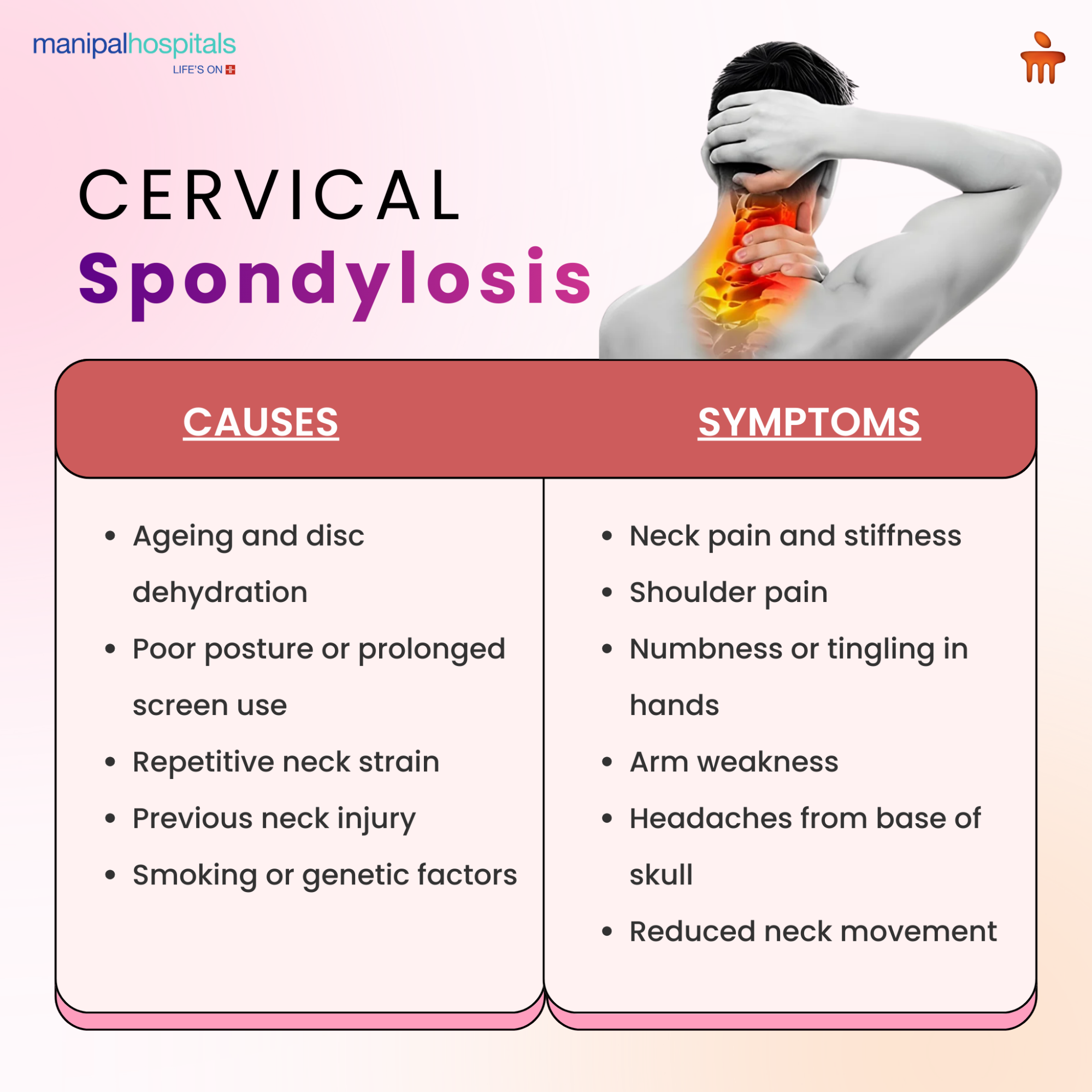
Degeneration in the cervical spine is gradual, but certain factors accelerate the process. Understanding cervical spondylosis causes helps with prevention and long-term management. Some common contributing factors include:
-
Natural ageing and disc dehydration
-
Repetitive neck strain from prolonged screen use
-
Poor ergonomic posture
-
Previous neck injury
-
Genetic predisposition to early disc degeneration
-
Smoking, which reduces disc nutrition
Unlike acute injuries, cervical spondylosis develops slowly. Many people adapt to mild stiffness until symptoms intensify or nerve involvement begins.
Recognising Cervical Spondylosis Symptoms
Early cervical spondylosis symptoms may be subtle. Stiffness on waking, reduced neck rotation, or discomfort after long hours at a desk often precede more noticeable signs. As the condition progresses, symptoms may include:
-
Persistent neck pain radiating to the shoulders
-
Tingling or numbness in one or both hands
-
Electric shock-like sensation on neck movement
-
Muscle weakness in the arms
-
Headaches originating from the base of the skull
-
Loss of coordination in severe cases
In rare but serious situations, compression of the spinal cord itself (cervical myelopathy) can cause imbalance, difficulty walking, or bladder disturbances. These signs require urgent evaluation.
Diagnostic Approach: How Doctors Confirm the Condition
A careful clinical assessment remains the foundation of diagnosis. Doctors evaluate neck movement, reflexes, muscle strength, and sensory changes. Specific manoeuvres may reproduce symptoms, helping identify the affected nerve root.
Imaging adds clarity when needed. An MRI scan provides detailed information about discs, nerves, and the spinal cord. X-rays may show alignment and bony changes. Nerve conduction studies are occasionally used when symptoms overlap with peripheral nerve disorders such as carpal tunnel syndrome.
Not every case requires extensive imaging. The decision depends on symptom severity, duration, and neurological findings.
Treatment Options for Cervical Spondylosis
Treatment for cervical spondylosis focuses on relieving pain, reducing nerve irritation, and preserving function. It should be noted that the majority of patients improve with non-surgical measures.
Conservative Management
-
Short-term use of anti-inflammatory medication
-
Physiotherapy to strengthen neck and shoulder muscles
-
Postural correction strategies
-
Heat therapy for muscle spasm relief
-
Temporary use of a soft cervical collar in selected cases
Interventional Options
When pain persists despite conservative care, targeted steroid injections around the affected nerve root may reduce inflammation and discomfort.
Surgical Consideration
Surgery is reserved for progressive neurological weakness, spinal cord compression, or severe pain unresponsive to other therapies. Procedures may involve removing a disc fragment or decompressing the spinal canal.
Cervical spondylosis treatment plans are highly individualised. The aim is not merely pain relief but functional restoration.
Can You Cure Cervical Spondylosis Permanently?
Degenerative changes themselves cannot be reversed completely. However, symptoms can often be controlled effectively. With structured rehabilitation, ergonomic correction, and muscle strengthening, many individuals live comfortably without recurring episodes.
Long-term success depends on consistent spine care rather than a one-time intervention.
Targeted Exercises for Cervical Spondylosis
Movement, when done correctly, supports recovery. Cervical spondylosis exercises aim to improve flexibility, strengthen supportive muscles, and reduce mechanical stress. Commonly recommended exercises include:
-
Chin tucks to realign head posture
-
Isometric neck strengthening
-
Shoulder blade retraction exercises
-
Gentle neck range-of-motion movements
Exercises must be performed under professional guidance initially. Incorrect technique can worsen symptoms, especially in those with nerve compression.
Supportive Measures
Daily habits influence spinal health more than occasional therapy sessions. Small adjustments can significantly reduce symptom recurrence.
A supportive cervical spondylosis pillow helps maintain neutral neck alignment during sleep. Ideally, the pillow should neither push the head forward nor allow it to drop backward. Memory foam or contoured designs are often beneficial.
Workstation ergonomics matter equally. The computer screen should be at eye level, shoulders relaxed, and elbows supported. Frequent breaks prevent sustained strain.
Risk Factors for Progression: Who Needs Closer Monitoring?
Cervical spondylosis does not progress at the same pace in everyone. While many people experience mild, manageable symptoms, certain underlying health conditions and lifestyle factors can increase the likelihood of worsening nerve compression or spinal instability. Recognising these risks early allows for closer monitoring and more proactive management.
|
Risk Factor |
Why It Matters |
Clinical Implication |
|
Diabetes mellitus |
Impairs nerve healing and microcirculation |
Slower recovery from nerve compression |
|
Rheumatoid arthritis |
Inflammatory damage to cervical joints |
Increased instability risk |
|
Long-term corticosteroid use |
Weakens bone and connective tissue |
Increased risk of bone weakening and spinal instability |
|
Occupational heavy lifting |
Repeated axial load on the spine |
Accelerated disc wear |
|
Congenital spinal canal narrowing |
Less space for the spinal cord |
Greater risk of myelopathy |
When to See a Doctor?
In the case of cervical spondylosis, early evaluation can help sufficiently with preventing complications. While mild neck stiffness may settle with rest, certain signs should prompt immediate consultation:
-
Progressive hand weakness
-
Loss of balance or coordination
-
Numbness affecting both arms
-
Difficulty with bladder control
-
Severe pain following trauma
If you are seeking a structured assessment, then consulting a spine specialist ensures an accurate diagnosis and a personalised care plan.
Conclusion
Cervical spondylosis is a common yet often misunderstood condition, and ignoring the persistent neurological symptoms is never advisable. Although structural changes in the neck are part of ageing, symptoms such as numbness in the hands deserve careful attention. With the right combination of medical evaluation, targeted exercises, posture correction, and timely cervical spondylosis treatment, most individuals regain comfort and function. So, if you are searching for options for treatment for cervical spondylosis at Malleshwaram, then a specialised team, such as the one at Manipal Hospital Malleshwaram, can help you with a balanced, informed approach that protects both your spinal health and overall quality of life.
FAQ's
Yes. If multiple nerve roots are involved or if there is spinal cord compression, symptoms may appear in both hands. Bilateral numbness should always be medically assessed, particularly if accompanied by weakness or coordination difficulty.
Driving is generally safe if neck movement is adequate and there is no significant weakness. However, limited rotation may reduce reaction time. Adjusting seat position and mirrors properly can improve comfort and safety.
Some patients report increased stiffness during colder weather due to muscle tightness. While scientific evidence is limited, maintaining warmth and gentle stretching can help reduce discomfort.
Prolonged untreated nerve compression can cause lasting weakness or sensory changes. Timely intervention significantly reduces this risk.
Some individuals experience short-term relief from acupuncture or manual therapy. These should complement, not replace, medical evaluation and structured rehabilitation.
Share this article on:


