


 7 Min Read
It is a common scenario: you experience a sudden, sharp pain in your upper abdomen after a heavy meal. It’s uncomfortable, perhaps even distressing, but after an hour or two, the sensation fades. You might tell yourself it was just a bout of indigestion or something that didn't agree with you. However, when these episodes, often called “gallbladder attacks," become a recurring part of your life, they are usually a signal that your gallbladder is struggling to function. Ignoring these symptoms of gallbladder problems doesn't make the stones go away; it simply gives them more time to cause irreversible damage to your internal plumbing.
This blog explores the biological risks of waiting, the warning signs your body is sending, and why choosing gallbladder removal surgery may be the best way to protect your long-term digestive health.
Synopsis
The Role of the Gallbladder
The gallbladder is a small, pear-shaped sac located just beneath your liver. Its primary role is to store bile, a fluid produced by the liver that helps your body break down fats. When you eat, the gallbladder contracts to squeeze this bile into the small intestine.
The problem starts when the bile hardens into small, pebble-like deposits known as "gallstones." As long as these stones stay quiet, they might not cause trouble. But if a stone gets stuck in the exit duct, the gallbladder continues to contract against the blockage. This creates the intense pressure and pain known as biliary colic. If this blockage isn't resolved, it can lead to a variety of gallbladder surgery complications, transforming a routine elective surgery into an emergency situation.
Recognising the Symptoms of Gallbladder Problems
Identifying the early signs of distress is the first step in preventing a crisis. Many people live with discomfort for months, unaware that they are experiencing the classic symptoms of gallbladder problems.
Typical indicators include the following:
-
Sudden, Intense Pain: Usually felt in the upper right or centre of the abdomen, which may radiate to the right shoulder or between the shoulder blades.
-
Digestive Distress: Nausea and vomiting that often follow a high-fat meal.
-
Bloating and Gas: A persistent feeling of fullness or "indigestion" that doesn't seem to have a clear cause.
-
Jaundice: A yellowing of the skin or the whites of the eyes, which indicates that a stone is blocking the flow of bile entirely.
If you are noticing these patterns, you are likely already facing significant gallbladder surgery delay risks. The longer the organ remains inflamed, the more "sticky" it becomes to the surrounding tissues, which can make the eventually necessary surgery more difficult.
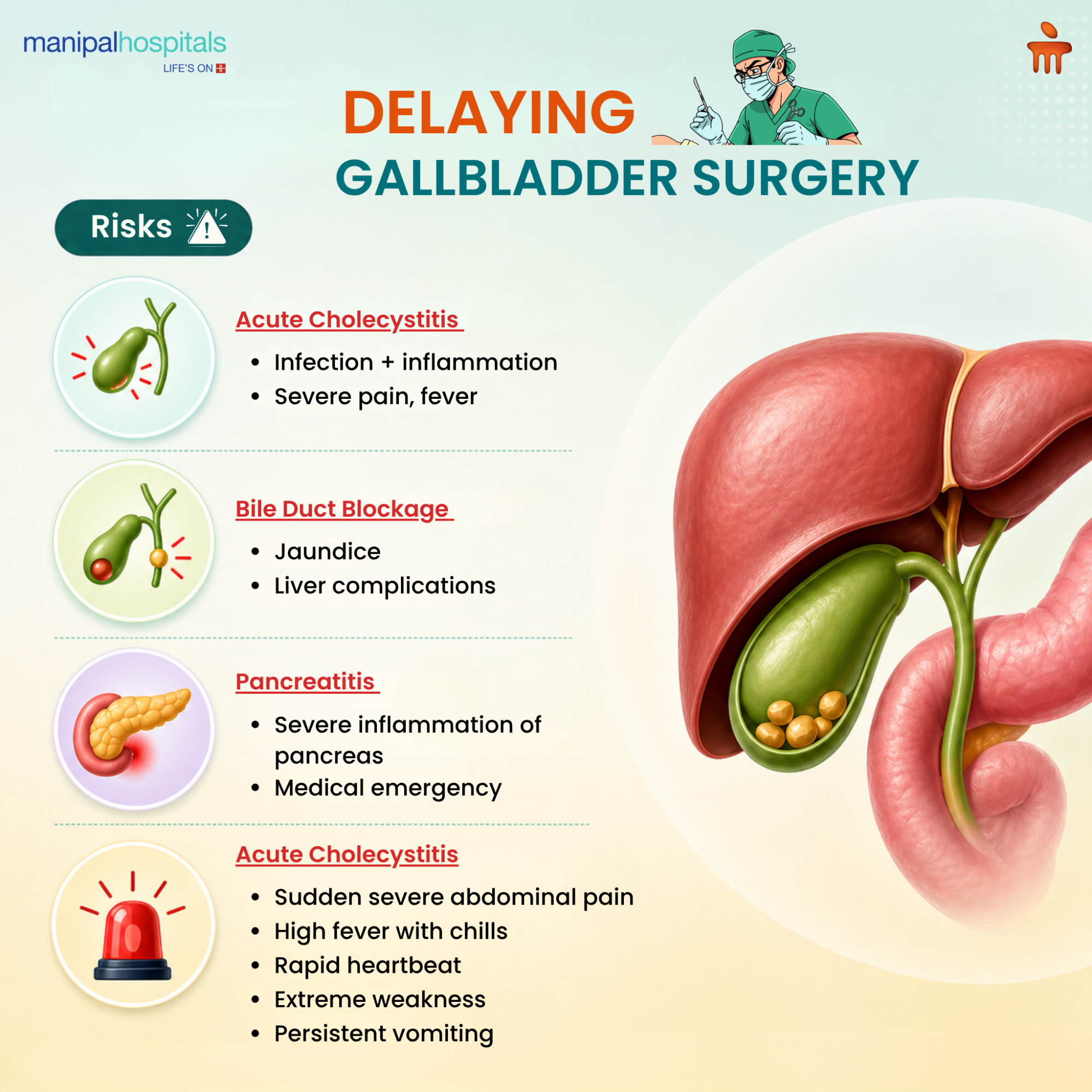
The Biological Risks of Delaying Surgery
When patients ask, “How long can you delay gallbladder surgery?” the answer depends on the frequency of the attacks. If the gallbladder is consistently irritated, several serious conditions can develop:
1. Acute Cholecystitis (Inflammation)
If a stone stays lodged in the duct, the bile becomes trapped and begins to irritate the walls of the gallbladder. This leads to an infection, known as cholecystitis. The gallbladder infection risks include severe pain, high fever, and a buildup of pus within the organ. An infected gallbladder is a medical priority because the tissue can eventually begin to die (gangrene).
2. Common Bile Duct Obstruction
Sometimes, a stone escapes the gallbladder but gets stuck in the common bile duct. This blocks the drainage for both the gallbladder and the liver. This can lead to a dangerous infection of the bile ducts (cholangitis) or significant liver damage if not addressed quickly.
3. Gallstone Pancreatitis
The duct from the gallbladder and the duct from the pancreas often join together before entering the small intestine. If a stone blocks this shared opening, the digestive enzymes from the pancreas can back up, causing the pancreas to become severely inflamed. Pancreatitis is a life-threatening complication that requires immediate hospitalisation.
Warning Signs of Gallbladder Rupture
One of the most severe gallbladder surgery delay risks is a perforation or rupture. This happens when the gallbladder becomes so swollen and infected that the wall of the organ actually tears. This is a true surgical emergency.
You must seek help immediately in Malleshwaram if you experience the following warning signs of gallbladder rupture:
-
A sudden, sharp decrease in pain followed by a widespread, agonising ache across the entire abdomen.
-
A very high fever accompanied by chills and shivering.
-
A rapid heartbeat and a feeling of extreme weakness or dizziness (signs of sepsis).
-
Nausea that is so severe you cannot keep down any fluids.
A rupture allows infected bile to leak into the abdominal cavity, leading to a widespread infection called peritonitis. Identifying these signs early is the only way to avoid the most dangerous gallbladder surgery complications.
The Clinical Advantages of Timely Intervention
Choosing to proceed with surgery when your symptoms are still manageable allows for a much smoother experience. In modern urology and gastroenterology, most gallbladder removals are performed "laparoscopically."
This means the surgeon uses a small camera and tiny instruments inserted through three or four small incisions. Because the incisions are small, patients experience less pain, spend less time in the hospital, and can usually return to work within a week. However, if you wait until the gallbladder is severely infected or has ruptured, the surgeon may be forced to perform an "open" surgery with a much larger incision, leading to a longer recovery and a higher risk of complications.
Risks vs. Benefits
When it comes to gallbladder disease, timing often shapes outcomes more than anything else. What may begin as mild, manageable discomfort can escalate into serious complications if treatment is delayed. The following table summarises why early action is generally the safer clinical choice:
|
Feature |
Early/Planned Surgery |
Delayed/Emergency Surgery |
|
Surgical Method |
Usually Laparoscopic (Minimally Invasive) |
Higher chance of needing an "Open" procedure |
|
Recovery Time |
3 to 7 days |
2 to 4 weeks or longer |
|
Risk of Infection |
Very low |
High (due to potential gallbladder infection risks) |
|
Complications |
Minimal |
Risk of pancreatitis, jaundice, or rupture |
|
Hospital Stay |
Often same-day or 24 hours |
Multiple days for monitoring and antibiotics |
Conclusion
While it is natural to feel hesitant about any surgical procedure, the risks of delaying a necessary gallbladder removal far outweigh the benefits of waiting. By paying attention to the symptoms of gallbladder problems or rupture risks, you can take the lead in your own health.
Don't wait for a manageable discomfort to turn into a medical emergency. Visit our best doctors for gallbladder stone surgery near Malleshwaram at Manipal Hospitals for a safer gallbladder removal surgery.
FAQ's
While there are medications that can slowly dissolve certain types of stones, they are rarely effective for large stones, and the stones often return once the medication stops. Surgery remains the only definitive gallbladder surgery treatment.
Even if the pain subsides, the stones are still present. Each subsequent "attack" increases the inflammation and scarring around the organ, complicating the eventual surgery. It is best to schedule the procedure while the organ is relatively quiet.
Most people live perfectly normal lives without a gallbladder. The liver continues to produce bile; it simply flows directly into the small intestine rather than being stored. You may need to adjust your fat intake slightly in the first few weeks, but your digestion will eventually normalise.
Yes. In fact, because the risks of infection and pancreatitis are higher in older adults, surgeons often recommend a planned surgery sooner rather than later to avoid a high-risk emergency situation.
A Computed Tomography (CT) scan or an ultrasound helps the surgeon see the size of the stones and check for any signs of swelling or infection. This information is vital for planning the safest surgical approach.
Share this article on:


.webp "Dr. Bhaskar Mallaiah | Expert General Surgeon in Malleshwaram Bangalore | Manipal Hospitals")


