


 7 Min Read
As we grow older, occasional body pain may seem normal. But persistent back pain in senior citizens should never be ignored. Back pain in elderly people can significantly affect walking, sleep, independence, and overall quality of life. In many cases, it may indicate underlying spine problems that may need expert medical attention.
Today, spine-related disorders are becoming increasingly common among the geriatric population due to aging, weak bones, arthritis, poor posture, and sedentary lifestyles. Fortunately, with modern spine care, advanced diagnosis, physiotherapy, minimally invasive procedures, and expert treatment, most elderly patients can return to a comfortable and active life. In fact, studies show that over 85% of elderly individuals experiencing back pain can achieve pain reduction and improved mobility with a personalized treatment plan.
Synopsis
- Why is Back Pain Common in Elderly People?
- Common Symptoms of Spine Problems in Seniors
- Importance of Early Spine Evaluation
- Advanced Spine Care for Elderly Patients
- Benefits of Physiotherapy for Senior Citizens
- Tips to Prevent Back Pain in Elderly Age
- When Should You Visit a Spine Doctor?
- Expert Spine Care Can Help You Move Pain-Free Again
Why is Back Pain Common in Elderly People?
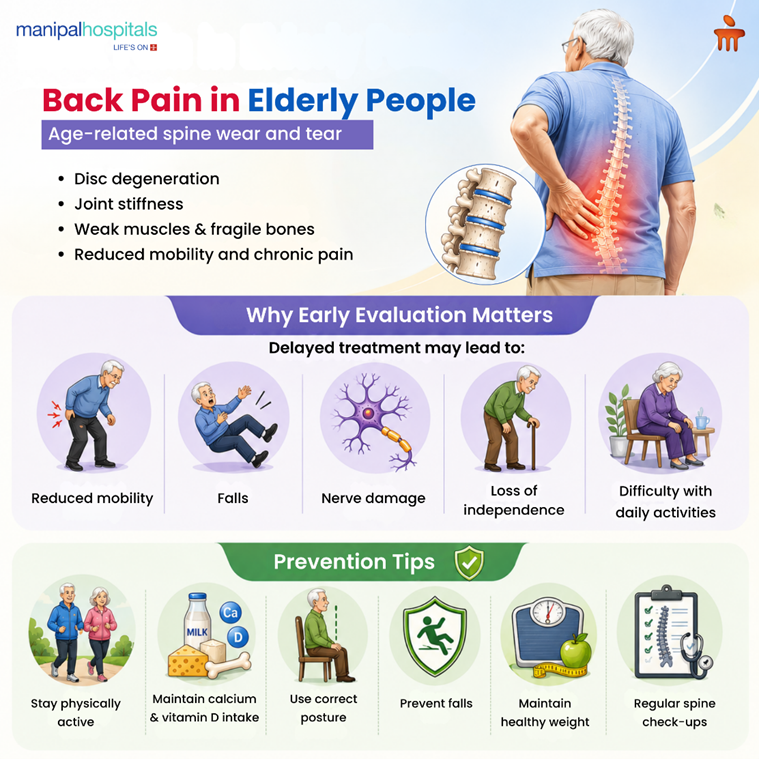
As age increases, the spine naturally undergoes wear and tear. The discs between spinal bones lose flexibility, joints become stiff, muscles weaken, and bones become fragile. These changes can lead to chronic pain and reduced mobility, making spine problems in old age a major concern.
Common age-related spine conditions that are the major causes of back pain in geriatric patients include:
-
Degenerative Disc Disease: Spinal discs, which act as cushions between vertebrae, can dehydrate and shrink with age, leading to pain and stiffness.
-
Osteoporosis: This condition weakens bones, making them brittle and susceptible to fractures, even from minor stresses. Compression fractures in the spine due to osteoporosis can be particularly painful and debilitating.
-
Osteoarthritis: The most common form of arthritis, it involves the breakdown of cartilage in the joints, including those in the spine.
-
Spinal Stenosis: A narrowing of the spinal canal, often due to bone spurs or thickened ligaments, which can compress nerves and cause pain, numbness, or weakness in the legs.
-
Sciatica: It is characterized by radiating pain that travels from the lower back down the legs due to sciatic nerve compression.
-
Slip Disc: This occurs when the soft inner core of a spinal disc pushes through the outer layer.
-
Compression Fractures: Small breaks in the vertebrae that can cause the spine to collapse or lose height over time.
-
Cervical & Lumbar Spondylosis: Age-related wear and tear affecting the spinal discs in the neck and lower back.
-
Muscle Weakness: Weak core and back muscles reduce support to the spine, increasing strain and discomfort.
These conditions can cause severe discomfort if not treated at the right time.
Common Symptoms of Spine Problems in Seniors
Many elderly patients ignore these symptoms, thinking they are just a normal part of aging.' However, early treatment can prevent complications from back pain in elderly people and lead to better long-term outcomes.
Warning signs include:
-
Persistent lower back pain
-
Neck pain and stiffness
-
Pain radiating to legs
-
Numbness or tingling sensation
-
Difficulty standing or walking
-
Weakness in legs
-
Stooping posture
-
Sudden severe pain after a fall
-
Difficulty bending or climbing stairs
-
Loss of balance
If these symptoms continue for several days, consultation with the best spine doctor for back pain is highly recommended.
Importance of Early Spine Evaluation
Ignoring back pain in elderly people can worsen the condition over time. Delayed treatment may lead to:
-
Reduced mobility
-
Dependence on others
-
Increased fall risk
-
Nerve damage
-
Difficulty performing daily activities
Early diagnosis helps in identifying the root cause and starting proper treatment before complications arise.
Advanced Spine Care for Elderly Patients
Modern spine treatment focuses on relieving pain, improving mobility, and avoiding major surgery whenever possible.
Non-Surgical Spine Treatments
Most elderly patients improve with conservative treatment such as:
-
Medications
-
Physiotherapy
-
Lifestyle modifications
-
Spine strengthening exercises
-
Pain management injections
-
Posture correction
Advanced Minimally Invasive Spine Procedures
When conservative care isn't enough but surgery is too risky, minimally invasive spine procedures offer various advantages for elderly back pain treatment, such as smaller incisions, faster recovery, less pain, and reduced hospital stay.
-
Radiofrequency Ablation (RFA): Uses localized heat to temporarily deactivate the specific nerves transmitting chronic pain from arthritic spine joints.
-
Kyphoplasty & Vertebroplasty: Direct stabilization of painful spinal fractures caused by osteoporosis. Medical-grade bone cement is injected to restore bone height and provide immediate pain relief.
Targeted Spinal Decompression (Without Fusion)
For conditions like spinal stenosis (narrowing of the spinal canal), modern techniques allow surgeons to relieve nerve pressure without the need for major spinal fusion hardware:
-
Microendoscopic Laminectomy: Using tiny cameras and specialized instruments to remove only the specific bone spurs or thickened ligaments pinching the nerves.
-
Interspinous Process Spacers: Small, non-fusion implants placed between the vertebrae to keep the spinal canal open and prevent nerve pinching when standing or walking.
Benefits of Physiotherapy for Senior Citizens
Physiotherapy plays a major role in spine recovery and is an essential part of spine physiotherapy treatment. Regular, guided exercises can improve balance and strength by up to 40%, drastically reducing the risk of falls among elderly individuals.
Benefits include:
-
Improved flexibility
-
Better balance and posture
-
Reduced stiffness
-
Muscle strengthening
-
Improved walking ability
-
Pain reduction
Regular guided exercises help elderly individuals maintain independence and confidence, forming a crucial part of spine care for elderly patients.
Tips to Prevent Back Pain in Elderly Age
Beyond treatment, preventive strategies are important to maintain spinal health as you age. Simple lifestyle adjustments can reduce the risk and severity of elderly back pain.
|
Stay Active |
Simple activities like walking and stretching help maintain spinal flexibility. |
|
Maintain Bone Strength |
Adequate calcium and vitamin D are essential for bone health. |
|
Follow Correct Posture |
Avoid slouching while sitting or walking. |
|
Prevent Falls |
Use supportive footwear and walking aids if necessary. |
|
Maintain a Healthy Weight |
Extra weight increases pressure on the spine. |
|
Regular Spine Check-ups |
Early evaluation by a spine specialist helps detect problems early. |
When Should You Visit a Spine Doctor?
Consult a spine specialists in Malleshwaram for senior citizens immediately if you experience any of the following:
-
Severe or sudden back pain
-
Pain after a fall
-
Difficulty walking
-
Numbness or weakness in legs
-
Loss of bladder or bowel control
-
Persistent pain not improving with rest
Timely consultation can prevent permanent complications and improve recovery outcomes.
Expert Spine Care Can Help You Move Pain-Free Again
Back pain in elderly people should not be considered a normal part of aging. With proper diagnosis, advanced spine treatment, physiotherapy, and expert care, senior citizens can enjoy a healthy, active, and pain-free life.
Modern spine care aims not only to reduce pain but also to restore confidence, mobility, and quality of life. If you or your loved one is suffering from chronic back pain, consult an experienced spine specialist at Manipal Hospital Malleshwaram, Bangalore, for personalised treatment and long-term geriatric back pain relief.
FAQ's
While not always serious, persistent back pain in elderly people should always prompt evaluation by a doctor. It can indicate underlying conditions that worsen if ignored, making early elderly back pain treatment crucial.
An osteoporosis spine fracture occurs when weakened bones in the spine, often due to osteoporosis, break or collapse, usually in the vertebrae. These can be very painful and lead to further complications if not treated as part of geriatric spine care.
Minimally invasive spine procedures are advanced surgical techniques that use smaller incisions, specialized instruments, and cameras to perform spinal operations. They offer faster recovery, less pain, and reduced hospital stays compared to traditional open surgery, making them ideal for spine care for elderly patients.
You should see a spine specialist if your back pain is persistent, severe, radiates to your legs, causes numbness or weakness, or significantly affects your daily activities. Early consultation can prevent complications related to spine problems in old age.
The best treatment for lower back pain in elderly people depends on the underlying cause. It often starts with non-surgical options like medication, physiotherapy, and lifestyle adjustments. For more severe cases, advanced spine care like minimally invasive procedures may be recommended. A spine specialist for senior citizens can provide a personalized plan.
Share this article on:


