


 9 Min Read
Do you wake up in the middle of the night short of breath, with your heart pounding?
These moments can be unsettling, and many people brush them off as signs of ageing or being out of shape. But sometimes, these symptoms point to something happening inside the heart itself. The heart muscle may be weakening, thickening, or becoming stiff. That is what we call cardiomyopathy. It is a condition that affects how well your heart pumps blood to the rest of your body. The good news is that with early recognition and the right care, most people with cardiomyopathy can manage their symptoms and maintain a good quality of life.
In this blog, we will walk you through the different types, the warning signs to watch for, what causes the condition, and the latest advances in cardiomyopathy treatment.
Synopsis
What is Cardiomyopathy?
The heart is a muscular pump. When the heart muscle becomes enlarged, thickened, stiff, or weakened, it may struggle to pump blood efficiently. This structural or functional abnormality of the heart muscle is known as cardiomyopathy.
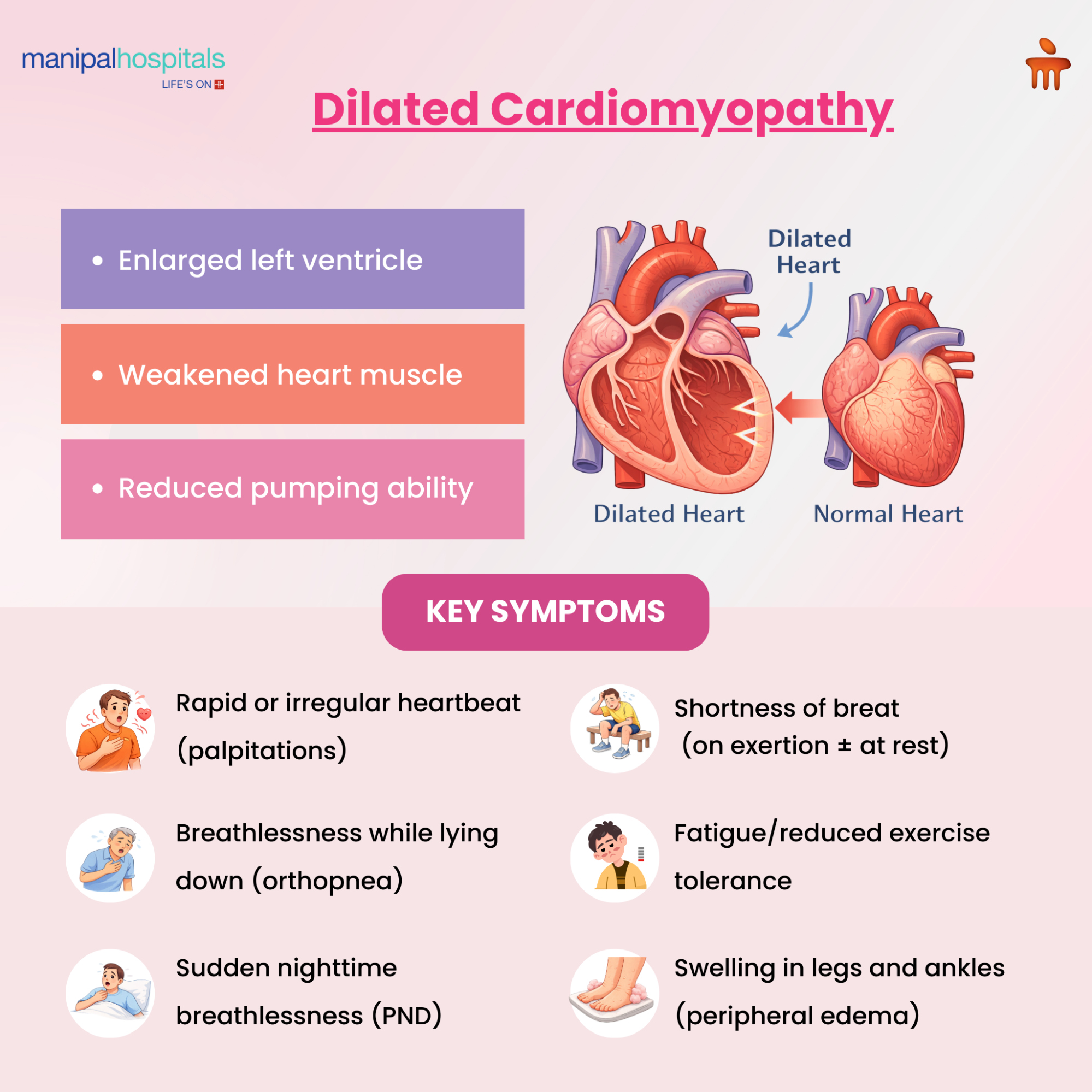
There are different types of cardiomyopathy, but the most common form is dilated cardiomyopathy. In this condition, the main pumping chamber of the heart, usually the left ventricle, becomes enlarged and weakened. (Reduced Efficiency)
Other forms include hypertrophic cardiomyopathy, where the heart muscle becomes abnormally thick, and restrictive cardiomyopathy, where the muscle becomes stiff.
Each type affects heart function differently, but all can eventually lead to similar cardiomyopathy symptoms if not managed properly.
Cardiomyopathy Symptoms: What Does It Feel Like?
The symptoms may develop gradually or appear suddenly, depending on the type and severity of the condition. Early on, some people may not notice anything unusual. As the heart’s pumping ability declines, and cardiomyopathy symptoms become more noticeable. Common signs include:
-
Shortness of breath during activity or later even at rest
-
Fatigue and reduced ability to exercise
-
Swelling in the legs, ankles, or abdomen
-
Rapid or irregular heartbeat
-
Chest discomfort
-
Dizziness or fainting spells
In advanced cases, fluid may accumulate in the lungs, causing breathlessness while lying down. Because these cardiomyopathy symptoms overlap with other heart conditions, proper evaluation is essential rather than assuming it is simple fatigue or ageing.
Cardiomyopathy Causes: Why Does the Heart Muscle Change?
Understanding cardiomyopathy causes helps in both prevention and early detection. In some individuals, the exact cause may not be identified, but several known factors increase the risk.
|
Cause/Risk Factors |
Explanation |
|
Genetic Factors |
Many types of cardiomyopathy run in families. If a parent or sibling has dilated cardiomyopathy or hypertrophic cardiomyopathy, your own risk increases. |
|
Long-standing, uncontrolled hypertension forces the heart to pump against higher pressure. Over time, the muscle thickens to cope, but eventually it may stretch and weaken. This is a common contributor to cardiomyopathy. It is diastolic heart failure; the heart muscle becomes stiff, and in the end stage, it becomes weak. |
|
|
Heart Valve Problems |
Leaky or narrowed valves make the heart work harder. The extra strain can cause the chambers to enlarge and the muscles to fail. |
|
Previous Heart Attacks |
A heart attack damages the heart muscle, leaving scar tissue behind. The remaining healthy muscle must work harder, and sometimes it stretches thin, leading to dilated cardiomyopathy. |
|
Infections and Inflammation |
Viral infections can trigger inflammation in the heart muscle, a condition called myocarditis. If the inflammation is severe, it weakens the muscle permanently. |
|
Chemotherapy and Radiation |
Some cancer treatments, particularly certain chemotherapy drugs and chest radiation, have long-term effects on the heart muscle. Patients who have undergone these treatments need regular heart checkups. |
|
Thyroid Disorders and Diabetes |
Both overactive and underactive thyroid glands affect heart function. Diabetes, especially when poorly controlled, increases the risk of heart muscle disease. |
|
Alcohol, Cocaine, and Other Toxins |
Heavy alcohol use over many years can weaken the heart muscle. Cocaine use is also linked to cardiomyopathy, sometimes after just one use. Other toxins, including heavy metals, can also play a role. |
|
Pregnancy-Related Cardiomyopathy |
Some women develop dilated cardiomyopathy in the final months of pregnancy or within five months after delivery. This is called peripartum cardiomyopathy, and while rare, it needs prompt attention. |
How Is Cardiomyopathy Diagnosed?
Diagnosis begins with a detailed conversation. The doctor will ask about your symptoms, when they started, and whether anyone in your family has heart problems.
Then comes the physical exam, where listening to the heart and checking for swelling give important clues.
If cardiomyopathy is suspected, tests help confirm the diagnosis:
-
ECG may show evidence of a previous (silent) myocardial infarction, left ventricular hypertrophy (thickened heart muscle), low voltage, and reduced myocardial function.
-
An echocardiogram is the most common test. It uses sound waves to create images of the heart, showing chamber size, wall thickness, and pumping strength.
-
An electrocardiogram (ECG) records the heart's electrical activity and can reveal rhythm problems or signs of thickening.
-
Cardiac MRI provides detailed images of the heart structure and can identify scarring or inflammation.
-
Blood tests check for thyroid issues, iron levels, and other conditions that affect the heart.
-
Genetic testing may be offered if a hereditary form is suspected.
-
Coronary angiography will rule out any blockages
Understanding exactly which type of cardiomyopathy you have guides the treatment decisions. A person with thickened walls needs different care than someone with an enlarged, weak heart.
Cardiomyopathy Treatment: What Are the Options?
The goal of cardiomyopathy treatment is to manage symptoms, slow disease progression, and prevent complications like heart failure or dangerous rhythms.
Treatment plans are tailored to the individual, based on the type of cardiomyopathy, how severe it is, and what underlying causes exist.
1. Medications
Medicines form the backbone of cardiomyopathy treatment, especially for dilated cardiomyopathy. Several classes of drugs help:
-
High-end medicines are available in the market; for example, mavacamten.
-
ACE inhibitors and ARBs relax blood vessels, lower blood pressure, and reduce strain on the heart.
-
Beta-blockers slow the heart rate and lower its workload, allowing the muscle to pump more efficiently.
-
Diuretics, or water pills, help remove excess fluid, reducing swelling and easing breathing.
-
Aldosterone antagonists block a hormone that promotes fluid retention and scarring.
-
Anticoagulants thin the blood to prevent clots, especially if the heart's pumping is very weak.
-
For hypertrophic cardiomyopathy, medications like beta-blockers or calcium channel blockers help the heart relax and fill better.
2. Device Therapy
In certain patients, devices may be recommended:
-
Implantable cardioverter-defibrillators (ICDs) monitor heart rhythm and deliver shocks to stop dangerous arrhythmias. They are lifesaving for people at risk of sudden cardiac arrest.
-
Cardiac resynchronization therapy (CRT) uses a special pacemaker to coordinate contractions between the heart's left and right sides, improving pumping efficiency.
-
These options are part of advanced cardiomyopathy treatment strategies.
3. Lifestyle Changes
For many people, the first steps involve daily habits. Reducing salt intake helps control fluid buildup. Staying active within comfortable limits maintains muscle tone without overworking the heart. Quitting alcohol and avoiding recreational drugs protects the heart from further damage. Regular weight checks help detect fluid retention early. These measures support the heart and make medications work better.
4. Surgical and Advanced Options
In severe cases where heart function continues to decline despite optimal care:
-
Ventricular assist devices (VADs) are mechanical pumps that help a weakened heart circulate blood. They are used in advanced heart failure, either as a bridge to transplant or as long-term support.
-
Septal myectomy is performed for hypertrophic cardiomyopathy when thickened muscle blocks blood flow. The surgeon removes part of the thickened septum to open the outflow tract.
-
A heart transplant is reserved for end-stage cardiomyopathy when all other treatments have failed, and the patient is otherwise healthy enough for transplant surgery.\
These are considered in advanced heart failure when other treatments are insufficient.
Conclusion
Cardiomyopathy is a serious condition, but it is also one that can be managed. From the first moment you notice unexplained breathlessness or swelling to the day you receive a clear diagnosis, every step matters. For those seeking cardiomyopathy treatment in Malleshwaram, our team at Manipal Hospital Malleshwaram provides comprehensive cardiac care. From advanced diagnostics to personalised treatment plans and long-term follow-up, patients receive the support they need to manage their condition and maintain quality of life. Do not ignore what your heart is telling you. Early action preserves heart muscle and opens the door to better outcomes.
FAQ's
There is no complete cure for most forms of cardiomyopathy, but it can be managed to control the symptoms and halt its progression. In some instances, such as those brought on by pregnancy or alcohol, the condition can be alleviated once the cause is eliminated.
Yes, it can be. If you have dilated cardiomyopathy, your immediate family members can be screened for the condition. Genetic testing can help determine who is at risk.
Yes, but it depends on the type of cardiomyopathy. Moderate exercise is encouraged, but high-intensity activities such as sports or heavy lifting may be avoided, especially if you have hypertrophic cardiomyopathy. Your cardiologist can advise you on how much exercise you can do.
The life expectancy with cardiomyopathy is difficult to determine because it depends on the type and severity of the condition. However, with proper management, people with cardiomyopathy can live long lives. Early treatment and compliance with medication can increase life expectancy.
Transplant is considered when heart failure progresses despite maximal medical and device therapy, and the patient has no other options. Evaluation is thorough to ensure the best possible outcome.
Share this article on:


.webp "Understanding Cardiophobia (Heart Anxiety): When Your Mind Tricks Your Heart")


