5 Min Read
On World Ovarian Cancer Day, there’s one simple but powerful reminder for every woman: listen to your body, even when the signs seem small.
A lot of women experience bloating, fatigue, or mild abdominal discomfort and brush it off as part of everyday life. Between work, family, and responsibilities, health often takes a back seat. But what if these subtle changes are your body trying to tell you something important?
That’s exactly why awareness around ovarian cancer matters so much. It doesn’t always begin with alarming symptoms. In fact, it often develops quietly, which is why early detection becomes challenging and incredibly important.
At Manipal Hospitals Kharadi, doctors frequently meet patients who say, “I thought it was nothing serious.” This is a common story, and it highlights the need for better awareness and timely action.
Synopsis
Understanding Ovarian Cancer in Simple Terms
Let’s break it down without complicated medical language.
Ovarian cancer begins in the ovaries, the small organs in the female reproductive system responsible for producing eggs and hormones. While the condition can affect women of any age, it is more commonly seen after menopause.
The challenge with ovarian cancer is not just the disease itself but how it behaves. It tends to grow silently in its early stages. By the time clear symptoms appear, the disease may already have progressed.
However, there is a positive side. When detected early, treatment outcomes improve significantly. Many women respond well to treatment and go on to lead healthy lives. That’s why awareness and early consultation are key.
The Signs Most Women Overlook
Here’s where things get tricky.
The symptoms of ovarian cancer often resemble common digestive or hormonal issues. Because of this, they are easily ignored or misinterpreted.
You should pay attention if you notice these symptoms persisting almost daily for more than 2–3 weeks:
-
A constant feeling of bloating, even without heavy meals
-
Pelvic or abdominal pain that feels new or unusual
-
Feeling full very quickly while eating
-
Increased urge to urinate frequently
-
Changes in bowel habits, like constipation or diarrhoea
-
Back pain that doesn’t seem related to posture or injury
-
Ongoing fatigue or low energy levels
-
Sudden, unexplained weight changes
-
Irregular periods or bleeding after menopause
At first glance, these may seem like everyday health issues. And that’s exactly why many women delay seeking medical advice.
At Manipal Hospitals Kharadi, specialists always emphasise one thing:
-
It’s not just the symptom – it's how long it stays.
-
If your body feels different and that feeling doesn’t go away, it deserves attention
Who Is More at Risk?
While ovarian cancer can affect any woman, some factors may increase the risk.
You may need to be more cautious if:
-
You are above the age of 50
-
You have a family history of ovarian or breast cancer
-
You carry genetic mutations like BRCA1 or BRCA2
-
You have conditions such as endometriosis
-
You have never been pregnant or had a late pregnancy
-
You are overweight or obese
-
You have been on long-term hormone replacement therapy
Having these risk factors doesn’t mean you will definitely develop ovarian cancer. But it does mean you should stay informed and proactive about your health.
When Should You See a Doctor?
Many women wait too long before consulting a doctor, hoping symptoms will resolve on their own. But when it comes to ovarian cancer, early action can make a life-saving difference.
You should consult a doctor if:
-
Symptoms persist beyond a few weeks
-
They feel unusual compared to your normal health patterns
-
You have a family history of cancer
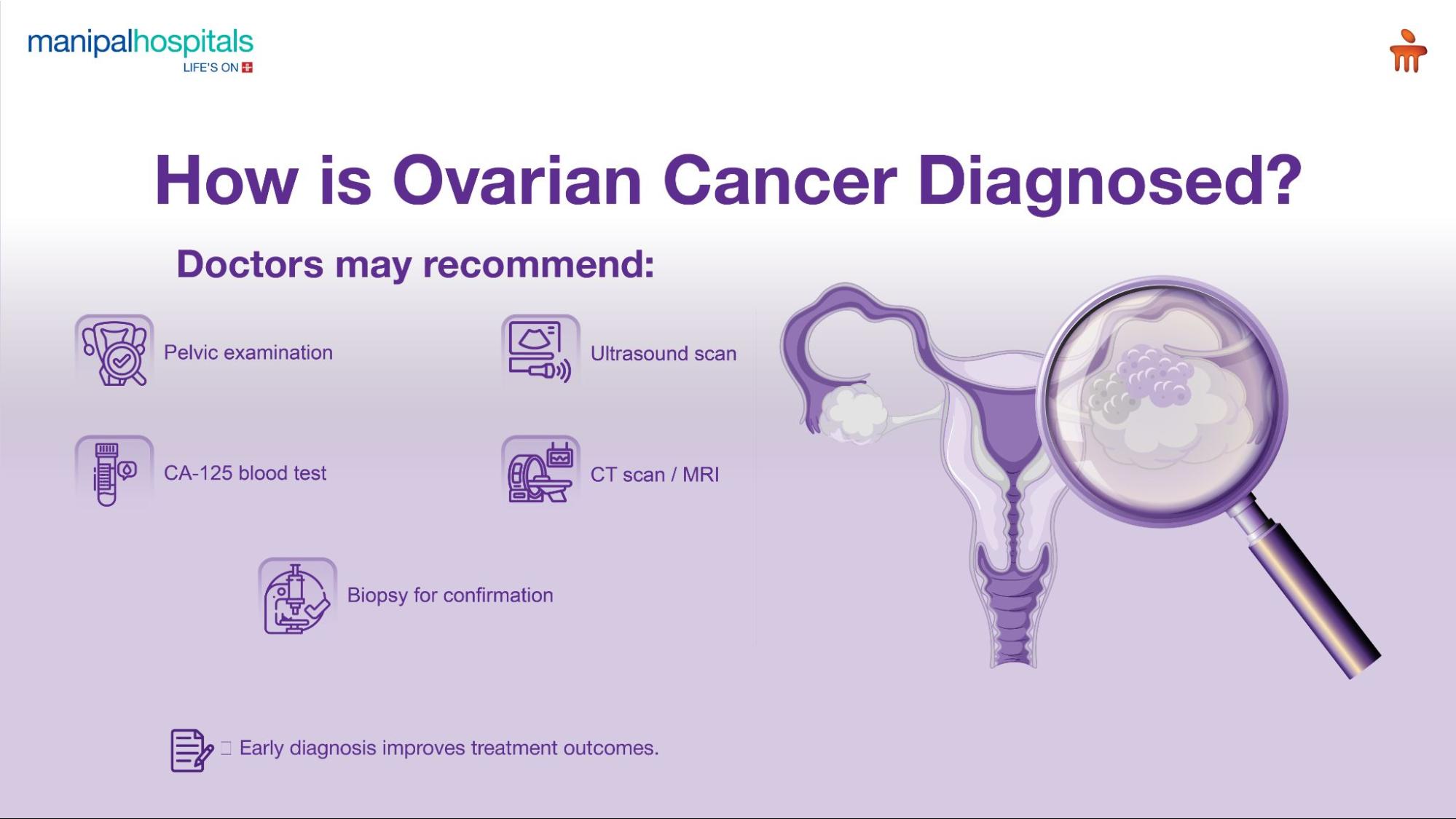
Doctors may recommend a few tests to understand what’s happening:
-
Pelvic examination
-
Ultrasound scan
-
Blood test (CA-125)
-
CT scan or MRI
These tests help rule out serious conditions or detect them early, when treatment is most effective.
Treatment: What to Expect
Hearing the word “cancer” can be overwhelming. It often brings fear and uncertainty. But it’s important to know that treatment options today are advanced and highly effective.
At Manipal Hospitals Kharadi, a personalised treatment approach is followed for each patient.
Depending on the stage and condition, treatment may include the following:
-
Surgery to remove the tumour
-
Chemotherapy to destroy cancer cells
-
Targeted therapy for more precise treatment
-
Immunotherapy to strengthen the body’s natural defence system
The goal is not just to treat the disease but also to ensure a better quality of life during and after treatment.
Everyday Habits That Help
While there is no guaranteed way to prevent ovarian cancer, certain habits can support overall health and reduce risk.
Do:
-
Stay aware of your body’s changes
-
Go for regular gynaecological check-ups
-
Maintain a balanced diet and an active lifestyle
-
Share your family medical history with your doctor
Don’t:
-
Ignore symptoms that persist
-
Delay medical consultation out of fear
-
Assume common symptoms are always harmless
Small steps taken at the right time can make a big difference.
A Gentle Reminder for Every Woman
Women often prioritise everyone else’s health before their own. It’s easy to dismiss discomfort and carry on with daily life.
But on World Ovarian Cancer Day, it’s worth pausing for a moment and asking yourself:
-
“Am I paying attention to my own health?”
-
Because your well-being matters just as much.
-
Listening to your body is not overthinking; it’s being responsible.
Take the First Step Towards Better Health
If something feels unusual, don’t wait for it to become serious. Early consultation can lead to early diagnosis and better outcomes.
You can reach out to experts at Manipal Hospitals Kharadi for timely care, guidance, and support.
Disclaimer: This article is for informational purposes only and does not replace professional medical advice. Please consult a qualified healthcare provider for diagnosis and treatment.
FAQ's
Currently, there is no reliable screening test for the general population. Awareness of symptoms is the best approach.
Yes, although it is more common in older women.
Not always. But persistent bloating should not be ignored.
There is no guaranteed prevention, but risk can be reduced with awareness and medical guidance.
If symptoms persist for more than a few weeks, consult a specialist without delay.
Share this article on: