6 Min Read
---Causes,-Symptoms-and-Home-Remedies.webp "dysentery symptoms")
Stomach infections are quite common, especially in busy urban areas where eating outside is part of daily life. But when loose motions become severe and frequent and include blood or mucus, it may not be just a simple upset stomach; it could be dysentery (pechis).
At Manipal Hospital kharadi, Pune, doctors often see patients who ignore early symptoms and come in when the condition worsens. Understanding dysentery symptoms, causes, and treatment can help you take timely action and recover faster.
Synopsis
What is dysentery?
If you’re wondering, "What is dysentery?" it is a serious intestinal infection that leads to diarrhea with blood and mucus, along with pain and inflammation.
Unlike normal diarrhea, dysentery affects the intestines more severely and can cause dehydration if not treated properly.
There are two main types:
-
Bacterial dysentery – caused by bacteria like Shigella
-
Amoebic dysentery – caused by parasites like Entamoeba histolytica
Both types are usually linked to contaminated food and water.
Dysentery is caused by what?
A common question people ask is, "What causes dysentery?" The answer mainly lies in hygiene and infection.
1. Contaminated Food and Water
Eating unhygienic street food or drinking untreated water is one of the biggest reasons for dysentery in cities like Pune.
2. Poor Hygiene Practices
Not washing hands before meals or after using the toilet allows infections to spread quickly.
3. Bacterial Infections
Bacteria such as Shigella, Salmonella, and E. coli are common culprits.
4. Parasitic Infections
Amoebic dysentery occurs due to parasites entering the digestive system.
5. Weak Immunity
People with lower immunity are more prone to infections and slower recovery.
Dysentery Symptoms You Should Not Ignore
Recognising dysentery symptoms early is important to avoid complications.
Here are the most common signs:
-
Frequent loose stools
-
Blood or mucus in stool
-
Abdominal cramps and pain
-
Fever and chills
-
Nausea or vomiting
-
Dehydration (dry mouth, weakness)
-
Urgent need to pass stools
If symptoms are severe or persistent, medical attention is necessary.
While mild cases can be managed at home, some situations require immediate care.
Visit a doctor if you experience:
-
Blood in stool for more than 1–2 days
-
High fever
-
Severe dehydration
-
Persistent vomiting
-
Weakness or dizziness
At Manipal Hospital Kharadi, specialists recommend early diagnosis to prevent complications and ensure faster recovery.
Dysentery Treatment Options
The treatment for dysentery depends on its cause and severity.
1. Hydration is Most Important
Loss of fluids can be dangerous, so ORS, coconut water, and fluids are essential.
2. Medications
-
Antibiotics for bacterial infections
-
Anti-parasitic medicines for amoebic dysentery
-
Medicines to relieve symptoms
3. Rest and Diet
Giving your digestive system time to heal is crucial.
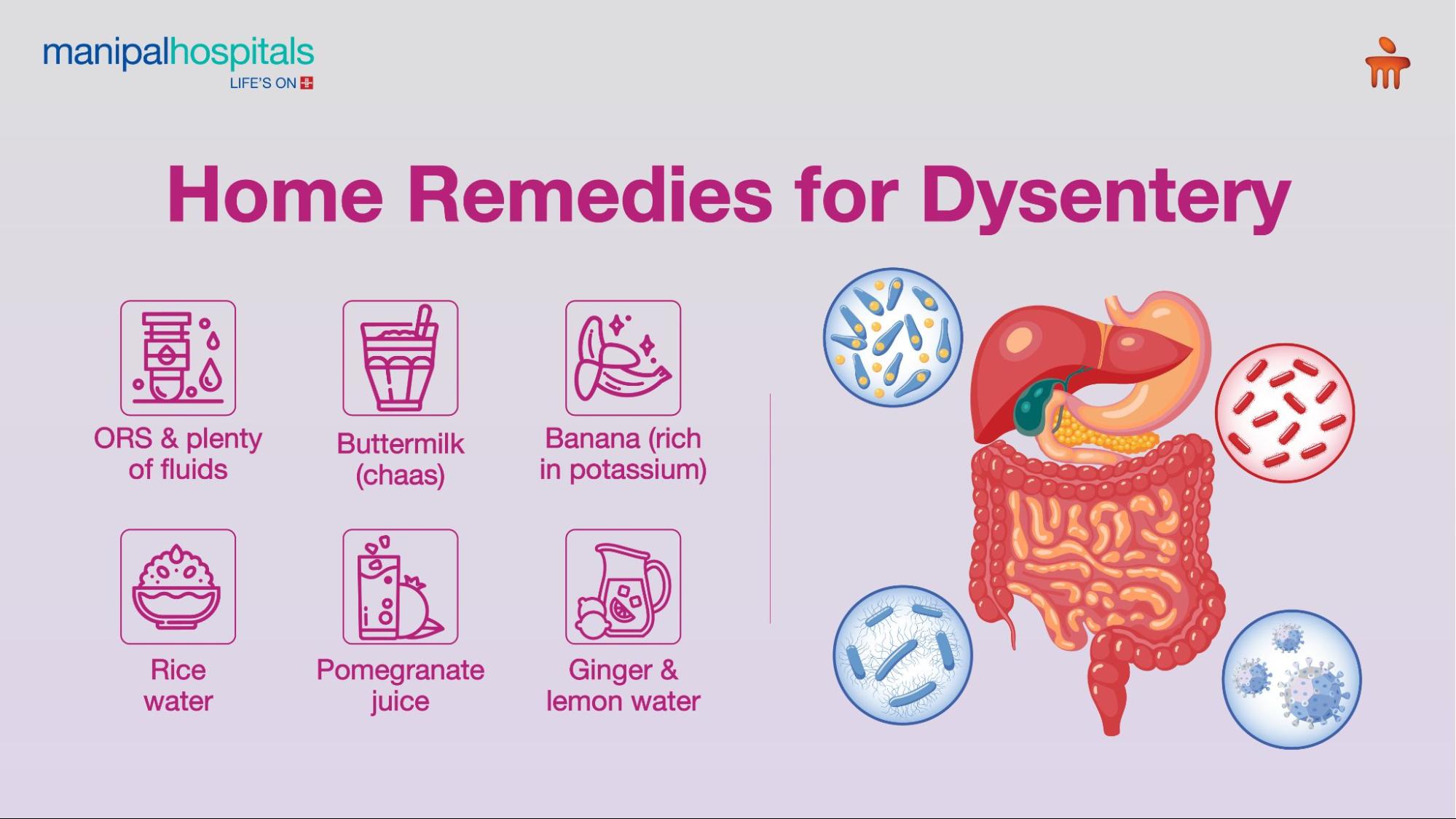
Effective Home Remedies for Dysentery
Along with medical care, certain home remedies for dysentery can help manage symptoms naturally.
1. ORS and Fluids
Prevents dehydration and restores electrolyte balance.
2. Buttermilk (Chaas)
Improves gut health and helps restore good bacteria.
3. Banana
Rich in potassium, it helps in recovery and improves stool consistency.
4. Rice Water
Gentle on the stomach and helps reduce diarrhea.
5. Pomegranate Juice
Known for its anti-inflammatory properties.
6. Ginger Water
Helps reduce infection and soothe digestion.
7. Lemon Water
Supports digestion and boosts immunity.
What to Eat and Avoid During Dysentery
Diet plays a key role in recovery.
Foods to Eat
-
Khichdi and plain rice
-
Boiled potatoes
-
Yoghurt/curd
-
Bananas
-
Toast
Foods to Avoid
-
Spicy and oily food
-
Junk food
-
Caffeine
-
Raw vegetables
-
Unhygienic street food
Eating light helps your gut heal faster.
How to Prevent Dysentery
Simple daily habits can reduce your risk significantly.
Follow These Tips:
-
Wash your hands regularly
-
Drink filtered or boiled water
-
Avoid uncovered food
-
Wash fruits and vegetables properly
-
Maintain kitchen hygiene
In fast-growing areas like Kharadi, where lifestyle is busy, these habits are especially important.
A Real-Life Example
Amit, a 28-year-old IT professional working in Kharadi, often relied on outside food due to his hectic schedule. One week, he developed severe stomach pain and frequent loose motions with blood.
Initially, he ignored the symptoms, assuming it was food poisoning. But when the condition worsened, he visited Manipal Hospital Kharadi, where he was diagnosed with bacterial dysentery.
With proper medication, hydration, and dietary care, he recovered within a few days. His case highlights the importance of not ignoring early warning signs.
Dysentery is more than just a stomach issue it can become serious if ignored. Knowing what causes dysentery, recognising symptoms, and starting early treatment can make a big difference.
If symptoms persist or worsen, it is always best to consult gastroenterologists experts at Manipal Hospital Kharadi for accurate diagnosis and care.
Taking care of your hygiene, diet, and hydration is the simplest way to protect your digestive health and stay infection-free.
FAQ's
Dysentery is a severe intestinal infection that causes diarrhea with blood and mucus.
It is caused by bacteria or parasites, usually through contaminated food or water.
Mild cases can be managed with fluids and home remedies, but severe cases need medical treatment.
With proper treatment, it usually improves within 3–7 days.
If you have blood in stool, fever, or dehydration, seek medical help immediately.
Share this article on: