8 Min Read
After childbirth, life can feel a little overwhelming at first. While you are looking after the baby, your body is also trying to recover from pregnancy and delivery. Tiredness, body pain, sleep trouble, breast discomfort, and mood changes are all common during this time. Knowing the meaning of postpartum can help make this stage feel a little less confusing.
The postpartum period starts right after delivery and continues while the body heals and settles into a new routine. Some women feel better fairly quickly, while others need more time, rest, and support, especially after a caesarean birth.
Good postpartum care helps with both physical recovery and emotional well-being after childbirth. This blog looks at common postpartum symptoms, recovery after delivery, emotional changes, and simple after-childbirth care tips that can help during this time.
Synopsis
- What is the Postpartum Period?
- Physical Changes After Childbirth
- Emotional Changes During the Postpartum Period
- Common Postpartum Symptoms
- Importance of Postpartum Care
- Nutrition During Postpartum Recovery
- Breastfeeding and Recovery
- Exercise After Childbirth
- Warning Signs That Need Medical Attention
- Practical Tips for After Childbirth Care
- Long-Term Recovery and Adjustment
- Conclusion
What is the Postpartum Period?
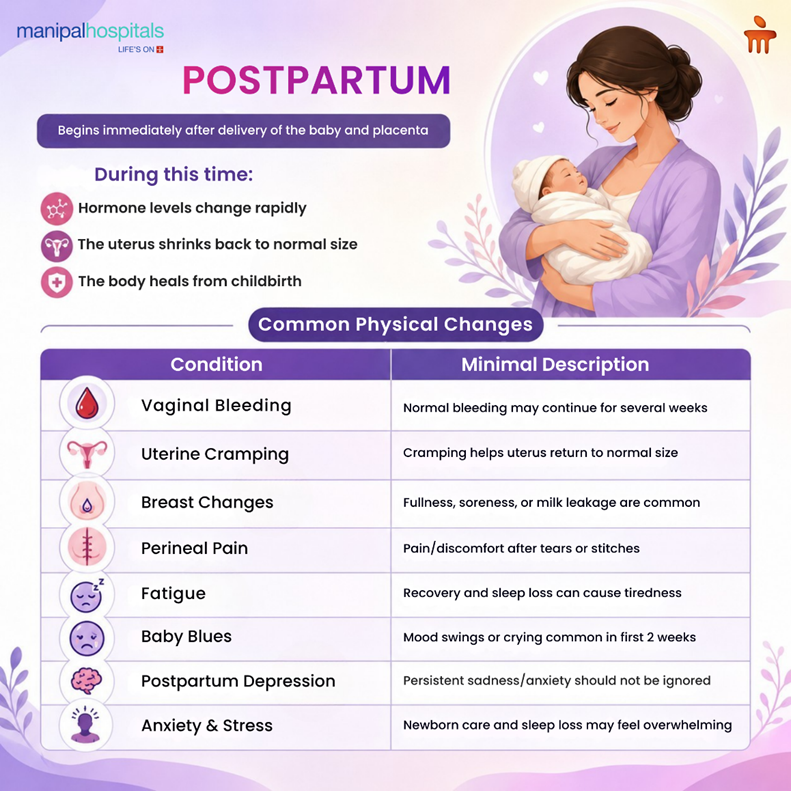
Postpartum refers to the stage after childbirth when the mother’s body begins returning to its pre-pregnancy condition. Doctors generally consider the postpartum period to last around six weeks, although physical and emotional recovery may continue for several months. This stage begins immediately after delivery of the baby and placenta. Hormone levels drop quickly, and the uterus gradually returns to its pre-pregnancy size.
Those who have delivered via a cesarean method will have a more extended recovery period as a result of healing from the wound created in the operation. There is an enormous difference in the recovery process.
The emotional side of the postpartum period also deserves attention. Motherhood adaptation, feedings, and insomnia are known to have an impact on one’s emotions in the first weeks following birth.
Physical Changes After Childbirth
The body experiences several visible and invisible changes during the postpartum period. Some symptoms improve quickly, while others take time to settle.
Vaginal Bleeding
Bleeding after childbirth is normal and usually lasts for several weeks. It starts heavily and gradually reduces over time. This process is part of natural postpartum recovery.
Uterine Cramping
Most women feel cramp-like pain after childbirth. These cramps help the uterus return to its pre-pregnancy size.
Breast Changes
After childbirth, it is common for the breasts to become sore, heavy, or tender as they begin producing milk.
Perineal Pain
Women who have vaginal tears or stitches often experience discomfort while sitting or walking. Good hygiene and rest help during after childbirth care.
Fatigue
Extreme tiredness is one of the most common complaints during the postpartum period. Recovery from labour combined with interrupted sleep can leave mothers physically drained.
Emotional Changes During the Postpartum Period
Physical healing is only one part of recovery. Emotional changes are equally common after childbirth.
Baby Blues
Many mothers feel emotional, irritable, or unusually sensitive during the first few days after delivery. This usually improves naturally within two weeks.
Postpartum Depression
Despite the occurrence of temporary emotional shifts, postpartum depression stands out due to its length and impact on one’s routine. Do not minimise feelings of sadness, anxiety, or hopelessness or problems with bonding with your baby.
Consulting with a doctor would be of great importance to one during the postpartum period.
Anxiety and Stress
The pressure of caring for a newborn can feel overwhelming, especially for first-time mothers. Emotional support from family members plays an important role in effective postpartum care.
Common Postpartum Symptoms
The following table explains some common postpartum symptoms and situations where medical attention may be necessary:
|
Symptom |
Common Cause |
When to Consult a Doctor |
|
Uterine healing |
Heavy bleeding or large clots |
|
|
Breast pain |
Milk production |
Fever or redness in the breasts |
|
Pelvic discomfort |
Healing after delivery |
Severe or worsening pain |
|
Fatigue |
Lack of sleep and recovery |
Extreme weakness or dizziness |
|
Mood swings |
Hormonal changes |
Symptoms lasting more than two weeks |
|
Constipation |
Reduced bowel activity |
Severe abdominal pain |
Recognising unusual symptoms early is an important part of safe care after childbirth.
Importance of Postpartum Care
Some women focus entirely on newborn care and forget their health needs. However, proper postpartum care is essential for long-term recovery.
-
Medical Follow-Up: Regular check-ups help doctors monitor healing, blood pressure, bleeding, and emotional health during the postpartum period.
-
Nutrition and Hydration: Balanced meals help restore energy and support tissue healing. Women who breastfeed also need adequate hydration throughout the day.
-
Rest and Recovery: Rest is often difficult with a newborn at home, but recovery becomes harder without enough sleep. Even short periods of rest can support postpartum recovery.
-
Hygiene: Maintaining personal hygiene cuts down the risk of infections. After a caesarean, women should keep the incision site clean and dry as part of postpartum care.
Nutrition During Postpartum Recovery
Food choices can influence healing, energy levels, and emotional well-being after childbirth.
-
A healthy recovery diet should include:
-
Protein-rich foods for tissue repair
-
Iron-rich foods after blood loss
-
Calcium for bone health
-
Fibre to reduce constipation
-
Plenty of fluids for hydration
Simple home-cooked meals are often easier to tolerate during the postpartum period than heavily processed foods.
Breastfeeding and Recovery
Breastfeeding supports bonding and provides ideal nutrition for newborns. It also helps the uterus contract after delivery. However, breastfeeding can come with challenges. Some mothers experience nipple soreness, breast engorgement, or difficulty with latching. Lactation guidance may improve comfort and confidence during postpartum recovery. Women should continue practising proper postpartum care while breastfeeding, including eating nutritious meals and staying hydrated.
Exercise After Childbirth
Physical activity should restart gradually after delivery. Gentle movement can improve circulation, reduce stiffness, and support mental well-being.
Safe activities include:
-
Walking
-
Pelvic floor exercises
-
Gentle stretching
-
Deep breathing exercises
Women recovering from surgery may need additional time before returning to regular exercise routines during the postpartum period.
Warning Signs That Need Medical Attention
Although mild discomfort is common, some symptoms should never be ignored during postpartum recovery.
Seek immediate medical care in Jayanagar if there is:
-
Heavy bleeding, soaking pads quickly
-
Chest pain or breathing difficulty
-
High fever
-
Severe headache with blurred vision
-
Foul-smelling discharge
-
Severe depression or self-harm thoughts
Prompt treatment helps prevent serious complications during the postpartum period.
Practical Tips for After Childbirth Care
Recovery often feels easier when mothers receive practical support at home. Helpful steps include:
-
Drinking enough water daily
-
Eating regular, nourishing meals
-
Accepting help from family members
-
Sleeping whenever possible
-
Avoiding heavy lifting
-
Attending follow-up appointments
-
Speaking openly about emotional struggles
These small habits can make after childbirth care more manageable and less stressful.
Long-Term Recovery and Adjustment
Postpartum is an important phase of healing and adaptation after delivery. The physical as well as emotional aspects of postpartum involve many difficulties. An understanding of the postpartum definition makes women aware of the normal phases of postpartum recovery and when to seek assistance. Postpartum care is achieved by following certain healthy practices, seeking emotional support and getting medical check-ups done.
Conclusion
The postpartum period is a major stage of healing and adjustment after childbirth. From physical recovery to emotional changes, mothers experience several challenges during this time. Understanding the postpartum meaning helps women recognise common recovery experiences and seek help when needed. Proper postpartum care, healthy routines, emotional support, and medical follow-up all contribute to safer postpartum recovery.
For expert maternity guidance and specialised after childbirth care, visit us at Manipal Hospital Jayanagar.
FAQ's
A majority of women are able to recuperate from childbirth within six weeks; nevertheless, recuperation after childbirth could take many months, depending on the mode of birth and any pre-existing medical conditions.
Some of the postpartum symptoms that one may suffer from include bleeding, tender breasts, fatigue, backache, constipation, mood swings, and sleep problems.
Postpartum care is essential because it ensures proper healing, prevents diseases, improves emotional wellness, promotes effective lactation, and detects complications.
Gentle walking and stretching exercises may normally be started soon after normal delivery. Heavy exercises can commence after the recommendation of the doctor.
If a woman suffers from excessive bleeding, fever, chest pain, severe headaches, difficulty breathing, or persistent feelings of depression after childbirth, she should urgently contact her doctor.
Share this article on: