6 Min Read
Being told you have fibroids can feel unsettling. Many women immediately begin to wonder, “Is this serious? Will I need surgery?”
The good news is that there are many ways to treat uterine fibroids now, depending on your symptoms, age, and plans for having children in the future. The treatment modalities also vary according to the size, location, and symptoms of the fibroid. Many women discover fibroids during a routine scan, often without any symptom at all. Some women may not need treatment, while others may need medication or surgery.
This blog explains uterine fibroids, their types, causes, and treatment options in a clear and simple way, from what uterine fibroids are to the different types of uterine fibroids, what causes them, and the best treatment options available today.
Synopsis
- What Are Uterine Fibroids?
- Types of Uterine Fibroids
- Why Do Uterine Fibroids Develop?
- Symptoms You Should Not Ignore
- When Do You Need to Treat Uterine Fibroids?
- Different Ways to Treat Uterine Fibroids
- How to Choose the Right Treatment?
- Living with Uterine Fibroids
- When to Visit the Doctor?
- Conclusion
What Are Uterine Fibroids?
Uterine fibroids are common, noncancerous growths that form in or on the wall of the uterus, usually occurring during a woman's reproductive years. They are also called leiomyomas, myomas, or fibromyomas. Fibroids are not cancerous and usually don’t develop into cancer. In very rare cases, a cancerous growth called Leiomyosarcoma may occur, but it doesn’t arise from fibroids. Fibroids can be as small as a seed or as large as a watermelon, and they may enlarge the uterus.
Many women have fibroids without knowing it, since they often don’t cause symptoms. Understanding fibroids often brings relief because, in most cases, they are harmless and easily manageable.
Types of Uterine Fibroids
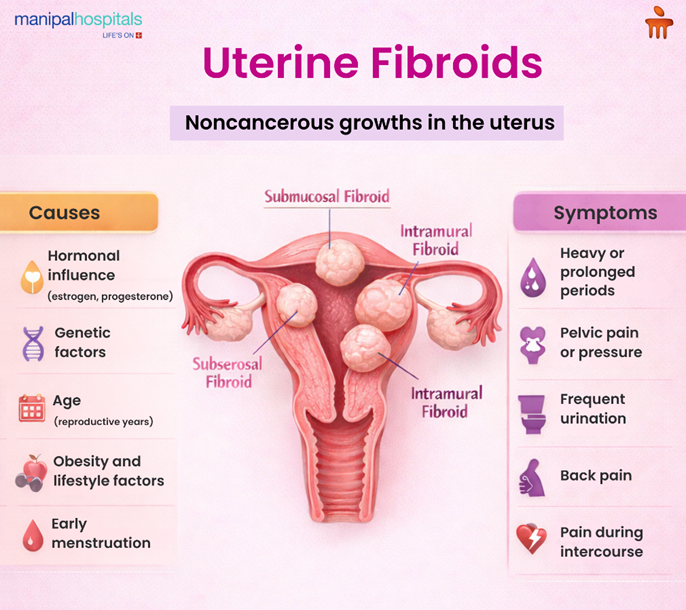
Fibroids can differ in size, number, and location. Depending on these factors, each uterine fibroid type can cause different symptoms. The type helps obstetrics and gynaecology choose the right treatment.
Some common types of uterine fibroids are as follows:
|
Types of Uterine Fibroids |
|
|
Intramural Fibroids |
The most common type grows inside the uterine wall. |
|
Submucosal Fibroids |
Form within the uterine lining and may impact fertility. |
|
Subserosal Fibroids |
Grow on the outside of the uterus |
|
Pedunculated Fibroids |
These are attached to the uterus by a stalk. |
Why Do Uterine Fibroids Develop?
Many women wonder what causes uterine fibroids. The exact cause is not always known, but several factors can play a role:
-
Hormones: Estrogen and progesterone promote fibroid growth.
-
Genetic factors: A family history raises the risk.
-
Age: Common during the reproductive years.
-
Early menarche: Onset of periods at a very young age
-
Obesity and certain lifestyle factors may also contribute
Understanding what causes uterine fibroids can help you spot risk factors and lower your risk. However, fibroids cannot always be prevented.
Symptoms You Should Not Ignore
Fibroids often do not cause symptoms, but when they do, you may notice:
-
Heavy or long-lasting periods
-
Pain or pressure in the pelvis
-
Difficulty emptying the bladder
-
Pain in the lower back
-
Pain during sex
The size and type of uterine fibroids often determine the symptoms.
When Do You Need to Treat Uterine Fibroids?
Not every fibroid needs to be treated. Doctors generally recommend treatment when:
-
Symptoms affecting daily life present
-
Heavy bleeding resulting in anaemia
-
Fibroids increasing in size
-
Having an impact on fertility
Different Ways to Treat Uterine Fibroids
Treatment depends on how severe the condition is, what symptoms you have, and whether you want to have children in the future. Here is a brief overview:
|
Treatment Type |
What It Involves |
Who It’s Suitable For |
|
Medications |
Hormonal therapy, pain relief |
Mild to moderate symptoms with small-sized fibroids |
|
Minimally invasive procedures (Non-surgical) |
Uterine artery embolisation |
Women avoiding major surgery |
|
Surgery (Laparoscopic Myomectomy) |
Removal of fibroids only |
Women in the reproductive age group |
|
Surgery (Laparoscopic Hysterectomy) |
Removal of the uterus |
Severe symptoms with recurrent or multiple fibroids |
Medical treatment of Uterine Fibroids
For many women, treatment often begins with simple medications to control symptoms before considering surgery. Common options include:
-
Hormonal drugs: Help shrink fibroids and help regulate menstrual cycles
-
Pain relief medications: Help reduce discomfort and excess bleeding
-
Iron supplements: Help manage anaemia caused by heavy bleeding
While medications can relieve symptoms, they may not eliminate fibroids completely.
Surgical treatment of Uterine Fibroids
If medicines don’t provide enough relief, your doctor may suggest surgical options. Surgery options include the following:
1. Myomectomy
This procedure removes fibroids but keeps the uterus intact. It is a good option for women who are young and want to have children in the future.
2. Hysterectomy
This involves removing the uterus and is considered a permanent solution. It is recommended in severe cases when other treatments have not worked.
3. Minimally invasive options
Procedures such as uterine artery embolization (UAE) block the blood supply to fibroids, causing them to shrink. These minimally invasive options aim to restore fertility and are becoming a widely accepted treatment pathway for many younger women suffering from fibroids of the uterus.
How to Choose the Right Treatment?
Choosing the best treatment for uterine fibroids depends on the following factors:
-
Age and general health
-
Severity of the symptoms
-
Types and sizes of uterine fibroids
-
Future pregnancy plans
A personalised treatment plan often leads to better outcomes and fewer complications.
Living with Uterine Fibroids
Lifestyle changes may help manage symptoms if treatment is not needed immediately. Eating foods rich in iron, staying active, and managing stress can help. Fibroids frequently get smaller after menopause. Knowing the underlying causes may help you lower your risk. Making small choices every day, such as eating balanced meals and engaging in gentle exercise, can enhance overall comfort and health.
When to Visit the Doctor?
If you have any of the following, see a doctor:
-
Heavy or unusually long periods
-
Severe pelvic pain that doesn’t ease
-
Difficulty or pain while urinating
-
Symptoms interfering with daily activities
-
Sudden changes in the menstrual cycle pattern
Conclusion
While fibroids can feel worrying at first, the reassuring part is that effective treatments are available today. With the right care, most women continue to lead healthy, active lives. Modern treatments, whether medication or surgery, are generally safe and effective when guided by a specialist. With the right diagnosis, advice, and timely care, most women can continue to live healthy lives without major problems.
If you have symptoms or are considering uterine fibroid treatment in Jayanagar, talk to a trusted gynaecologist at Manipal Hospitals Jayanagar to find the best option for you.
FAQ's
No, fibroids do not turn into cancer. A rare cancer called leiomyosarcoma is separate and not caused by fibroids.
Some small ones may shrink on their own after menopause. Others may last longer and need treatment depending on symptom severity and overall health.
Not all the time. Medications or close observation are used to treat many fibroids. Only severe or complicated cases require surgery.
Large fibroids or those situated deep inside the uterus on the right can affect fertility or the outcome of a pregnancy, causing miscarriage or fetal growth retardation, but smaller ones usually don't cause any major problems.
Doctors look at your symptoms, the fibroid type, and your health goals to suggest treatment options that fit your lifestyle and needs.
Share this article on: