8 Min Read
It usually starts very casually – a few extra minutes in the sun during a walk, a day at the beach, an outdoor event, or even sitting near a pool for too long.
At first, nothing feels wrong. But later in the day, the skin begins to feel hot, tight, and sore.
By night, even wearing clothes can feel uncomfortable.
A lot of people brush off sunburn as something harmless, but too much time in the sun can sometimes leave the skin painfully red, dry, peeling, and even blistered. Repeated sun damage can also affect the skin over time and increase the risk of early ageing and skin cancer. Because the symptoms appear after the damage is already done, many people do not realise how serious sunburn can become. Knowing how to manage sunburn early and protect the skin from further damage can make recovery much easier.
This blog explores the symptoms of sunburn, what causes skin damage from sun exposure, when medical attention may be needed, and practical tips to help prevent future sun damage.
Synopsis
- What is Sunburn?
- Why Does Sunburn Happen?
- Common Sunburn Symptoms
- Understanding the Severity of Sunburn
- Skin Damage from Sun Exposure
- Immediate Sunburn Treatment
- Natural Remedies for Sunburn
- When Should You See a Doctor?
- Emergency Skin Care for Severe Burns
- How to Reduce UV Exposure Risks
- Long-Term Skin Protection
- Conclusion
What is Sunburn?
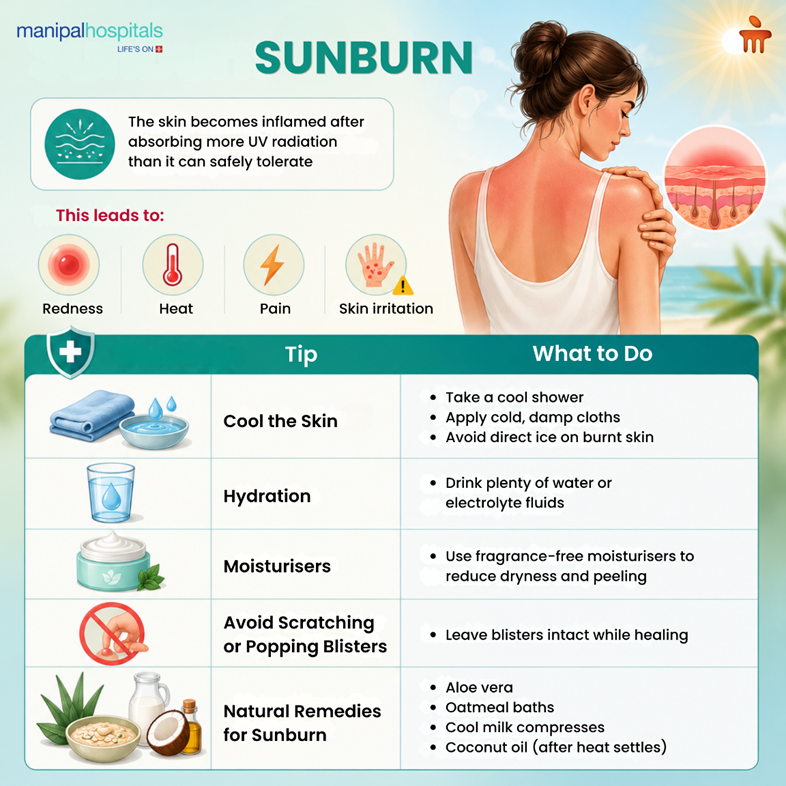
Sunburn is the skin’s inflammatory response to excessive ultraviolet radiation exposure. In simpler terms, the skin becomes injured after absorbing more ultraviolet light than it can tolerate safely.
The body reacts quickly once skin cells are damaged. Blood vessels widen, inflammation increases, and the affected area becomes red and warm. That familiar burning sensation is part of the inflammatory process. Mild burns may cause little more than redness and peeling. Stronger burns can lead to swelling, blisters, exhaustion, and significant pain.
People sometimes assume tanning is safer than burning, but both indicate skin damage from sun exposure. The difference is simply the degree of visible injury. Another thing worth mentioning is that sunburn does not only happen at beaches.
Patients often develop burns while:
-
Driving long distances
-
Attending outdoor weddings
-
Trekking
-
Gardening
-
Sitting near pools
-
Watching sporting events
The exposure builds gradually, which is why many people fail to notice the danger until later.
Why Does Sunburn Happen?
The skin naturally has melanin, a pigment that offers some protection against the sun’s ultraviolet (UV) rays. But after too much sun exposure, the skin is no longer able to protect itself properly. Inflammation develops, leading to visible injury. Several common factors listed below increase UV exposure risks:
-
Long Hours Outdoors: This sounds obvious, but people consistently underestimate how quickly ultraviolet exposure accumulates. Even two or three hours outdoors without protection may trigger noticeable burns.
-
Midday Sunlight: Sun intensity is strongest during late morning and afternoon hours. This is when sunburn symptoms often develop fastest.
-
Reflective Surfaces: Water, concrete, glass, and sand reflect sunlight back onto the skin. This increases total ultraviolet exposure.
-
Lighter Skin Tones: Individuals with lighter skin usually burn more quickly because they produce less protective melanin.
-
Incorrect Sunscreen Use: Many people think one layer of sunscreen is enough, but it can wear off after sweating, swimming, or spending hours in the sun.
Common Sunburn Symptoms
Not every burn looks the same. Symptoms depend on skin type, duration of exposure, and environmental conditions.
-
Redness and Heat: This is usually the first sign people notice. The skin feels unusually warm and sensitive.
-
Burning Pain: Some describe it as stinging. Others compare it to a constant throbbing discomfort.
-
Tightness: Burnt skin often feels stretched or dry during movement.
-
Swelling: Inflammation beneath the skin may cause mild puffiness.
-
Blistering: Blisters suggest deeper injury and require more careful emergency skin care. More severe burns may also cause chills, headaches, nausea, dehydration, and fatigue. These more serious sunburn symptoms should not be ignored.
Understanding the Severity of Sunburn
Doctors usually classify burns according to how deeply the skin has been affected.
|
Severity |
Common Signs |
Recovery |
|
Mild |
Redness, tenderness |
3 to 5 days |
|
Moderate |
Swelling, peeling |
Around 1 week |
|
Severe |
Blisters, dehydration, intense pain |
Several weeks |
The severity helps determine whether home-based sunburn treatment is enough or whether professional care is necessary.
Skin Damage from Sun Exposure
This is the part many people overlook. Repeated skin damage from sun exposure affects collagen, pigmentation, and the deeper structure of the skin. Over time, this damage contributes to:
-
Wrinkles
-
Uneven skin tone
-
Rough texture
-
Visible blood vessels
-
Increased skin cancer risk
Children and teenagers with repeated severe burns appear to carry a higher long-term melanoma risk later in life. The skin remembers cumulative ultraviolet exposure, even when visible burns heal completely.
Immediate Sunburn Treatment
When a sunburn first appears, the skin usually feels hot, painful, and irritated. At that stage, simple care at home can often help calm the discomfort.
Getting out of the sun should be the first step, because continued exposure can make the burn worse. Many people find that a cool shower or a damp cloth placed on the skin helps relieve some of the heat. Applying ice directly to burnt skin should be avoided, as it may worsen irritation.
Drinking enough water also matters because the skin can become dry and dehydrated after too much sun exposure. A light, fragrance-free moisturiser may help soothe dryness and peeling as the skin starts healing. If blisters appear, it is best not to pop or scratch them, as the skin underneath is still healing.
In most cases, early sunburn treatment is simply about cooling the skin, drinking enough fluids, and giving the skin time to heal on its own.
Natural Remedies for Sunburn
Many people prefer trying home remedies before seeking medical advice. Some methods may temporarily soothe discomfort.
|
Aloe Vera |
Aloe vera is one of the most commonly used natural remedies for sunburn because it feels cool on inflamed skin. |
|
Oatmeal Baths |
Colloidal oatmeal baths may reduce itching and irritation during recovery. |
|
Cool Milk Compresses |
Some people find temporary comfort using cool milk-soaked cloths. |
|
Coconut Oil |
Once active heat settles, coconut oil may help reduce dryness and peeling. |
It is important to remember that natural remedies for sunburn may improve comfort but cannot reverse deeper tissue injury.
When Should You See a Doctor?
Certain situations require medical evaluation rather than home care. Seek medical help if there is:
-
Extensive blistering
-
Severe pain
-
Fever
-
Vomiting
-
Dizziness
-
Fainting
-
Dehydration
-
Confusion
Doctors providing emergency skin care often focus on fluid replacement, pain control, and monitoring for heat-related illness. Consult our emergency care doctors near Jayanagar for timely medical support and treatment.
Emergency Skin Care for Severe Burns
Severe burns are treated differently from mild redness. Try the following tips for emergency care:
-
Fluid Replacement: Some patients need intravenous fluids if dehydration becomes significant.
-
Wound Care: Blistered skin requires careful cleaning and protection.
-
Pain Management: Anti-inflammatory medicines may help reduce severe discomfort.
-
Monitoring for Infection: Damaged skin becomes more vulnerable to bacterial infection.
Proper emergency skin care becomes especially important in children and elderly individuals because dehydration develops more quickly.
How to Reduce UV Exposure Risks
People do not need to avoid outdoor life completely. Small habits usually provide meaningful protection.
Helpful prevention measures:
-
Wearing hats and sunglasses
-
Using broad-spectrum sunscreen
-
Reapplying sunscreen regularly
-
Seeking shade during peak sunlight
-
Avoiding prolonged midday exposure
-
Staying hydrated outdoors
Simple awareness of daily UV exposure risks often prevents severe burns entirely.
Long-Term Skin Protection
Skin protection should not begin only during holidays or beach trips. Daily ultraviolet exposure adds up gradually over the years. Even routine activities like commuting or sitting near windows contribute to cumulative skin damage from sun exposure. That is why dermatologists and emergency physicians continue emphasising prevention rather than relying only on later sunburn treatment.
Conclusion
Too much time under the sun can do more damage to the skin than most people realise. What starts as mild redness can sometimes turn into pain, peeling, blisters, and dehydration if the skin is not cared for properly. Repeated skin damage from sun exposure may also increase long-term UV exposure risks. Knowing the early sunburn symptoms and starting timely sunburn treatment can help the skin recover more comfortably. Simple care like cooling the skin, staying hydrated, using a skin protection guide, and avoiding further sun exposure often helps in mild cases. However, severe burns, intense pain, or dehydration may require proper medical care and emergency skin care.
If you are suffering from sunburns and looking for sunburn treatment in Jayanagar, visit our emergency medicine specialist at Manipal Hospital Jayanagar.
FAQ's
When ultraviolet radiation damages the skin cells faster than the body can repair them, inflammation, redness, pain, and visible irritation of the skin occur.
Common sunburn symptoms include redness, warmth, tenderness, swelling, peeling skin, blistering, dehydration, and discomfort that worsens several hours after sun exposure.
Sunburns can be treated naturally with remedies such as aloe vera, oatmeal baths, cold compresses, moisturisers, staying hydrated and coconut oil.
But if your sunburn has caused fever, dehydration, dizziness, blistering, vomiting, confusion or needs immediate pain relief, you may need to visit the doctor.
Yes. Repeated exposure to sunlight makes you susceptible to early ageing, discolouration of the skin, and various types of skin cancers.
Share this article on: