8 Min Read
The arrival of a newborn into the family usually brings great joy, love, and a series of new duties. In the early weeks of their lives, changes in feeding, activity levels, breathing patterns, or temperature regulation can sometimes be early indicators of serious illness in newborns. Although most worries about newborn health issues are normally harmless, there are certain situations that warrant emergency medical intervention, and neonatal sepsis is one of them.
Neonatal sepsis is a condition characterised by infection in newborn infants that can become fatal without proper identification and treatment as soon as possible. Luckily for infants, modern neonatology care has enabled doctors to save many more lives than before. Knowing what to look out for and when medical care should be sought could prove crucial.
In this blog, neonatal sepsis is covered comprehensively in terms of causes, symptoms, diagnostic criteria, treatment, risk factors, prevention, and recovery.
Synopsis
- What is Neonatal Sepsis?
- Risk Factors and Neonatal Sepsis Causes
- Neonatal Sepsis Symptoms Parents Should Never Ignore
- How Do Doctors Diagnose Neonatal Sepsis?
- Common Infections Associated With Neonatal Sepsis
- Neonatal Sepsis Treatment and Hospital Care
- Possible Complications and Prognosis
- Can Neonatal Sepsis Be Prevented?
- Conclusion
What is Neonatal Sepsis?
The early stage in an infant's life is an especially important time as the baby’s immune system is developing. As a result, the baby is highly susceptible to various infections that adults or even older children would be able to fight off much more easily.
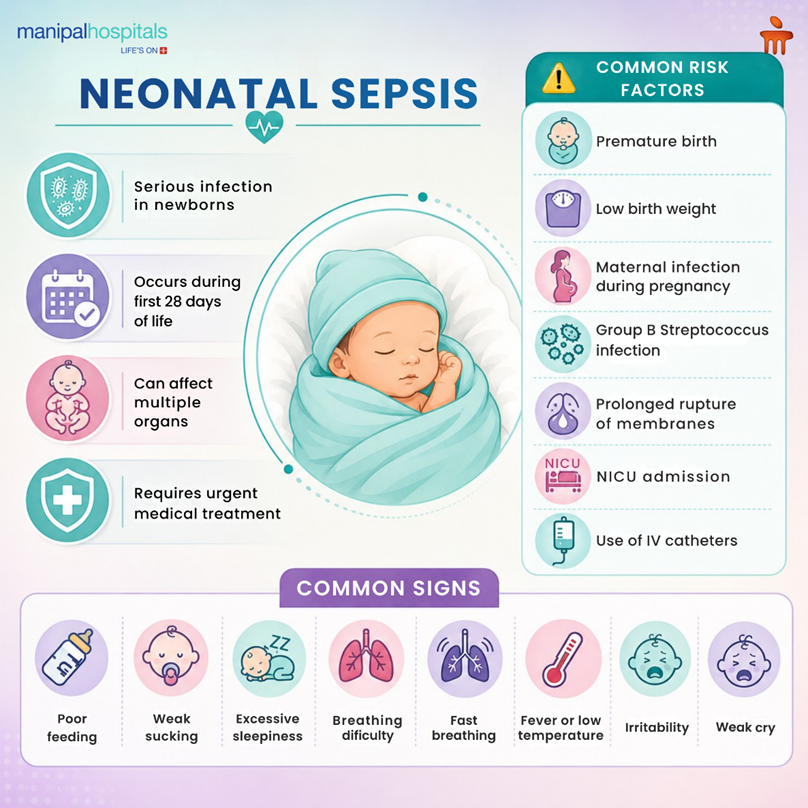
Neonatal sepsis is a serious systemic infection occurring during the first 28 days of life that can affect multiple organs and may rapidly become life-threatening if untreated. It involves the presence of either a bacterial, viral, or fungal infection in the child's body, which causes inflammation throughout a newborn's body. Since babies cannot express their feelings, the condition may initially seem harmless.
The disease may be classified into the following types:
-
Early-onset sepsis: The infection develops in the first three days of an infant's life, often connected to mother-to-baby infections occurring during pregnancy or childbirth.
-
Late-onset sepsis: Develops after the first three days; mostly related to post-delivery complications.
Risk Factors and Neonatal Sepsis Causes
There are many risk factors that can make a newborn more prone to an infection. Identifying such factors is useful for tracking and monitoring the health of babies at risk from birth.
Some common neonatal sepsis causes include:
-
Infection in the mother's bloodstream while she was pregnant
-
Mother carrying the Group B Streptococcus bacteria
-
Long pre-delivery rupture of the membranes
-
Babies born premature
-
Low body weight
-
Complications during birth needing special care
-
The use of invasive devices, such as IV catheters
-
Exposure to infection carriers or contaminated areas
Babies born prematurely have a higher risk because of their undeveloped immune systems and immature skin barrier, which makes them more susceptible to infections.
Neonatal Sepsis Symptoms Parents Should Never Ignore
One of the hardest things about neonatal sepsis is that its symptoms are sometimes subtle at first. Your baby might just look like they simply aren't "feeling quite right."
Some common neonatal sepsis symptoms that parents need to look out for are:
-
Lack of interest in feeding or inability to suck
-
Unusual sleepiness or lack of alertness
-
Difficulty breathing or breathing too fast
-
Fever or very low body temperature
-
Uneven colour of the skin (pale, mottled, blue)
-
Irritability
-
Weakened cry
-
Vomiting or stomach bloating
-
Reduced urine production
-
Intervals of not breathing
If your baby begins acting differently or there is a change in eating habits, the best thing you can do is seek professional advice.
How Do Doctors Diagnose Neonatal Sepsis?
Early diagnosis usually involves a combination of clinical diagnosis and lab tests. In order to prevent complications due to delay, physicians usually start treatment even while investigations are ongoing.
Investigations that may be carried out include:
-
Bacterial cultures in the blood to detect the infecting bacteria
-
CBC (complete blood count) to detect the presence of infection
-
C-Reactive Protein or other inflammatory markers
-
Urine test, where relevant
-
Lumbar puncture in cases of suspected meningitis
-
X-rays of the chest in infants with respiratory signs
The purpose of such extensive investigations is to diagnose not only the infection itself but also its origin and extent.
Common Infections Associated With Neonatal Sepsis
A number of microorganisms can cause infections among newborns. Accordingly, understanding the cause of the infection can help healthcare providers to understand the treatment options best suited to deal with it. The table below highlights some important organisms and their typical characteristics.
Neonatal Sepsis Treatment and Hospital Care
Being informed that your baby needs to be admitted into the hospital may leave you feeling helpless. However, you do not need to worry, as neonatal units are designed to give urgent, specialised care to newborns who are severely ill with an infection.
Some common treatments for neonatal sepsis include:
-
IV antibiotics administered right away
-
Closely monitoring heart rate, respiratory rate, and oxygen saturation
-
Hydration through IV fluids
-
Breathing support if necessary
-
Nutrition therapy while recovering
-
Sometimes antifungal or antiviral medication is used
The period of treatment may vary from a few days to longer hospital admission periods, depending on the cause of the infection, test results, and the course of your baby’s illness.
Possible Complications and Prognosis
Even though it is a life-threatening condition, most infants can fully recover from neonatal sepsis. Developments in neonatal critical care have made it possible that as long as timely care is provided, the infection does not cause any lasting harm to the child.
Severe infections may lead to significant complications despite treatment. Some potential complications can include:
-
Meningitis
-
Lack of function of organ systems
-
Developmental problems, in serious cases
-
Loss of hearing in certain infectious cases
-
Hospitalisation for a prolonged period of time
Follow-up appointments attended regularly enable the doctors to monitor the infant’s growth and development, ensuring there is no lasting harm to the child's health.
Can Neonatal Sepsis Be Prevented?
While not every infection can be prevented, several measures have helped reduce newborn sepsis rates worldwide.
Healthcare providers focus on:
-
Screening mothers for Group B Streptococcus
-
Treating maternal infections promptly
-
Maintaining strict hygiene during delivery
-
Following infection-control practices in neonatal units
-
Encouraging proper hand hygiene among caregivers
-
Supporting breastfeeding, which provides protective antibodies
These preventive strategies play an important role in safeguarding newborn health during the most vulnerable stage of life.
Conclusion
Neonatal sepsis is a concerning condition that is, unfortunately, considerably common. However, the earlier doctors diagnose it and provide appropriate medical help, the better the chances of complete recovery. Being familiar with early symptoms, knowing possible causes, and taking your child to see a doctor immediately in case of any doubts can be very helpful to ensure your baby’s safety at this crucial time in their life. Due to the latest developments in medicine, most cases of neonatal sepsis result in complete recovery and further development.
For professional assessment and neonatal sepsis treatment in Jayanagar, Bangalore, contact the specialists at Manipal Hospital Jayanagar. The experienced team will provide your baby with the necessary medical care so your child can, too, make a full recovery.
FAQ's
Breast milk contains antibodies, immune cells, and protective proteins that help strengthen a newborn's developing immune system. While breastfeeding cannot completely prevent infections, it has been associated with a lower risk of several serious illnesses during infancy.
Multiple births are more likely to result in premature delivery or low birth weight, both of which can increase vulnerability to infections. However, the risk varies depending on gestational age, birth circumstances, and overall newborn health.
Yes. Some infections can develop days or weeks after birth. Parents should continue monitoring feeding patterns, activity levels, breathing, and general behaviour even after returning home and seek medical advice if concerning changes appear.
A newborn's immune system develops gradually over the first months and years of life. During the neonatal period, babies rely heavily on maternal antibodies and protective measures such as breastfeeding, vaccination schedules, and effective hygiene practices.
The need for follow-up depends on the severity of the illness and whether complications occurred. Some babies require developmental assessments, hearing evaluations, or neurological monitoring to ensure they continue to meet growth and developmental milestones.
Share this article on: