6 Min Read
Coronary artery disease remains one of the leading causes of cardiovascular illness worldwide, and in India, it has emerged as a critical public health challenge. India accounts for nearly 60% of the world's coronary artery disease cases, with the disease striking at a younger age, approximately 5-10 years earlier than in Western countries. As the arteries supplying blood to the heart narrow or become blocked, they can cause symptoms such as chest pain, breathlessness, and reduced exercise tolerance.
In such cases, procedures such as angioplasty may be required to restore circulation and reduce the risk of serious cardiac events. For many people, it offers rapid symptom relief, improves blood flow to the heart, and helps reduce the risk of serious cardiac complications. This blog explains what is angioplasty, how the angioplasty procedure is performed, who may need it, what recovery looks like, and the lifestyle changes that help ensure long-term heart health.
Synopsis
What is Angioplasty?
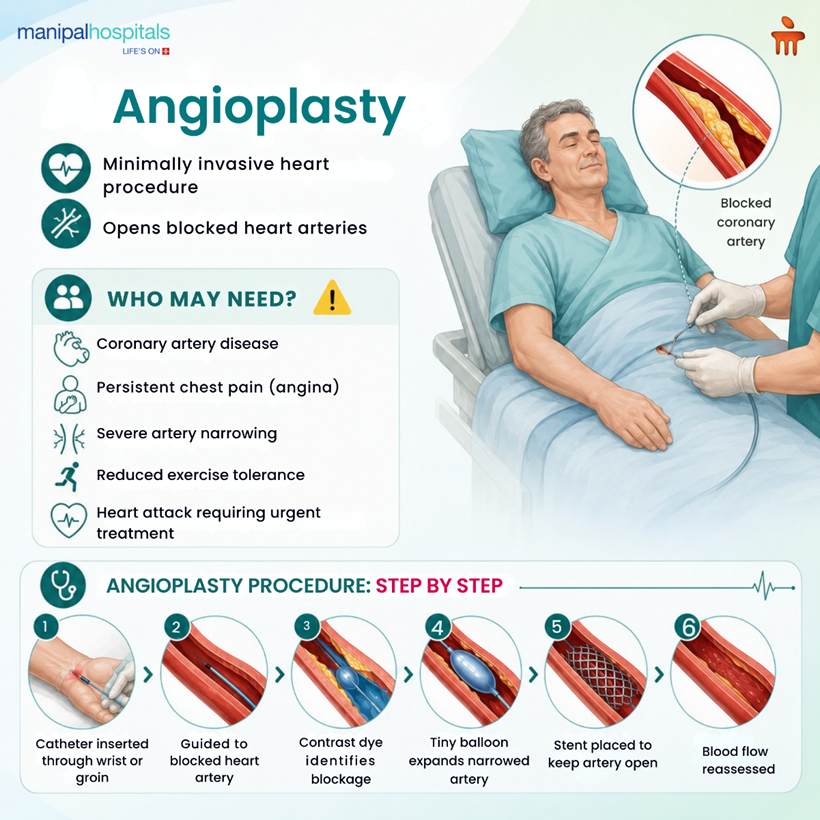
When arteries supplying blood to the heart become narrowed due to fatty deposits called plaques, the heart muscle may not receive enough oxygen-rich blood. This can lead to chest pain, breathlessness, reduced exercise capacity, or even a heart attack. During angioplasty, a cardiologist uses a thin tube called a catheter to reach the blocked artery and restore blood flow.
The procedure is commonly recommended for:
-
Coronary artery disease causing symptoms
-
Significant arterial narrowing detected during testing
-
Heart attacks requiring urgent restoration of blood supply
-
Persistent angina despite medication
-
Multiple risk factors with evidence of severe blockage
Although some people refer to it as "angio surgery," angioplasty is generally performed through a small puncture in the wrist or groin rather than a large surgical incision.
How is it different from bypass surgery?
The terms can sometimes create confusion because they are often used interchangeably in everyday conversations. While angioplasty uses a catheter to open narrowed arteries from within, coronary artery bypass grafting (CABG) is a major surgical operation that creates an alternative route around blocked arteries.
Angioplasty is often preferred when:
-
There are fewer blockages
-
The narrowed segments are accessible by catheter
-
Rapid treatment is required during a heart attack
-
Recovery time needs to be shorter
Bypass surgery may be recommended for extensive disease involving multiple major arteries or complex patterns of blockage. Your cardiologist evaluates imaging findings, overall health, and long-term outcomes before recommending the most suitable treatment option.
How is the Angioplasty Procedure Performed?
Knowing what happens step by step often helps reduce anxiety before treatment. The procedure is usually performed in a specialised cardiac catheterisation laboratory under local anaesthesia.
The angioplasty procedure typically involves:
-
A small catheter is inserted through an artery in the wrist or groin.
-
The catheter is carefully guided toward the heart arteries with imaging guidance.
-
Contrast dye is injected to identify the exact location and severity of the blockage.
-
A tiny balloon is advanced to the narrowed segment.
-
The balloon is inflated to widen the artery.
-
In most cases, a stent is placed to help keep the artery open.
-
Blood flow is reassessed before the catheter is removed.
Most procedures take between 30 minutes and two hours, depending on the complexity and number of blockages being treated.
Types of Stents Used During Angioplasty
The stent plays an important role in maintaining blood flow after treatment. Different stent technologies have been developed to improve long-term outcomes and reduce the likelihood of re-narrowing. The following are the different types of stens used and benefits each provides:
|
Stent Type |
Key Feature |
Typical Advantage |
Consideration |
|
Bare Metal Stent |
Simple metallic framework |
Rapid healing of vessel lining |
Higher chance of artery narrowing again |
|
Drug-eluting Stent |
Releases medication gradually |
Lower risk of re-blockage |
Requires longer use of blood-thinning medication |
|
Bioabsorbable Scaffold |
Designed to dissolve over time |
Leaves no permanent implant |
Not suitable for all blockage types |
|
Covered Stent |
Special protective covering |
Useful in selected complex situations |
Reserved for specific clinical indications |
|
Dual Therapy Stent |
Combines healing-promoting surface with drug release |
Balances healing and restenosis prevention |
Used selectively based on patient profile |
The choice of stent depends on factors such as the artery involved, medical history, bleeding risk, and overall heart condition.
Recovery After Angioplasty
Recovery is often much quicker than people expect. Most individuals notice an improvement in symptoms soon after blood flow is restored. During the first few hours, the access site is monitored while the patient is kept under observation. Depending on the clinical situation, discharge may occur the same day or after a short hospital stay.
First Week
-
Mild bruising or tenderness at the catheter insertion site
-
Temporary fatigue
-
Gradual return to walking and routine daily activities
-
Regular medication use as prescribed
First Month
-
Improved exercise tolerance
-
Better control of angina symptoms
-
Follow-up consultations to monitor progress
-
Introduction of structured cardiac rehabilitation if recommended
Long-Term Recovery
Successful treatment does not eliminate the underlying tendency to develop artery disease. Long-term recovery focuses on protecting heart health through:
-
Smoking cessation
-
Blood pressure control
-
Cholesterol management
-
Regular physical activity
-
Weight management
-
A heart-healthy diet
-
Diabetes control when applicable
These measures help maintain the benefits achieved through the angioplasty procedure.
Understanding the Risks of Angioplasty
While angioplasty is considered safe and routinely performed worldwide, every medical procedure carries some degree of risk. Knowing these possibilities helps create realistic expectations rather than unnecessary fear. Potential complications include:
-
Bleeding at the catheter insertion site
-
Allergic reactions to contrast dye
-
Irregular heart rhythms
-
Blood clot formation within the stent
-
Damage to the treated artery
-
Kidney complications in susceptible individuals
-
Stroke, though uncommon
-
Heart attack during the procedure, which is rare
Serious complications are uncommon, particularly when the procedure is performed by experienced interventional cardiologists, and appropriate precautions are followed.
When Should You Contact Your Doctor After Angioplasty?
Most recoveries are smooth, but certain symptoms should never be ignored. Prompt medical attention can prevent complications from becoming more serious.
Contact your healthcare team if you experience:
-
Increasing swelling at the puncture site
-
Persistent bleeding
-
Fever or signs of infection
-
New chest discomfort
-
Dizziness or fainting
-
Sudden weakness or difficulty speaking
Conclusion
Learning what is angioplasty and understanding the recovery process can make the experience far less intimidating. Modern angioplasty has helped millions of people regain quality of life by restoring healthy blood flow to the heart with minimal disruption to daily activities. While every procedure carries risks, careful patient selection, advanced techniques, and ongoing lifestyle changes contribute significantly to successful outcomes.
For angioplasty surgery in Jayanagar, Bangalore, and long-term heart health support, consult our experienced cardiac specialists at Manipal Hospital Jayanagar.
FAQ's
Yes. Some individuals may require repeat angioplasty if new blockages develop in different arteries or if previously treated areas become narrowed again. The need for additional procedures depends on lifestyle factors, medical conditions, and progression of coronary artery disease.
Most people remain awake but relaxed throughout the procedure. Local anaesthesia numbs the insertion site, and mild sedative medication may be given to help you feel comfortable. General anesthesia is rarely required.
Modern coronary stents are minimal and generally do not trigger airport security systems. You can travel normally after receiving medical clearance from your cardiologist.
Extreme temperatures can place additional stress on the cardiovascular system. Very hot or freezing weather may increase the heart's workload, so it is wise to stay hydrated, dress appropriately, and avoid strenuous activity during severe weather conditions.
Long-term emotional stress can contribute to high blood pressure, unhealthy lifestyle habits, and increased cardiovascular risk. Stress management through exercise, relaxation techniques, adequate sleep, and social support plays an important role in maintaining heart health after treatment.
Share this article on: