8 Min Read
It often starts in a way that is easy to miss. You may feel more tired than usual, get breathless while climbing stairs, or notice chest discomfort during things that were never a problem before. Most people do not immediately think of a heart issue. They assume it is stress, ageing, or simply a busy life catching up with them. These signs can sometimes mean aortic stenosis. This can sometimes happen because the aortic valve narrows and restricts blood flow from the heart. Because the change happens slowly, many people adjust to it without realising what is going on.
This blog explains the causes of aortic valve narrowing, the symptoms that should not be ignored, how doctors diagnose the condition, the treatment options available, and when valve replacement surgery may be recommended.
Synopsis
- What is Aortic Stenosis?
- Causes of Aortic Valve Narrowing
- Common Aortic Stenosis Symptoms
- Understanding the Severity of Aortic Stenosis
- How Aortic Stenosis Affects the Heart?
- How Doctors Diagnose Aortic Stenosis?
- Aortic Stenosis Treatment
- Recovery After Valve Replacement Surgery
- Lifestyle Measures That Support Heart Health
- When Should You See a Doctor?
- Living with Aortic Stenosis
- Conclusion
What is Aortic Stenosis?
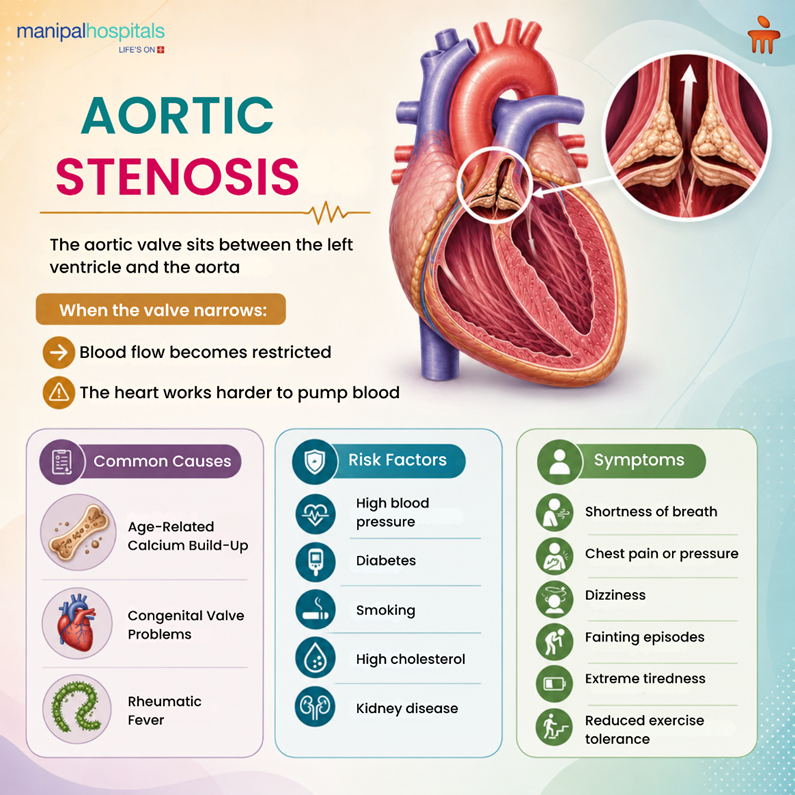
Aortic stenosis is a condition where the aortic valve slowly becomes narrow or stiff. The aortic valve is placed between the heart’s left ventricle and the aorta, which is the main blood vessel that carries blood to the rest of the body.
In a healthy heart, this valve opens properly every time the heart pumps blood. But when someone has aortic stenosis, the valve does not open fully, making it difficult for blood to flow normally.
Because of this narrowing, the heart has to work harder to push blood through the valve. At first, the body may adjust to the extra pressure, so symptoms can remain mild for some time. As the condition gradually worsens, people may start noticing tiredness, breathlessness, dizziness, or chest discomfort during everyday activities.
Causes of Aortic Valve Narrowing
There is no single reason why aortic stenosis develops. Several conditions can damage or stiffen the valve over time.
-
Age-Related Calcium Build-Up: This is the most common cause. Calcium deposits collect on the valve leaflets gradually, limiting movement and causing aortic valve narrowing.
-
Congenital Valve Abnormalities: Some people have an aortic valve with two leaflets from birth, not three. This may lead to earlier valve degeneration and increase the risk of aortic stenosis.
-
Rheumatic Fever: Although less common today, previous rheumatic fever infections can damage heart valves permanently.
-
Other Risk Factors: Certain medical conditions may increase the chance of developing aortic stenosis, including:
-
High blood pressure
-
Diabetes
-
High cholesterol
-
Smoking
-
These factors may also speed up progression once valve disease begins.
Common Aortic Stenosis Symptoms
One challenge with aortic stenosis is that symptoms may appear slowly. Many people adjust their activities without realising their heart function is changing.
-
Breathlessness: Shortness of breath during walking or climbing stairs is among the most common aortic stenosis symptoms.
-
Faintness: Decreased circulation of blood to the brain leads to fainting spells.
-
Fatigue: The heart tries to pump blood efficiently, resulting in increased fatigue over time.
-
Reduced Exercise Capacity: Some active individuals realise they fatigue easily when compared to their former selves.
Pressure or pain during activity may occur because the heart works harder to pump blood through the narrowed valve. Ignoring these aortic stenosis symptoms can delay diagnosis and increase the risk of complications later.
Understanding the Severity of Aortic Stenosis
Normally, doctors examine how narrowed the valve is and its impact on the blood flow. In such a way, they assess the degree of severity of the problem to choose appropriate measures. The following table gives a brief description of these severity levels and what symptoms they may elicit:
|
Severity Level |
Valve Function |
Possible Symptoms |
|
Mild |
Slight narrowing |
Usually no noticeable symptoms |
|
Moderate |
Reduced valve opening |
Tiredness during activity |
|
Severe |
Major blood flow restriction |
Chest pain, dizziness, breathlessness |
|
Critical |
Extremely limited flow |
Risk of heart failure |
This grading system helps doctors decide the right timing for aortic stenosis treatment.
How Aortic Stenosis Affects the Heart?
The heart structure allows the blood to be pumped efficiently with virtually no resistance. When there is a marked rise in resistance, the condition is known as aortic stenosis.
The left ventricle gradually becomes thicker, a process called left ventricular hypertrophy. The heart works harder to push blood through the narrowed valve, increasing strain over time. For the time being, this is okay; however, this could lead to the weakening of the heart muscles.
If left untreated, heart valve diseases may result in:
-
Abnormal heart rhythm
-
Fluid accumulation in the lungs
-
Heart failure
-
Sudden cardiac death
This is why regular monitoring is important, even when symptoms seem manageable.
How Doctors Diagnose Aortic Stenosis?
Diagnostics usually start from a physical exam along with symptom evaluation.
-
Physical Exam: A heart murmur can be heard during auscultation through a stethoscope. The murmur is due to turbulence caused by the narrowing of the aortic valve opening.
-
Echocardiogram: The echocardiogram is an important diagnostic test used in detecting an abnormality of the aortic valve. The echocardiogram employs ultrasound images to assess movement and flow through the valve.
-
Electrocardiogram: This test checks the heart rhythm and signs of strain on the heart muscle.
-
Chest Imaging: Chest X-rays or CT scans may help evaluate heart enlargement or calcium deposits.
-
Cardiac Catheterisation: In some instances, the doctor will perform catheter testing before contemplating any surgical operation to replace the valve.
Aortic Stenosis Treatment
The correct choice of aortic stenosis treatment depends on various factors.
Monitoring Mild Disease
People with mild narrowing may only require regular heart scans and routine follow-up appointments.
Medication Support
Medicines cannot reverse aortic valve narrowing, but they may help manage blood pressure or heart rhythm problems.
Valve Replacement Surgery
For severe disease, valve replacement surgery is often necessary. In the operation, the damaged valve is replaced by an artificial or biological valve.
Transcatheter Valve Procedures
Some patients are candidates for minimally invasive procedures such as TAVI. This approach avoids traditional open-heart surgery in selected individuals.
Treatment approaches for aortic stenosis that have been developed recently have considerably increased the chances of survival.
Recovery After Valve Replacement Surgery
Recovery can differ from patient to patient. There are several factors that affect the recovery period following valve replacement surgery.
Most patients need:
-
Gradual physical rehabilitation
-
Follow-up cardiac appointments
-
Lifestyle adjustments
-
Medication monitoring
Many people notice major improvement in breathing and energy levels after successful aortic stenosis treatment.
Lifestyle Measures That Support Heart Health
Lifestyle changes cannot cure aortic stenosis, but they may support better heart function overall.
Helpful habits include:
-
Eating a balanced diet
-
Avoiding smoking
-
Staying physically active within medical advice
-
Managing cholesterol and blood pressure
-
Attending regular cardiology reviews
Patients with heart valve disease should always discuss exercise safety with their doctor.
When Should You See a Doctor?
Some people wait too long before seeking medical attention because symptoms appear gradually. A cardiology consultation is important if you experience:
-
Breathlessness during simple activities
-
Chest discomfort
-
Frequent dizziness
-
Fainting episodes
-
Persistent unexplained fatigue
Early diagnosis often leads to better outcomes and more treatment choices.
Living with Aortic Stenosis
It is not necessary for all patients to undergo surgery immediately upon diagnosis of aortic stenosis because many patients survive for several years under careful monitoring. Still, routine follow-up is essential because aortic valve narrowing may worsen over time without obvious warning signs.
Understanding the condition, recognising changes early, and attending scheduled appointments all contribute to safer long-term management in Jayanagar.
Conclusion
Aortic Stenosis is an important but reversible heart valve condition. It occurs due to narrowing of the aortic valve, resulting in reduced blood supply from the heart. Senior citizens should not overlook symptoms like dizziness, chest pain, fatigue, and shortness of breath. Early detection and proper management of aortic stenosis will ensure improved living standards. Operations like valve replacement surgery have yielded excellent results for many patients. At Manipal Hospital Jayanagar, you can get expert treatment for aortic valve narrowing from our top cardiologists in Jayanagar.
FAQ's
Age-related calcium deposits on the valve are the most common cause. Congenital valve defects, rheumatic fever, and cardiovascular risk factors may also contribute.
Common aortic stenosis symptoms include breathlessness, chest pain, dizziness, fainting episodes, fatigue, and reduced ability to perform physical activities comfortably.
No. Medicines may help control related symptoms or conditions, but severe aortic valve narrowing usually requires procedural or surgical treatment for long-term improvement.
Valve replacement surgery is generally advised when severe narrowing causes symptoms, affects heart function, or significantly reduces blood flow through the valve.
Yes. Severe, untreated aortic stenosis may lead to heart failure, dangerous heart rhythm problems, stroke, or sudden cardiac death over time.
Share this article on: